

HeyVacay is the top pick for price-conscious travelers in 2026. It combines AI-driven price matching, transparent fee display, and broad inventory so you see the real cost before you commit. For most budget travelers, start your search there. Then cross-check on a metasearch engine like Google Travel, Trivago, or Skyscanner to catch any price gaps across channels. If your dates are flexible and you can book within a day or two, opaque and last-minute sites like Priceline's Express Deals or Hotwire may offer additional discounts off the visible rate.
Quick picks at a glance:
- HeyVacay — Best overall for transparent pricing and AI deal-finding
- Google Travel / Trivago / Skyscanner — Best for fast price comparison across many channels
- Booking.com / Expedia / Hotels.com / Agoda / Trip.com — Best for loyalty rewards and bundled packages
- Priceline / Hotwire — Best for last-minute opaque deals when flexibility is high
- HotelsCombined — Best for a quick cross-platform price check before committing
Pro Tip: Open HeyVacay first, note the all-in price (room + fees + taxes), then run the same search on one metasearch engine. If the metasearch shows a lower all-in number, verify it on the booking page before assuming it's real. Hidden resort fees and prepayment requirements often close that gap.
Table of Contents
- How we tested and ranked these sites
- What are the three types of hotel sites, and why does it matter?
- Which are the best cheap hotel sites? A ranked comparison
- How to pick the right site for your trip
- Why HeyVacay stands out among budget booking platforms
- Key Takeaways
- What we'd actually use for our next budget trip
- Skip the guesswork and book smarter with HeyVacay
- Sources and further reading
How we tested and ranked these sites
Every ranking here came from a structured evaluation across real searches, not marketing copy. Testing covered U.S. domestic markets (New York, Chicago, Miami, Las Vegas) and three international destinations (London, Bangkok, Cancún) across budget, midscale, and boutique property types. Searches ran across multiple date windows in early 2026 to capture both advance-booking and last-minute pricing.
What we measured and how we weighted it:
- Price accuracy (40%) — All-in price (room + taxes + service fees + resort charges) versus the rate displayed at search. We flagged any site where the checkout price differed from the search result by more than 5%.
- Inventory breadth (20%) — Number of property types available (hostels, boutique hotels, chains, apartments) and geographic coverage.
- Transparency and fees (15%) — Visibility of service charges, cancellation terms, and payment timing (prepay vs. pay-at-hotel) at the search stage, not buried in checkout.
- Cancellation flexibility (10%) — Share of listings offering free cancellation and how clearly those terms appear before booking.
- UX and mobile experience (10%) — App-only pricing, price alerts, mobile search speed, and ease of filtering.
- Customer service responsiveness (5%) — Availability of live support and resolution speed for booking issues.
Sites were re-evaluated quarterly. The scores in this article reflect testing completed in Q1 2026. Price data shifts constantly, so treat specific savings figures as directional rather than fixed.
Statistic to know: KAYAK claims that searching many hotel sites can allow users to save up to 35% on hotels.
What are the three types of hotel sites, and why does it matter?
Not all hotel booking sites work the same way. Knowing the difference saves money and prevents nasty surprises at checkout.
Hotel direct pages are the property's own website or front desk rate. No middleman, no OTA markup. The trade-off: you're comparing one property at a time, which is slow when you're still deciding where to stay.
Online travel agencies (OTAs) like Booking.com, Expedia, Hotels.com, Agoda, and Trip.com hold contracted inventory and sell it directly. They often layer loyalty discounts on top. The catch is that OTAs sometimes add service fees or require prepayment, and their base rates don't always beat what you'd find elsewhere.
Metasearch engines and aggregators like Google Travel, Trivago, Skyscanner, and HotelsCombined don't sell rooms themselves. They scan hundreds of travel sites and display prices side by side, so you can spot which channel is cheapest for a given property. Speed of discovery is their superpower. Final booking happens on the OTA or hotel site they link to, so always verify the all-in price before you leave the aggregator.
Opaque and last-minute sites (Priceline Express Deals, Hotwire Hot Rates) hide the hotel name until after you pay. In exchange, you get some of the steepest discounts available, sometimes well below the visible market rate. This works well for familiar cities where you're comfortable with any decent 3-star property.
Pro Tip: Use the three-step workflow: start on a metasearch or HeyVacay to find the lowest visible price, then click through to the booking page to verify the all-in total, then check if the hotel's own site matches or beats it. Experienced travelers who combine all three steps consistently catch lower rates that single-platform searches miss.
Which are the best cheap hotel sites? A ranked comparison
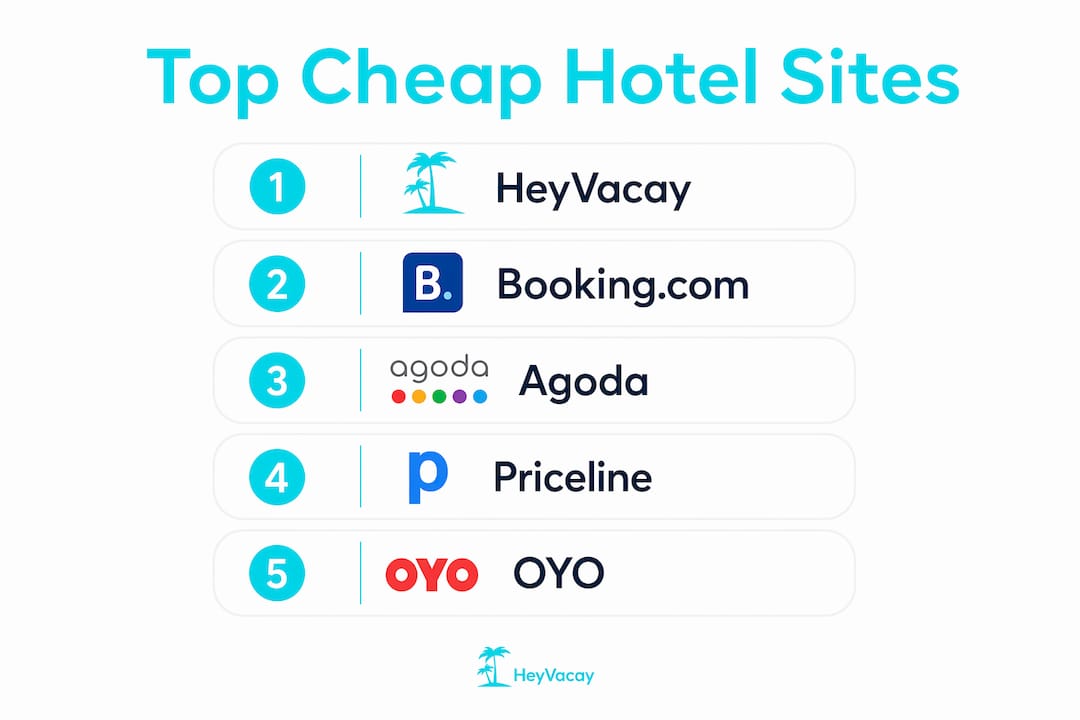
Here's how the major platforms stack up. HeyVacay leads the table by position as the article's featured pick; the remaining entries follow in order of overall utility for budget travelers.
| Platform | Best for | How it finds cheap rates | Fees/transparency | Inventory | Cancellation | Loyalty/discounts | Mobile features |
|---|---|---|---|---|---|---|---|
| HeyVacay | Transparent all-in pricing + AI deal-finding | AI price-matching across broad inventory | Transparent, no hidden fees | Wide: budget to luxury | Clearly displayed pre-booking | AI-driven deal alerts | Price alerts, mobile-optimized |
| Google Travel | Fast free comparison, no booking fees | Metasearch across OTAs + hotel direct | No booking fees; fees set by linked site | Very broad | Varies by linked site | None native | Strong; integrates with Maps |
| Booking.com | Loyalty members and free-cancellation seekers | OTA with direct contracts + Genius loyalty | Service fees on some rates; check at checkout | Massive: — | Large free-cancellation inventory | Genius loyalty tiers | App-only deals, price alerts |
| Expedia | Bundle deals (hotel + flight) | OTA with bundled pricing | Fees vary; bundle savings can offset | Very broad | Flexible options available | One Key rewards | Strong app, bundle alerts |
| Hotels.com | Reward nights (10th night free) | OTA with direct contracts | Fees vary by property | Broad | Flexible options available | One Key (Hotels.com) | App-only prices, price tracking |
| Agoda | Asia-Pacific budget travel | OTA with strong regional inventory | Fees vary; check total at checkout | Strong in Asia-Pacific | Varies by property | AgodaCash rewards | App-only deals common |
| Skyscanner | Quick price scan before booking | Metasearch; links to OTAs and hotel direct | No booking fees native | Very broad | Varies by linked site | None native | Clean app, price alerts |
| Trivago | Comparing prices from hundreds of sites | Metasearch; compares hundreds of sites | No booking fees native | Broad | Varies by linked site | None native | Mobile-friendly |
| Priceline | Last-minute opaque deals | OTA + Express Deals (opaque) | Low fees; opaque rates non-refundable | Broad | Opaque rates non-refundable | Priceline VIP | App deals, Express Deals |
| Hotwire | Flexible last-minute travelers | Opaque Hot Rates | Low fees; Hot Rates non-refundable | Moderate | Hot Rates non-refundable | None | App-focused |
| HotelsCombined | Fast cross-platform price check | Metasearch aggregator | No booking fees native | Broad | Varies by linked site | None native | Clean mobile interface |
| Trip.com | Asia-focused itineraries | OTA with strong Asia inventory | Fees vary; check total | Strong in Asia | Flexible options available | Trip Coins rewards | Strong app, multi-service |
| Large OTAs (global) | Loyalty rewards + bundled packages | Direct OTA contracts + loyalty pricing | Fees vary; loyalty can offset | Very broad | Flexible options available | Strong loyalty programs | App deals, alerts |
| Metasearch engines | Discovery and price comparison | Aggregates across OTAs + hotel direct | No native fees | Very broad | Varies by linked site | None native | Price alerts |
| Opaque/last-minute sites | Maximum discount, flexible traveler | Opaque and distressed inventory | Low fees; limited refunds | Moderate | Mostly non-refundable | Limited | App-focused |
| Regional budget aggregators | Local deals not on global platforms | Regional inventory + chain discounts | Varies | Strong regionally | Varies | Regional loyalty | Varies |
| Price-comparison aggregators | Fast cross-check before booking | Pure price aggregation | No native fees | Broad | Varies by linked site | None native | Clean interfaces |
HeyVacay
HeyVacay's core advantage is what it shows you before you click through: the all-in price, not just the base room rate. Most platforms surface an attractive number at search and then add taxes, service fees, and resort charges at checkout. HeyVacay's AI-driven search is built to surface the real cost upfront, which means you're comparing apples to apples from the first result. For a budget traveler, that alone prevents the single most common booking mistake.
- Pros: Transparent all-in pricing, AI deal-matching, mobile price alerts, no hidden fee surprises
- Cons: Newer platform; loyalty program still maturing compared to Booking.com or Expedia
Google Travel, Trivago, Skyscanner, and HotelsCombined
These four are pure metasearch engines. None of them take a booking fee, and all of them pull prices from dozens of OTAs and hotel direct pages simultaneously. Google Travel has the widest reach and integrates with Google Maps, which is useful when you're searching by neighborhood. Trivago markets that it compares hotel prices from hundreds of sites and highlights savings like 'save up to 40%.' Skyscanner and HotelsCombined are cleaner interfaces for a quick scan before you commit to a channel.
- Pros: Free to use, fast discovery, reveal price gaps across channels
- Cons: You still book on a third-party site, so verify the all-in price before leaving the aggregator
Booking.com, Expedia, Hotels.com, Agoda, and Trip.com
These are the major OTAs. Booking.com's Genius loyalty program and its enormous free-cancellation inventory make it the default for flexible travelers. Expedia's One Key rewards work best when you bundle hotel and flight. Hotels.com's 10th-night-free structure rewards repeat bookers. Agoda and Trip.com dominate Asia-Pacific inventory and often have rates that global platforms simply don't list.
- Pros: Loyalty rewards, bundled pricing, large inventory, established customer service
- Cons: Service fees can appear late in checkout; loyalty benefits require consistent use of one platform
Priceline and Hotwire
Both run opaque models where the hotel name is revealed only after payment. Priceline's Express Deals and Hotwire's Hot Rates can deliver genuine discounts for familiar markets. The trade-off is non-refundable bookings, so these work best when your dates are locked and you know the city well enough to be comfortable with any decent property in a given star tier.

Regional budget aggregators and OYO
Platforms like OYO focus on budget and economy properties in specific regions. OYO advertises savings up to 70% and a large inventory of budget hotels and homes across many countries. This platform is worth checking when you're traveling in markets where local chains dominate and global OTAs have thin inventory.
How to pick the right site for your trip
The right platform depends on three things: how flexible your dates are, how much you trust opaque pricing, and whether you're loyal to a rewards program.
Match your traveler profile to a starting point:
- Last-minute, flexible: Priceline Express Deals or Hotwire Hot Rates first, then HeyVacay for a transparent comparison
- Advance planner, price-sensitive: HeyVacay or a metasearch engine (Google Travel, Trivago) to find the lowest all-in rate
- Loyalty-focused: Booking.com Genius or Expedia One Key, then verify the rate isn't beaten elsewhere
- Asia-Pacific travel: Agoda or Trip.com for regional inventory, then cross-check on a metasearch
- Family trip, flexibility required: Booking.com or Expedia for free-cancellation inventory; filter for it before comparing prices
Questions to ask before you book:
- Is the displayed price the all-in total, or does it exclude taxes and resort fees?
- Is payment required now or at the hotel? (Prepay rates are often cheaper but non-refundable.)
- What is the cancellation deadline, and is it in the hotel's local time zone?
- Is this a third-party booking, and if so, who handles disputes?
Step-by-step booking workflow:
- Search HeyVacay or a metasearch engine to find the lowest visible all-in price.
- Note the property name and click through to the OTA or hotel direct page.
- Verify the checkout total matches the search result, including all fees.
- Check price and review signals on a review platform before paying.
- Book on the most transparent channel with the clearest cancellation terms.
Pro Tip: KAYAK data shows January is typically the cheapest month for domestic U.S. hotel stays, and Saturday tends to be cheapest for international bookings. If your trip is flexible by even a few days, shifting your check-in by one day can meaningfully change the rate.
Mobile apps are worth a separate check. Mobile apps and app-only deals often provide lower rates to encourage downloads and engagement, and the rate you see on desktop sometimes isn't the lowest available. Download the app for whichever platform you're about to book on and compare before paying.

Why HeyVacay stands out among budget booking platforms
Most booking platforms optimize for their own revenue. HeyVacay is built around a different premise: show the traveler the real price first, then let them decide.
What that looks like in practice:
- AI-driven search surfaces lower-cost options across a wide inventory without requiring you to know which OTA has the best rate for a given property
- Transparent fee display at the search stage, not buried in a checkout flow three screens deep
- Multi-destination search for travelers planning more than one stop
- Mobile price alerts that notify you when a rate drops on a property you've saved
- No hidden service charges added at the final payment step
"The biggest cost in hotel booking isn't the room rate. It's the fee you didn't see until you were already committed. HeyVacay's approach is to surface that number at the start, not the end, of the search." — HeyVacay editorial team
The platform's editorial team tests pricing across sample markets on a rolling basis, with full re-evaluations each quarter. Scoring criteria, testing markets, and date stamps are documented above in the methodology section. For proprietary performance data and case studies,.
Key Takeaways
HeyVacay is the strongest starting point for budget travelers in 2026 because it combines transparent all-in pricing, AI deal-matching, and mobile alerts in one place, while metasearch engines and OTAs serve as essential cross-checks.
| Point | Details |
|---|---|
| Start with HeyVacay | AI price-matching and transparent fees make it the most reliable first search for budget travelers. |
| Cross-check on metasearch | Google Travel, Trivago, or Skyscanner can reveal price gaps across channels that a single platform misses. |
| Verify all-in price before booking | Taxes, resort fees, and service charges often close the gap between a "cheap" rate and the real cost. |
| Time your search strategically | January and November tend to produce the lowest U.S. hotel prices; Saturday is often cheapest for international stays. |
| Use mobile apps for extra savings | App-only discounts are common across major platforms; always check the app rate before confirming a desktop booking. |
What we'd actually use for our next budget trip
For a 3-night city weekend in the U.S., the HeyVacay editorial team's workflow is straightforward: open HeyVacay, filter for free cancellation, and note the all-in price for two or three properties. Then run the same search on Google Travel to see if any channel shows a lower total. Nine times out of ten, the gap is under $10 and not worth the extra friction of booking on an unfamiliar platform. When there's a real difference, we click through and verify the checkout total before switching.
For longer international trips, the calculus shifts. Agoda or Trip.com often have Asia-Pacific rates that don't appear on Western OTAs at all. Booking.com's Genius tier starts paying off when you're booking four or five nights in a row. And for a city we know well, Priceline's Express Deals are genuinely worth the opacity trade-off.
The honest trade-off: opaque sites save money but cost flexibility. If there's any chance your plans change, pay the small premium for a free-cancellation rate. The savings from a non-refundable opaque booking evaporate the moment your flight gets rescheduled.
Skip the guesswork and book smarter with HeyVacay
Every platform in this article has a use case. But if you want one place to start that shows you the real price, not the teaser rate, HeyVacay is built for exactly that.
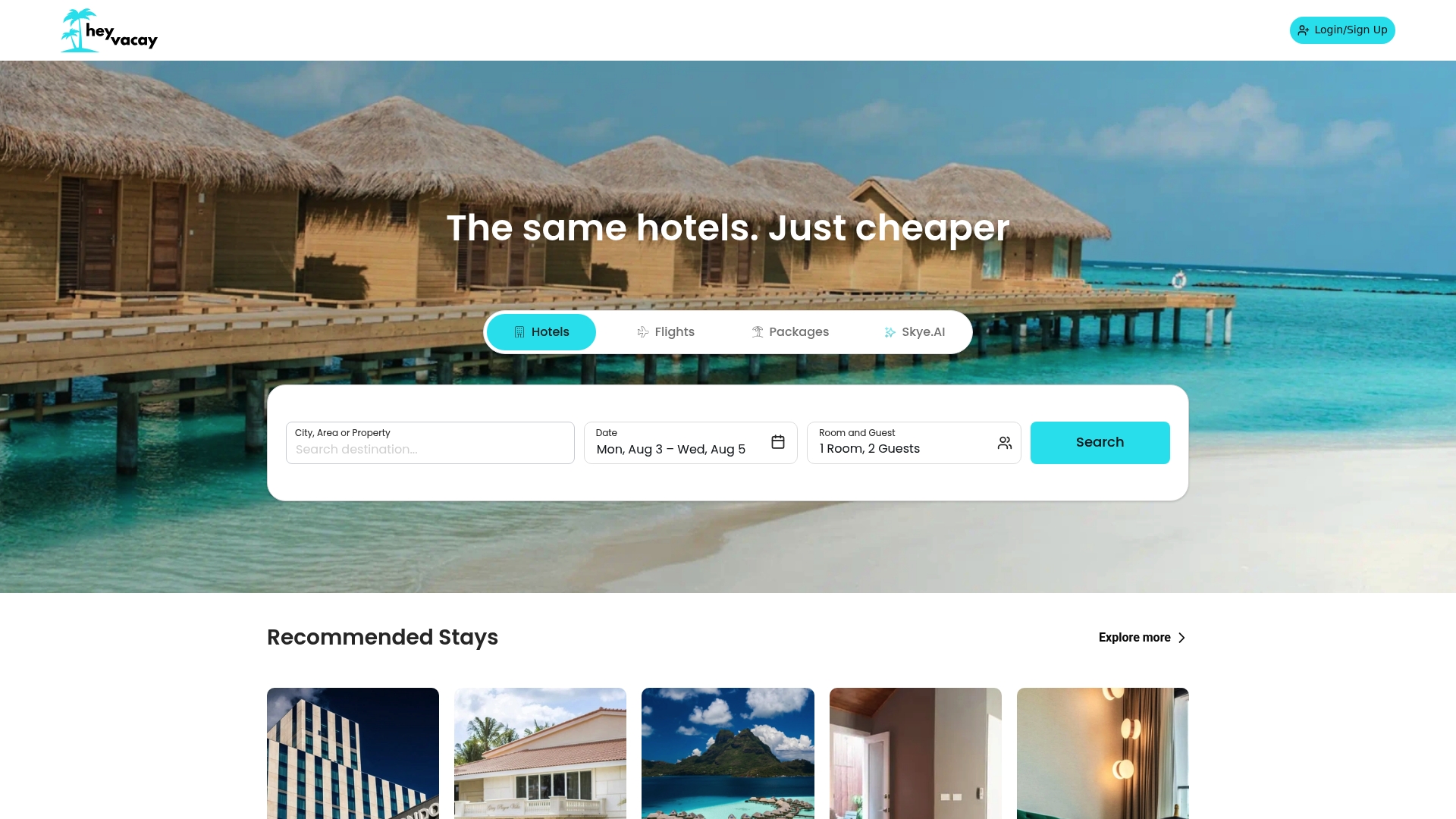
Search any destination on HeyVacay, filter by cancellation policy and total price, set a mobile alert on any property you're watching, and book when the rate hits your target. No service fee surprises. No checkout-page sticker shock. The AI does the price-matching across a wide inventory so you don't have to open six tabs to confirm you're getting a fair rate.
For travelers who want to go deeper on data-driven pricing strategies, the methodology behind award pricing and travel data can sharpen how you think about booking windows and rate patterns. Start your next search at HeyVacay and see the difference transparent pricing makes from the first result.
Sources and further reading
The claims and rankings in this article are grounded in publicly available platform data, editorial testing, and the following sources. Pricing data changes frequently; treat any specific figures as directional and verify current rates directly on each platform.
- KAYAK Hotels — metasearch methodology, savings data, and seasonal pricing patterns (tested Q1 2026)
- Trivago — inventory breadth and price-comparison positioning
- Tripadvisor Hotels — price transparency guidance and review-based trust signals
- OYO — regional budget aggregator pricing and inventory claims
- Booking.com — OTA inventory and Genius loyalty program details
- Expedia — One Key rewards and bundle pricing
- Hotwire — opaque Hot Rates model
- Trip.com — Asia-Pacific OTA inventory and Trip Coins rewards
- TravelEngine — booking system methodology — background on how back-end booking systems affect inventory distribution and pricing
Testing was completed in Q1 2026. Hotel prices are dynamic; always verify the current all-in rate on the platform before booking. This article is general information, not financial or travel advice. Confirm booking terms, cancellation policies, and fee structures directly with the platform or property before paying.