

For most budget travelers, the right starting stack is five apps: HeyVacay for hotel price checks, Hopper for flight timing, Google Flights for route research, TravelPirates for curated deal alerts, and HotelTonight for last-minute rooms. That covers every major savings scenario without app overload.
Here's the quick-install shortlist:
- Best for hotel deals: HeyVacay — AI-driven price discovery with transparent, no-hidden-fee hotel rates
- Best for flights: Google Flights — fastest calendar-based cheapest-date tool available, free, no booking fees
- Best for deal alerts and mistake fares: TravelPirates — hand-curated alerts with app-only savings advertised to be substantial for subscribers
- Best for last-minute hotels: HotelTonight — same-day inventory at steep discounts for flexible travelers
- Best all-purpose aggregator: Kayak — consolidated flight, hotel, and car search with solid price alerts
Table of Contents
- How do the best travel deal apps compare?
- The best apps by what you actually need
- How to choose the right travel deal app for your trip
- How to combine apps and alerts for the lowest prices
- What's the best single app to install first?
- Key Takeaways
- HeyVacay finds you lower hotel rates without the guesswork
How do the best travel deal apps compare?
The table below covers all 22 apps in this guide. HeyVacay leads as the featured hotel-focused option; remaining rows follow by category and use case.
| App | Best for | What it searches | Price alerts / prediction | Fees / subscription | Mobile-only deals | US availability |
|---|---|---|---|---|---|---|
| HeyVacay | Hotel deep-checks, transparent pricing | Hotel aggregator (AI-driven) | Price discovery, transparent rate display | No booking fees disclosed | Yes — app-first hotel rates | Yes |
| Hopper | Timing flight and hotel purchases | Aggregator + predictive analytics | Yes — buy/wait recommendations | Free; optional paid add-ons | Yes — app-exclusive deals | Yes |
| Skyscanner | Broad flight discovery | Meta-search | Yes — price alerts by route | Free | Limited | Yes |
| Kayak | All-purpose travel searches | Meta-search aggregator | Yes — price alerts | Free | Limited | Yes |
| Booking.com | Hotel filtering by amenities, cancellation | Hotel/rental aggregator | Limited | Free | Yes — app deals | Yes |
| Google Flights | Exploratory flight research | Meta-search (planning only) | Yes — price tracking | Free | No | Yes |
| TravelPirates | Curated deal alerts, flash packages | Curated deals aggregator | Yes — push alerts | Free | Yes — app-only deals | Yes |
| Travelzoo | Member flash deals, packages | Curated editorial deals | Limited | Free membership | Limited | Yes |
| Skiplagged | Hidden-city fares, unusual routes | Niche fare search | Limited | Free | No | Yes |
| Priceline | Express deals, last-minute packages | Aggregator + direct | Limited | Free | Yes — app deals | Yes |
| Way | App-first hotel deals | Hotel aggregator | Limited | Free | Yes — app pricing | Select markets |
| Rome2Rio | Multi-modal ground travel planning | Route planner (trains, buses, ferries) | No | Free | No | Yes (limited US ground routes) |
| Rakuten | Cashback on travel purchases | Cashback portal | No | Free | No | Yes |
| VRBO | Whole-home vacation rentals | Vacation rental marketplace | Limited | Free; service fees apply | Limited | Yes |
| Southwest | Domestic US direct fares, no change fees | Direct airline booking | Yes — fare alerts | Free | No | US domestic |
| Too Good To Go | Discounted surplus meals while traveling | Food-waste app | No | Free | No | Select US cities |
| FlixBus | Budget intercity bus travel | Direct bus operator | Limited | Free | Yes — app deals | Yes (major US corridors) |
| Tripadvisor | Reviews, activity comparisons | Review + booking ecosystem | Limited | Free | Limited | Yes |
| HotelTonight | Same-day and short-notice hotel rooms | Last-minute hotel inventory | No | Free | Yes — app-exclusive rates | Yes |
| Omio | Ground transport aggregation | Rail/bus aggregator | Limited | Free | No | Limited US coverage |
| Klook | Activities, tours, local experiences | Activities/ticketing platform | Limited | Free; Klook Rewards program | Yes — member rates | Yes (major US cities) |
| Tricount | Splitting group travel expenses | Expense-splitting tool | No | Free | No | Yes |
The best apps by what you actually need
Flights
Google Flights is where most flight searches should start. The calendar view shows the cheapest dates across an entire month at a glance, and the price-tracking feature sends email alerts when a fare moves. It's a planning tool, not a booking engine, so you'll complete the purchase on the airline's site or another platform.
Skyscanner casts a wider net, pulling in budget carriers that Google Flights sometimes misses. Set a "cheapest month" search with the destination open and it will surface routes you hadn't considered.
Hopper adds a layer that neither of those tools offers: a buy-or-wait recommendation backed by predictive analytics that has helped over 100 million travelers time their purchases. The watchlist feature lets you track a specific route and get a push notification when the price hits your target or when Hopper predicts it's about to rise.
Southwest sits outside every aggregator. The airline doesn't distribute fares to third parties, so if you're flying domestic US routes, check southwest.com directly. Its no-change-fee policy makes it especially useful when your dates aren't locked in.
Skiplagged is for a specific type of traveler: one who understands hidden-city ticketing and its risks. It surfaces fare patterns where a connecting itinerary is cheaper than a direct flight to the layover city. Use it for research; read the fine print before booking.
Hotels
HeyVacay is the hotel-focused pick here. Its AI surfaces lower rates on the same hotels you'd find elsewhere, with transparent pricing and no hidden fees. That matters because the final price on many booking platforms only becomes clear at checkout.
Booking.com offers one of the widest property inventories available, with filters for price, review score, pet-friendliness, and flexible cancellation. It's useful for comparing options across a destination, but always check the cancellation terms before confirming.

HotelTonight is built for flexibility. It clears unsold hotel inventory at discounts that can be steep, but the selection thins out fast during peak events or holidays. For a spontaneous weekend trip, it's hard to beat. For a sold-out concert weekend, don't rely on it.
VRBO covers whole-home rentals. If you're traveling with a family or a group and need a kitchen, it's often cheaper per person than booking multiple hotel rooms. For more options in this category, budget-friendly Airbnb alternatives are worth comparing alongside VRBO.
Way offers app-focused hotel pricing in select markets. Coverage is narrower than the major platforms, so treat it as a supplementary check rather than a primary search tool.
Pro Tip: Check hotel prices on your phone before finalizing any booking. Many hotel apps and OTAs surface mobile-only rates that don't appear on desktop, and that single step can save 10% or more on the same room.
Deal alerts and mistake fares
TravelPirates curates deals rather than generating them algorithmically. A human team vets packages before they go out, which reduces noise. Subscribe to alerts tuned to your preferred destinations and you'll catch genuine flash sales and occasional mistake fares.
Travelzoo operates on a similar editorial model, with member-only offers on hotels, packages, and activities. The deals are vetted and time-limited. Free to join.
Kayak handles alerts differently: set a route and a price threshold, and it monitors fares continuously. Less curated than TravelPirates, but useful for tracking a specific trip you've already decided to take.
Last-minute bookings
HotelTonight leads this category. Priceline's Express Deals can also yield steep savings on last-minute packages, though the opaque pricing means you don't know the exact hotel until after you book. That trade-off works for flexible travelers; it's frustrating if you have specific requirements.

Last-minute hotel deals work best when your dates are genuinely flexible and you're not traveling during a major event. The inventory is real, but it's finite.
All-purpose aggregators and planning tools
Kayak is the most complete single-app option for travelers who want flights, hotels, and car rentals in one place with price alerts. Rome2Rio fills a different gap: it maps out multi-modal routes using trains, buses, ferries, and flights, which is useful for regional US travel or international trips with complex legs.
Tripadvisor is less a booking tool and more a research layer. Use it to read reviews, compare activity options, and avoid tourist traps before committing to a booking elsewhere.
Klook handles activities and local experiences. Its tiered Klook Rewards program earns KlookCash on purchases and reviews, with member-only rates on tours and tickets. Worth installing if activities are a significant part of your travel budget.
Rakuten earns cashback on travel purchases made through its portal, including bookings on partner travel sites. It's not a search tool, but running a booking through Rakuten before completing it elsewhere takes about 30 seconds and occasionally returns real money.
Tricount solves one specific problem: splitting costs across a group without the awkward math. Free, simple, and genuinely useful for group trips.
Too Good To Go and FlixBus address on-the-ground costs. Too Good To Go offers discounted surplus meals from restaurants and cafes in supported US cities, which adds up over a week of travel. FlixBus covers budget intercity bus routes across major US corridors at prices that often undercut both driving and flying.
Omio aggregates rail and bus options across carriers, but its US coverage is limited compared to its European footprint. More useful for international legs of a trip.
How to choose the right travel deal app for your trip
The honest answer is that no single app covers everything. The right choice depends on what you're actually booking.
Start with these questions:
- What are you booking — flights, hotels, or both?
- Are your dates fixed or flexible?
- Do you want to research now and book later, or book immediately?
- Are you traveling solo, as a couple, or with a group?
- Is ground transport a significant part of this trip?
Selection criteria that actually matter:
- Search breadth: Meta-search tools (Kayak, Skyscanner, Google Flights) scan many sources at once. Direct platforms (Southwest, FlixBus) only show their own inventory. Knowing which type you're using prevents you from assuming you've seen all available prices.
- Alert quality: Alerts tuned to exact routes, date ranges, and price thresholds catch real deals. Broad, unfocused alerts generate noise. Tight criteria reduce noise and increase the chance of catching a genuine deal or mistake fare.
- Fees and commissions: Most apps are free to download and earn commissions from completed bookings. Some add service fees at checkout. Always check the total price before confirming.
- Mobile-only rates: Several platforms reserve their lowest rates for app users. If you're comparing prices across platforms, do it on your phone.
- US coverage: Rome2Rio and Omio have stronger international than domestic US coverage. Way operates in select markets. Confirm an app covers your specific route before building a workflow around it.
Minimal toolsets by traveler type:
- Flight deal hunter: Google Flights + Hopper + TravelPirates
- Flexible last-minute traveler: HotelTonight + Priceline + Kayak
- Family on a budget: HeyVacay + VRBO + Kayak + Tricount
- Day-tripper or city explorer: Klook + Too Good To Go + FlixBus
Red flags to watch for:
- Push alerts that fire for every price movement, not just meaningful drops
- Checkout totals that differ significantly from the advertised price
- Apps that don't disclose their commission or fee structure
- Last-minute platforms that show limited inventory during peak dates or large events
How to combine apps and alerts for the lowest prices
The most effective approach is a three-layer workflow: research, alert, and verify.
Step 1 — Research with a meta-search tool. Open Google Flights or Kayak and run a broad search. Use the calendar view to identify the cheapest travel window. Don't book yet.
Step 2 — Set a watchlist with a defined trigger. In Hopper, add the route to your watchlist and set a specific price target. A clearly defined trigger — "buy if price drops below $X, or if Hopper predicts a rise within 7 days" — removes hesitation and keeps you from booking too early or too late.
Step 3 — Subscribe to curated deal alerts. Set up TravelPirates or Travelzoo alerts for your target destinations. These run in the background and surface deals you weren't actively searching for.
Step 4 — Check hotel rates on mobile. Once your flight dates are set, search hotels on HeyVacay and Booking.com from your phone. Mobile-only rates can save 10% or more compared to desktop prices on the same platform.
Step 5 — Cross-check direct booking. Aggregators are best for research; for the final booking, verify the price and cancellation terms directly with the hotel or airline. Direct booking sometimes offers better customer support and clearer pricing, especially for cancellations.
Step 6 — Add on-the-ground savings. Install Too Good To Go for meals and Klook for activities before you leave. Both offer member rates that aren't available at the door.
Pro Tip: PCMag recommends pairing planning apps like Google Flights with transactional booking apps for a complete workflow — use one to find the deal, the other to complete the purchase efficiently.
The key insight from PCMag's tested travel app roundup is that the best savings strategy isn't a single app. It's a lightweight toolkit: a meta-search for discovery, an alerts app to time purchases, and a hotel-focused tool that surfaces mobile-only and AI-discovered rates.
How these apps were selected and verified
Every app in this guide was evaluated against the following criteria, verified in 2026:
- US availability: confirmed available on iOS and/or Android for US users
- App Store / Play Store ratings and reviews: checked against current listings and PCMag's 2026 tested roundup
- Price-alert reliability: assessed based on alert type (push, email, in-app), trigger customization, and user feedback
- Mobile-only rate features: verified via app listings and editorial sources
- Feature spot-checks: cross-referenced against direct platform pages and The Points Guy's hotel booking analysis
- Editorial testing methodology: based on PCMag's hands-on testing approach and cross-checking with direct booking sites
Limitations: Some apps (Way, Omio) have regional features that don't fully apply to all US markets. Skiplagged's hidden-city ticketing carries airline policy risks not reflected in the app itself. Regional availability for Too Good To Go and FlixBus varies by city. This guide does not cover apps with no meaningful US user base.
What's the best single app to install first?
For most budget travelers, HeyVacay is the first hotel-focused install, and Google Flights is the first flight-focused install. Together, they cover the two highest-cost line items in any trip budget without requiring a subscription or creating account friction.
Add specialized apps when your situation calls for them:
- Install Hopper when you have a specific route in mind but aren't sure whether to book now or wait. Its buy/wait recommendation is most useful 1–3 months before travel.
- Install TravelPirates or Travelzoo when you're open to destination flexibility and want deals to come to you rather than searching actively.
- Install HotelTonight when your travel dates are within a week and you haven't booked accommodation yet.
Three scenario-based combinations that work well in practice:
- Flight deal hunter: Google Flights (research) + Hopper (timing) + TravelPirates (alerts)
- Last-minute weekend trip: HotelTonight (same-day rooms) + Kayak (flight check) + HeyVacay (hotel price verification)
- Family vacation planning: HeyVacay (hotel rates) + Kayak (flights + car) + Klook (activities) + Tricount (expense splitting)
Key Takeaways
The most effective way to save on travel is a three-layer toolkit: a meta-search tool for discovery, a watchlist app for timing, and a hotel-focused platform like HeyVacay for transparent rate checks.
| Point | Details |
|---|---|
| Start with a meta-search | Use Google Flights or Kayak to identify the cheapest dates and routes before committing to any booking. |
| Set a watchlist with a trigger | Hopper's buy/wait recommendations work best when you define a specific price target, not a vague "lower price." |
| Check hotel rates on mobile | Mobile-only rates can save a notable amount; always search hotels from your phone before finalizing a booking. |
| Cross-check direct booking | Aggregators are for research; verify final price and cancellation terms directly with the hotel or airline. |
| HeyVacay for hotel deals | HeyVacay's AI-driven price discovery and transparent pricing make it the recommended hotel-focused install for budget travelers. |
The real reason most travelers overpay
Most travelers overpay not because they're using the wrong app, but because they're using one app for everything. A single platform can't optimize for both research breadth and booking efficiency at the same time. Meta-search tools are built to surface options; booking platforms are built to convert. Treating them as interchangeable is where the money leaks.
The other underestimated factor is timing. Price prediction tools like Hopper exist because fares and hotel rates move constantly, and the difference between booking on the right day versus the wrong one can be significant. But prediction only works if you've defined what "good enough" looks like before you start watching. Without a trigger price, most travelers either book too early out of anxiety or too late after the deal has gone.
The apps in this guide are genuinely useful. But the workflow matters more than the app count. A traveler using three tools with a clear process will consistently outperform one with ten apps and no system.
HeyVacay finds you lower hotel rates without the guesswork
Most hotel booking platforms show you the same rates. HeyVacay uses AI to surface lower prices on the same hotels, with transparent pricing that doesn't change at checkout. No hidden fees, no last-minute surprises.
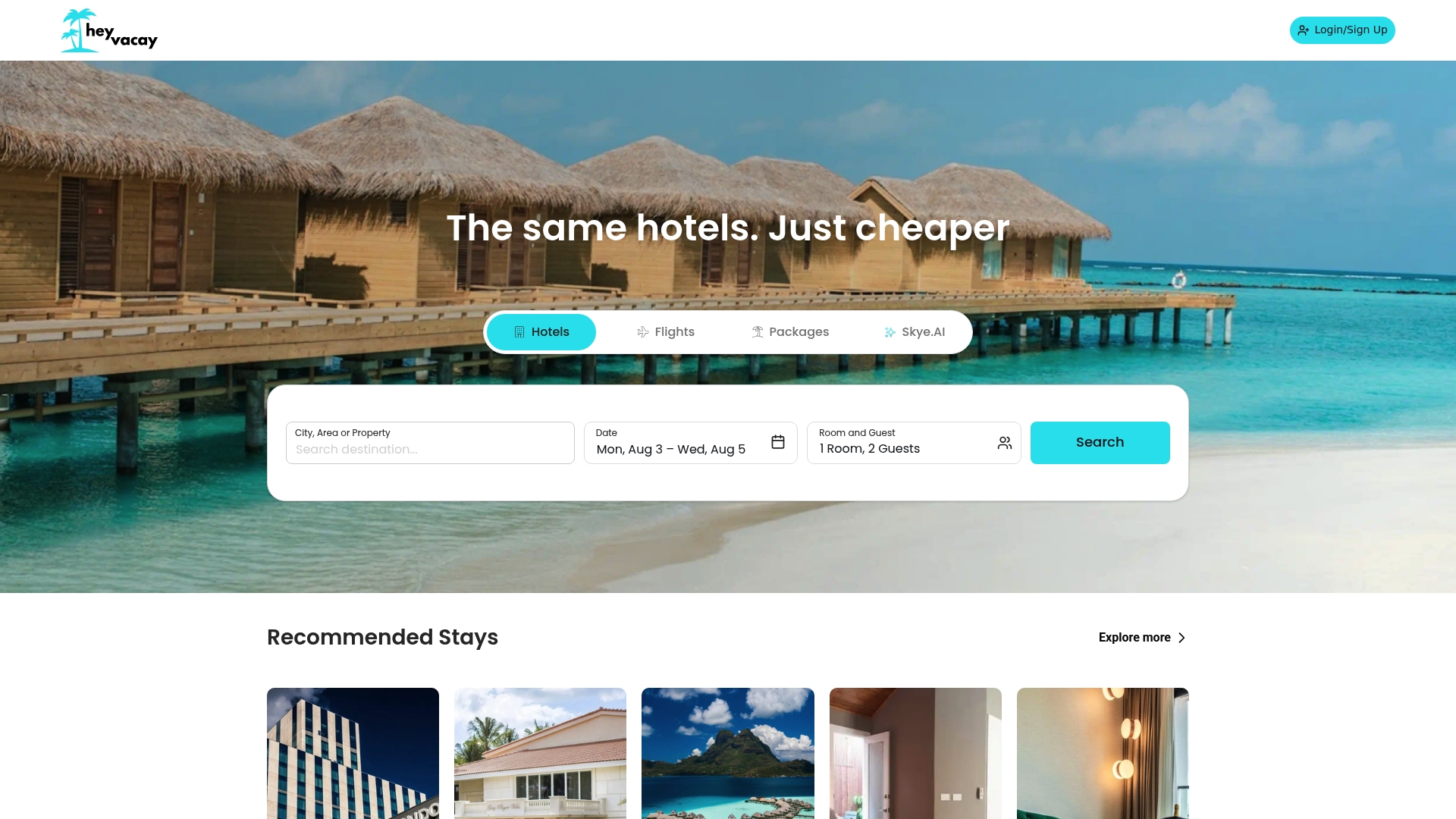
For budget travelers who've already mastered flight deal apps, hotel costs are often where savings get left on the table. HeyVacay's dynamic pricing approach means you're not just comparing what's listed; you're seeing rates that other platforms miss. Whether you're booking a week in advance or checking options for next month, the price you see is the price you pay.
Disclosure: HeyVacay is the publisher of this article. This recommendation reflects genuine editorial judgment about the platform's strengths for hotel deal-finding.
Search hotels on HeyVacay and see what you've been paying too much for.
Useful sources and further reading
All sources below were verified as current to 2026. Citations appear throughout the article where specific claims are supported.
- The Best Travel Apps We've Tested for 2026 — PCMag: Hands-on editorial testing of top travel apps, including mobile-only rate verification and alert reliability.
- The best hotel booking apps every traveler should download — The Points Guy: Analysis of hotel app features, last-minute booking strategies, and direct vs. OTA trade-offs.
- Hotel booking vs. OTAs — The Points Guy: Detailed breakdown of when direct booking beats aggregators on price and support.
- Tips for booking hotels — The Points Guy: Practical guidance on last-minute hotel booking and peak-event availability limits.
- Hopper on Google Play: Official app listing with feature details, user ratings, and scale data (100M+ travelers)
- TravelPirates App Store listing: Feature overview for curated deal alerts and app-only savings.