

The best family hotel chain depends on what your trip actually needs: space, included activities, or a low price per night. There's no single winner. A family flying to Orlando for five theme park days needs something completely different from a family doing a three week cross-country drive with two toddlers.
Here's the quick shortlist by trip type:
- Suite-style chains for extra space and free breakfast on shorter trips
- Long-stay suite brands with kitchens for extended stays or big families watching food costs
- Resort and all-inclusive properties when you want activities bundled in and zero planning
- Waterpark and themed resorts for destination trips built around one big attraction
- Budget family chains for road trips and short overnight stops where price matters most
Match your trip to the category first, then compare specific properties. HeyVacay's filters can surface family suite options and show you exactly what's included before you book, so you're not guessing about bedding or hidden fees at check-in.
Key Takeaways
The right family hotel chain is the one that matches your trip's length and priorities, not the one with the most name recognition.
| Point | Details |
|---|---|
| Trip type drives the choice | Suites for short stays, kitchens for long stays, resorts for bundled activities. |
| Bedding confirmation prevents disputes | Get sleeping arrangements in writing before you pay, not after check-in. |
| Daily extras change the real price | Resort fees, shuttles, and meals can outweigh a lower nightly rate. |
| Property reviews beat brand promises | Check recent guest feedback for the specific location, not the chain overall. |
| HeyVacay simplifies the comparison | Its filters surface family suites and transparent pricing so nothing gets buried in fine print. |
Table of Contents
- What Makes a Hotel Genuinely Family-Friendly
- Family Hotel Types and When Each One Wins
- How to Choose the Right Hotel: A Priority Checklist
- Booking Tactics That Actually Save Money
- How HeyVacay Helps You Book the Right Family Room
- Which Hotel Chains Actually Deliver for Families
- Safety and Security Features Parents Should Check
- Accessibility Features for Young Kids and Special Needs
- Loyalty Programs Worth Using as a Family
- What Most Family Travel Advice Gets Backward
- Book Your Family Suite With Confidence
- Frequently Asked Questions
- Sources
What Makes a Hotel Genuinely Family-Friendly
"Family-friendly" gets slapped on hotel listings so often it's basically lost meaning. The real signals are specific, and most of them come down to two things: does the room actually fit your family, and does the property reduce your daily workload?
Start with bedding. A room advertised as "sleeps 4" often means two adults on a queen bed and two kids on a pull-out sofa or rollaway. That's fine for one night. It's miserable for a week. Suite layouts with a separate bedroom, or interconnecting rooms with a shared door, solve this properly. Always ask whether the second sleeping area is an existing bed or an add-on cot, because those get charged differently and sleep differently.
Beyond bedding, look for these amenity signals when comparing properties:
- Free breakfast included in the rate, not a discounted add-on
- A kids club or supervised activity program with defined age ranges and hours
- A pool or water feature that's actually open during your stay (seasonal closures happen)
- On-site dining with a kids menu, so you're not driving off-property for every meal
- A kitchen or kitchenette, even a mini-fridge and microwave combo, cuts snack and breakfast costs
- On-site laundry, which matters more than people expect on trips longer than four days
- Airport or theme park shuttle, and whether it runs on a schedule or on request
Pro Tip: Call the property directly and ask them to confirm your exact bedding configuration by email before you pay. A phone confirmation disappears the moment you hang up; a written one gives you something to point to at check-in if the room doesn't match what you booked.
Family Hotel Types and When Each One Wins
Once you know your trip type, the hotel category picks itself. Here's how the main categories break down and where each one falls short.
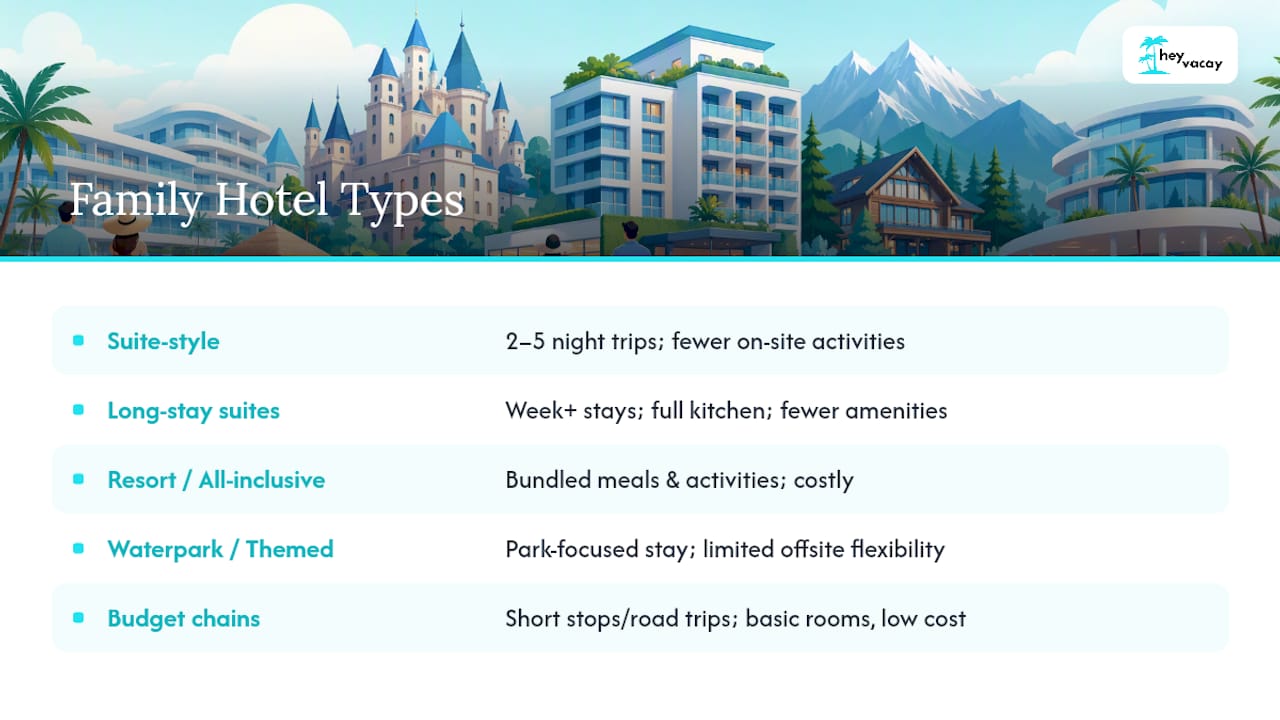
Suite-style chains work best for trips of two to five nights where you want more room than a standard hotel gives you without paying resort prices. Think a long weekend visiting grandparents, or a family wedding where you need a living area separate from where the kids sleep. The trade-off: fewer on-site activities than a resort, so you're relying on the destination itself for entertainment.
Long-stay suite brands are built for extended visits, typically a week or more, and usually include a full kitchen rather than a kitchenette. This category shines for relocations, extended school breaks, or families managing food allergies who need to cook rather than eat out every night. Family Travel Magazine's roundup points to brands like Residence Inn and Staybridge as consistent picks here precisely because the in-room kitchen changes the math on a week-long stay. The downside is fewer resort-style amenities, so don't expect a lazy river.
Resort and all-inclusive properties solve the planning problem entirely. Meals, activities, and often entertainment are bundled into one price, which matters most for families who don't want to research restaurants and attractions every evening of a beach trip. The catch is cost. All-inclusive rates look steep upfront, though they can beat pay-as-you-go pricing once you add up meals for four people over a week.
Waterpark and themed resorts center the entire trip around one destination feature. Great Wolf Lodge built an entire brand around this model, and it works because families don't need a car once they check in. The trade-off is limited flexibility. If your kids age out of the waterpark's sweet spot, or you want to explore beyond the property, this format feels restrictive fast.

Budget family chains matter most on road trips and one or two night stopovers where price per night outweighs amenities. You're not looking for a kids club here. You're looking for a clean room, a reasonable location, and maybe a basic breakfast bar to get everyone fed before you're back on the highway.
How to Choose the Right Hotel: A Priority Checklist
Comparing hotels on twenty different criteria at once is how parents end up with decision fatigue and a mediocre booking. Work through this list in order instead.
- Verify sleeping capacity first. Confirm whether "sleeps 4" or "sleeps 6" includes a rollaway, sofa bed, or crib, and whether any of those cost extra per night.
- Price out the daily extras. Add up meals, parking, resort fees, and shuttle costs on top of the room rate. A cheaper room with a $35 daily resort fee can lose to a pricier room with everything included.
- Check the kids' programming age range. A "kids club" for ages 5 to 12 does nothing for a family with a toddler and a teenager.
- Map the actual distance to what you're there for. "Near the parks" can mean a five minute shuttle or a twenty-five minute drive with no shuttle at all.
- Read the cancellation policy before you book. Flexible dates matter more with kids than with any other type of travel, since one sick child can upend the whole trip.
When you call or message the property, use direct language: "Can you confirm in writing the exact bed types in this room, and whether the shuttle to [attraction] is included or an extra charge?" That single question eliminates most surprises.
Watch for red flags in the listing itself. Vague bedding descriptions ("comfortably sleeps up to 4"), no clear breakdown of what's included versus what's an add-on, and pool hours buried in fine print are all signs the property is overselling itself. If a listing won't give you specifics, that's your answer.
Pro Tip: When space and cost pull you in different directions, prioritize space for trips over five nights and prioritize included activities for trips under four nights. Short trips don't give you enough time to notice cramped quarters, but they give you plenty of time to notice you're paying for a park ticket you already covered in the room rate.
Booking Tactics That Actually Save Money
Timing changes what's available more than most parents realize. Suite-style rooms with the configuration you need sell out earlier than standard rooms, often six to eight weeks ahead during peak school break windows, so book those first if that's your target trip type. Standard rooms have more flexibility closer to your date, but package deals and seasonal rate drops tend to appear during shoulder season windows, roughly six to ten weeks before major holidays.
Watch the rate type closely before you commit:
- Free breakfast included versus a "breakfast available for purchase" note buried in the fine print
- Resort fees listed separately from the nightly rate, sometimes adding $20 to $50 per day
- Shuttle or transfer service that's marketed on the brand page but not guaranteed at every property, as is common with resorts near The Grove Resort & Water Park Orlando and similar destination properties
Before you pay, request room layout photos, get bedding arrangements confirmed in writing, ask exact shuttle pickup times, and choose flexible cancellation whenever the price difference is small.
Breakfast and kitchen access matter more to your budget than they seem. The Points Guy's analysis of family hotel chains notes that suites with free breakfast and kitchen access consistently reduce daily food costs for families, since you're not paying restaurant prices for four people three times a day.
How HeyVacay Helps You Book the Right Family Room
Filtering by "family-friendly" on a generic search doesn't tell you whether the bedding actually fits your family or whether that resort fee is going to show up at checkout. HeyVacay's AI-assisted search filters directly for family suite configurations and shows transparent pricing upfront, so the rate you see is the rate you pay.
Here's how to use it on your next booking:
- Filter by amenity (kitchen, kids club, pool type) instead of scrolling generic "family" tags
- Compare meal inclusion across properties side by side before you commit
- Confirm bedding configuration through the listing details rather than guessing from a photo
- Check HeyVacay's guide on family suite hotels for a deeper breakdown of what separates a real family suite from a marketing label
This isn't a neutral rundown of every booking site out there. HeyVacay built its filtering specifically around the problems families run into: rooms that don't fit, fees that surprise you at checkout, and listings that oversell what's actually available.
| Point | Details |
|---|---|
| Match hotel type to trip length | Suite chains for short trips, long-stay suites with kitchens for extended visits. |
| Confirm bedding in writing | Get exact bed types and any rollaway fees emailed before you pay. |
| Use HeyVacay's filters | Search by amenity and compare transparent pricing before booking a family room. |
Which Hotel Chains Actually Deliver for Families
Brand reputation and real guest experience don't always match. A chain can market itself as family-friendly nationwide while individual properties vary wildly in how well they deliver on that promise. This is where checking property-level reviews, not just brand pages, actually pays off.
Tripadvisor's aggregated family hotel listings are useful precisely because they surface the gap between what a brand advertises and what guests report experiencing at a specific location. A hotel chain known nationally for kids clubs might have one property where the program only runs three days a week, or a pool that's closed for renovation during your exact travel dates. Reviews catch that. Brand pages usually don't.
The chains that consistently earn strong family marks tend to share a pattern: clear communication about what's included, staff trained specifically for family check-ins, and amenities that match what's advertised rather than a scaled-down version of it. Suite brands and resort properties that lean into kids' programming tend to outperform standard hotels that simply added a rollaway bed option and called it family-friendly.
Before booking any specific property, spend five minutes reading the most recent reviews rather than the featured ones. Recent guest feedback tells you whether the pool is currently open, whether the shuttle is currently running, and whether the kids club currently has staff. Chains change; individual properties change faster.
Safety and Security Features Parents Should Check
Safety concerns shift the moment you're traveling with kids instead of just yourself. A few features matter more than others when you're evaluating a property with children in tow.
Room location within the building matters. Ground floor rooms near exits are convenient, but rooms near pool areas, elevators, or stairwells can also mean more foot traffic and less privacy. Ask for a room away from high-traffic zones if you have young kids who might wander.
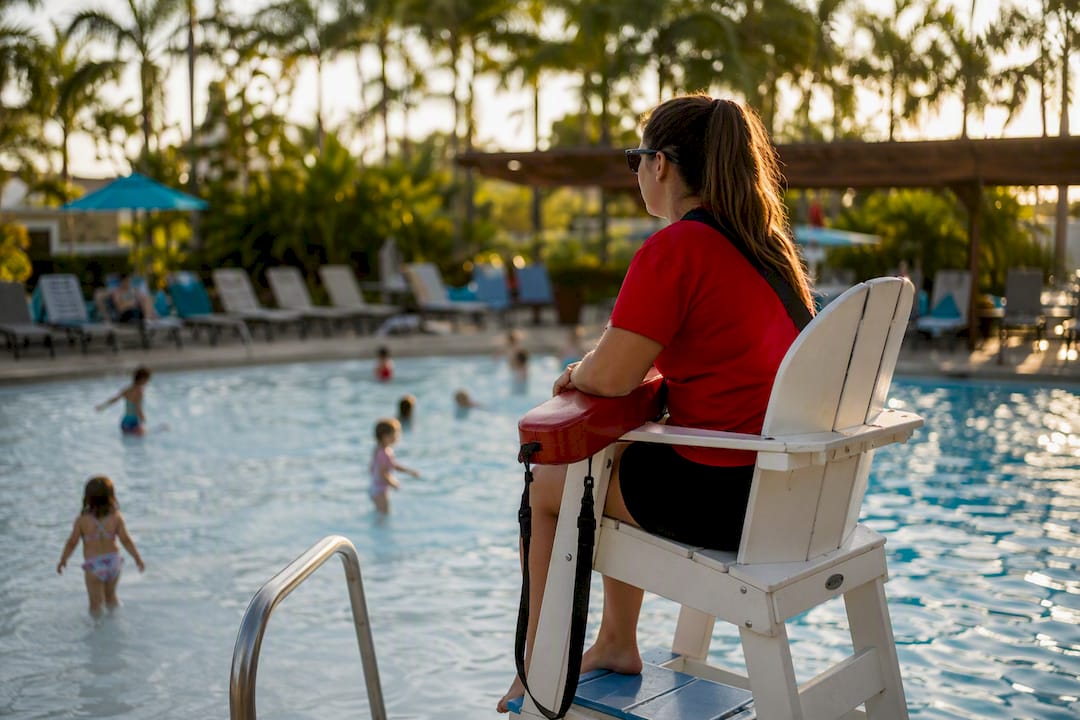
Pool safety varies more than families expect. Confirm whether the pool has a lifeguard on duty, what the posted hours are, and whether there's a separate shallow area for younger children. Not every "family pool" has supervision, and depth signage isn't always clear for a toddler who can't read it anyway.
Door and window security matters for ground floor or connecting rooms specifically. If you're booking an interconnecting room setup, ask whether the connecting door locks from both sides and whether it's a manual bolt or a keyed lock.
Key card access to elevators and pool areas, rather than open access from the lobby, is a meaningful security layer that not every property has. It's worth asking about directly rather than assuming it's standard, since it isn't at every hotel that markets itself as family-friendly.
Accessibility Features for Young Kids and Special Needs
Accessibility in family travel covers more ground than wheelchair access alone, though that remains essential to confirm for any family member who needs it. Roll-in showers, grab bars, and step-free room access should be requested by name when booking, not assumed from a general "accessible room" checkbox.
For families traveling with infants or toddlers, ask specifically about crib availability and whether cribs are standard portable models or full-size options, since sleep quality for a baby away from home depends heavily on the setup. Some properties charge a nightly crib fee; others include it. That detail rarely shows up in the listing itself.
Sensory considerations matter for families with a child on the autism spectrum or with sensory processing needs. Ask about room location away from ice machines, elevators, and high-traffic hallways, and whether the property can accommodate early check-in for a calmer arrival.
Dietary accommodation is its own accessibility question. If a child has a food allergy, confirm whether the kitchen or breakfast service can accommodate it before you arrive, rather than discovering the limits of the menu at 7 a.m. on day one. Properties with in-room kitchens or kitchenettes solve this more reliably than those relying entirely on on-site dining.
Loyalty Programs Worth Using as a Family
Hotel loyalty programs weren't designed with families specifically in mind, but a few features inside them pay off more for parents than for solo business travelers.
Free night redemptions tend to have better value at suite and extended-stay properties than at standard rooms, since the room rate you're redeeming against is naturally higher. If your family already leans toward suite-style stays, points accumulate toward something you'd book anyway.
Elite status tiers often unlock room upgrades to suites or connecting rooms at no extra cost, which matters more to a family of five than to a single traveler who doesn't need the extra space. It's worth checking whether your preferred chain's mid-tier status includes suite upgrade priority, since that's often where the real family value sits.
Some programs also waive resort fees or include breakfast for elite members, which directly offsets the daily extras discussed earlier in this guide. If you're already loyal to one brand's suite or resort line, it's worth confirming what your current tier actually includes rather than assuming standard benefits apply.
Loyalty points make the most sense for families who take three or more trips a year with the same brand family. For a once-a-year vacation, chasing status rarely beats simply booking the best rate for that specific trip.
What Most Family Travel Advice Gets Backward
Most guides rank hotel chains like there's a universal winner, then bury the trip-type nuance three paragraphs down. That's backward. A family debating between a beach resort and a national park road trip isn't choosing between two hotels; they're choosing between two entirely different vacation structures, and the hotel should follow that decision, not lead it.
The overrated factor is brand name recognition. Guests assume a nationally known chain guarantees consistency, but the research on family hotel reputation points the opposite direction: individual property performance, not brand-wide policy, determines whether the kids club actually runs or the pool actually opens on schedule.
What deserves more attention than it gets: reading the bedding fine print before falling in love with a rate. A $50 difference in nightly price often traces back to whether a bed is real or a rollaway. Prioritize that detail over star ratings, and most of the surprises this guide warns about simply stop happening.
Book Your Family Suite With Confidence
Comparing family hotel chains manually means opening a dozen browser tabs, cross-referencing bedding policies, and still guessing whether that "resort fee" line item is going to show up at checkout. HeyVacay cuts that process down to one search. Its AI-assisted filters let you search directly by family suite configuration and amenities, and every price you see includes what you'll actually pay, with no fees appearing later.
If you're planning a trip built around suite space, a kitchen for a longer stay, or a resort with kids' programming, start your search on HeyVacay and filter by the amenities that matter for your specific trip. Compare a few properties side by side, confirm the bedding details directly in the listing, and book once you see a rate with nothing hidden in it.
Frequently Asked Questions
What is the best family hotel chain for a trip to Orlando? For Orlando specifically, resort and waterpark properties near the parks tend to work best because they cut down on transportation planning, though suite chains near the parks also work well if you want kitchen access to manage meal costs across a multi-day trip.
Are suite-style hotels actually cheaper than standard family rooms? Not always on the nightly rate, but factoring in free breakfast and a kitchenette that reduces restaurant meals often makes suite chains cheaper overall for a family of four staying more than two nights.
How far in advance should I book a family suite? Book suite configurations six to eight weeks ahead during peak school break periods, since these rooms sell out faster than standard rooms with the same capacity.
Do all hotels in a family-friendly chain offer the same amenities? No. Amenities like kids clubs, pool hours, and shuttle service vary by individual property even within the same chain, so always check the specific location's current reviews before booking.
Is it worth joining a hotel loyalty program just for family trips? It pays off if you take three or more trips a year with the same brand family, since elite status often includes suite upgrades or waived resort fees that offset the daily extras families pay the most for.
Sources
- The 10 Best Hotel Chains for Families — The Points Guy
- Best hotel chains for families — Family Travel Magazine