

You don't need an employer to get corporate-style hotel discounts. Individual travelers in the U.S. can access the same reduced rates through membership eligibility, smart channel selection, direct negotiation, and AI-powered price comparison tools like HeyVacay. The fastest path: check whether you qualify for AARP, AAA, or military pricing, then compare that rate against what HeyVacay or an OTA shows, and call the hotel to price-match if you find a gap.
Fastest wins right now:
- Check AARP, AAA, Military.com, or your hotel loyalty account for member-only rates before you do anything else
- Compare the member rate against HeyVacay and at least one OTA to see which channel is lowest for your exact dates
- Call the hotel directly and quote your best price — they can often match or beat it
- For flexible trips with no specific property in mind, check opaque deals on Priceline Express Deals or Hotwire
Pro Tip: Log into every membership portal you qualify for before you start comparing prices. A member rate you never see is a discount you never get.
Key Takeaways
Individual travelers in the U.S. can access corporate-style hotel discounts by combining membership eligibility, smart channel selection, direct negotiation, and AI-powered price comparison through HeyVacay.
| Point | Details |
|---|---|
| Check membership eligibility first | AARP, AAA, military, and hotel loyalty programs offer up to 10% off before any negotiation starts. |
| Compare channels before booking | Direct, OTA, card portal, and opaque deals each win in different scenarios — no single channel is always cheapest. |
| Call the hotel with a real price | Quoting a lower public rate and asking for a match or added perks is one of the most reliable individual tactics. |
| Use opaque deals selectively | Priceline Express Deals and Hotwire can reach 30–60% off, but only work for fully flexible, nonrefundable trips. |
| HeyVacay as your starting point | HeyVacay's AI comparison surfaces member and channel pricing in one search, with transparent total costs. |
Table of Contents
- Where real discounts come from for individual travelers
- Quick channel comparison: direct, OTA, card portal, or opaque?
- How to negotiate a lower rate when you don't have a corporate account
- How credit-card portals, shopping portals, and loyalty math add savings
- Opaque and nonrefundable deals: when they make sense
- How HeyVacay helps you find corporate-style savings without a corporate account
- Group bookings and multiple rooms can unlock better rates
- Discount codes and coupons: where to find them and how to use them
- Business travel agencies that individual travelers can actually use
- The honest picture: what these tactics actually deliver
- HeyVacay makes the comparison fast
- Sources
Where real discounts come from for individual travelers
The right question isn't "Where's the corporate rate?" It's "Which eligibility channel am I currently missing?" That reframe opens more doors than most travelers realize.
NerdWallet identifies several eligibility categories that unlock hotel discounts without any employer involvement: seniors, military members, government employees, students, and AAA members. Each group has dedicated rate tiers at most major chains, and hotels rarely advertise them at checkout unless you ask.
Membership and eligibility channels:
- AARP: The AARP Travel Center Powered by Expedia offers up to 10% off select hotels for members, plus brand-specific deals across major chains. Membership costs $16 per year, which pays for itself on a single hotel stay.
- AAA: AAA members get negotiated rates at thousands of properties. The discount varies by property but is consistently available at chains like Marriott, Hilton, and IHG.
- Military.com: Active duty, veterans, and their families can access military rates through Military.com and directly at hotel front desks. Some chains extend this to government employees.
- Student and government rates: Less publicized but real. Ask at booking or call ahead.
Hotel loyalty programs add another layer.
Pro Tip: Lock your membership channel first. Log into AARP, AAA, or your loyalty account before you open any OTA. That member rate becomes your baseline — not an afterthought.
Quick channel comparison: direct, OTA, card portal, or opaque?
The channel you book through changes what you pay, what you earn, and how much flexibility you keep. No single channel wins every time.
SmarterTravel notes that direct bookings protect loyalty earning and service priority, while OTAs serve discovery and package deals, and opaque sites can deliver the deepest discounts when flexibility is available.
Decision checklist:
- Book direct when you're chasing elite-night credit, want upgrade eligibility, or need free cancellation on a specific property
- Use an OTA (Expedia, Booking.com) for discovery, package bundling, or when the OTA price is clearly lower and you don't need loyalty credit
- Use a card portal (Chase Travel, Capital One Travel) when you're redeeming points or the portal's pricing plus rewards beats direct
- Go opaque (Priceline Express Deals, Hotwire) only when you're flexible on property and price is the only variable that matters
Scenario examples: A family with fixed school-break dates should avoid opaque deals entirely — the no-refund rule is too risky when you can't shift dates. A solo traveler heading to Chicago on a Thursday with no specific hotel preference? Opaque is worth a serious look.
One caution worth flagging: Travel + Leisure reports that hotel best-rate guarantees are often limited by complex eligibility rules and rate volatility. Don't count on a guarantee to do the work for you.
How to negotiate a lower rate when you don't have a corporate account
Calling the hotel still works. The key is having a real, lower public price to quote before you dial.
Step-by-step:
- Find the lowest publicly available rate for your exact dates and room type (screenshot it)
- Identify the hotel's direct phone number — not the chain's 800 number
- Call and ask for the reservations desk
- Quote your price and ask them to match or beat it
- If they can't drop the rate, ask for added perks: parking, breakfast, or late checkout
- Get the final rate confirmed by email before you hang up
Phone script (read this verbatim):
Email template for price-match requests:
Have ready before you call:
- Screenshot of the competing rate (with date/time stamp)
- Your loyalty program number
- Specific room type and bed configuration
- Flexibility on check-in/check-out time as a bargaining chip
NerdWallet recommends calling the hotel directly and asking them to beat a found price as one of the most reliable tactics for individual travelers. It works best when the competing price is clearly visible and from a reputable source.
How credit-card portals, shopping portals, and loyalty math add savings
Card portals and shopping portals can stack value on top of a good base rate — but only when the math actually works in your favor.
Chase Travel and Capital One Travel let you redeem points at a fixed value against hotel bookings. The appeal is straightforward: if your points are worth more through the portal than through a transfer, book there. The catch is that card-issuer portals may not show the same pricing as the hotel's direct site, so always cross-check before confirming.
Shopping portals (like those accessible through airline miles programs) can add extra miles or cash back on top of a hotel booking, sometimes without affecting your loyalty credit. The double-dip opportunity is real but narrow — it works best on non-chain properties where you're not chasing elite nights.
When portal math beats direct booking:
- You're redeeming points and the portal's cents-per-point value exceeds what a transfer partner offers
- You're booking a non-chain boutique property where loyalty credit doesn't apply anyway
- The portal is running a bonus promotion that temporarily inflates point earnings
When to skip the portal and book direct:
- You're within striking distance of elite status and need every night to count
- The hotel is offering a direct-only rate or a member-only perk not visible on the portal
- The portal's price is higher than the direct rate (this happens more than you'd expect)
Pro Tip: Always open three tabs: the hotel's direct site, your card portal, and HeyVacay or an OTA. The lowest price is rarely in the same place twice.
| Channel | Earns Hotel Loyalty Credit | Extra Rewards Possible | Price vs. Direct |
|---|---|---|---|
| Direct hotel site | Yes, full | No | Baseline |
| Card portal (Chase, Capital One) | Sometimes partial | Yes (portal points) | May vary |
| Shopping portal | Rarely | Yes (miles/cash back) | May vary |
| OTA (Expedia, Booking.com) | Often no elite credit | Depends on OTA loyalty | Comparable or lower |
Opaque and nonrefundable deals: when they make sense
Opaque booking models like Priceline Express Deals and Hotwire exist to move unsold hotel inventory. The hotel gets a booking; you get a steep discount. The trade-off is that you don't know the property name until after you pay.
SmarterTravel reports that opaque deals can reach discounts of 30–60% compared to standard rates, but with strict no-refund, no-change rules. That's a real number — and a real constraint.
Risks to understand before booking opaque:
- You won't know the exact property until payment clears
- No refunds, no date changes, no room-type guarantees
- Loyalty points and elite-night credit are rarely earned
- You may end up at a property that doesn't fit your needs
Mitigation tactics:
- Use star-rating and neighborhood filters to narrow the property pool
- Only book opaque when your dates are completely fixed
- Have a backup plan if the property turns out to be inconvenient
Best use cases: last-minute solo travel in a major city, budget-focused trips where any decent 3-star property works, or when you're traveling alone and the only variable you care about is price. For families, couples with specific needs, or anyone who might need to cancel, opaque is a bad fit.
How HeyVacay helps you find corporate-style savings without a corporate account
HeyVacay is built for exactly this situation: an individual traveler who wants lower hotel rates but doesn't have an employer negotiating on their behalf.
The platform uses AI to compare rates across multiple channels simultaneously, surfacing member pricing, OTA rates, and direct hotel prices side by side. Transparent pricing means no hidden fees appearing at checkout — what you see is what you pay.
What HeyVacay does for individual travelers:
- Compares multiple booking channels in one search, including member-eligible rates where available
- AI filtering matches equivalent room types across properties so you're comparing apples to apples
- No hidden fees — total cost is visible before you commit
- Works for solo travelers, families, couples, and personal business trips
How to use it: Run a search for your dates on HeyVacay, note the lowest result, then cross-check that price against the hotel's direct member rate. If the hotel's direct rate is lower, call and confirm. If HeyVacay's result is lower, book there. Two minutes of comparison can save a meaningful amount on a multi-night stay.
Pro Tip: Use HeyVacay as your starting comparison point, not your ending one. The best outcome usually comes from combining a HeyVacay search with a quick call to the hotel.
Group bookings and multiple rooms can unlock better rates
Booking multiple rooms, even as an individual organizing a group trip, often triggers a different rate tier. Most hotels define a "group" as 10 or more rooms, but some properties will negotiate at 5 or even 3 rooms when occupancy is low.

If you're coordinating rooms for a family reunion, a wedding block, or a work retreat, call the hotel's group sales desk directly rather than booking through the standard reservations line. Group sales teams have more pricing flexibility and can often include perks like a complimentary room for the organizer, free meeting space, or a food-and-beverage credit.
For smaller gatherings, booking all rooms under one reservation (rather than separate bookings) signals volume and gives you a single point of leverage for negotiation. Platforms like HeyVacay support multi-room hotel searches that can surface group-friendly pricing before you call.
Discount codes and coupons: where to find them and how to use them
Discount codes for hotels come from more places than most travelers check. The obvious sources — hotel chain email lists and OTA promotional emails — are worth subscribing to, but the less obvious ones often yield better results.
Where to find real hotel discount codes:
- Hotel chain loyalty emails: Marriott Bonvoy, Hilton Honors, and IHG One Rewards regularly send member-exclusive promo codes for 15–25% off specific properties or dates
- Credit card benefits portals: Amex Offers, Chase Offers, and similar programs occasionally feature hotel-specific credits or percentage-back deals
- Coupon aggregator sites: RetailMeNot and Honey index OTA promo codes that can stack on top of a sale rate
- OTA app-exclusive deals: Booking.com and Expedia frequently offer app-only discounts of 10–15% that don't appear on the desktop site
- AAA and AARP member portals: Beyond the standard member rate, both organizations run limited-time promotional codes for additional savings
The catch with coupon codes is that they often exclude the cheapest available rate (usually labeled "non-refundable" or "advance purchase"). Read the exclusions before assuming a code applies to your specific booking.
Business travel agencies that individual travelers can actually use
Corporate travel agencies aren't exclusively for companies. Several agencies and managed travel platforms have opened their services to freelancers, independent contractors, and individual business travelers who want access to negotiated inventory without an employer account.
Platforms like TravelPerk and Navan (formerly TripActions) have historically targeted businesses, but some offer individual or small-team tiers.
For most individual travelers, the practical alternative is a travel management approach through OTAs and AI booking tools rather than a full agency relationship. The overhead of setting up an agency account rarely pays off unless you're traveling more than 20 nights per year. Below that threshold, a disciplined combination of membership rates, OTA comparison, and direct negotiation gets you most of the same savings without a monthly fee.
The honest picture: what these tactics actually deliver
That's not nothing — on a $200/night room for three nights, it's $60–$120 back in your pocket.
The biggest wins come from stacking tactics: AARP or AAA eligibility combined with a last-minute opaque deal, or a loyalty member rate combined with a card portal redemption. Single-tactic savings are modest; combinations are where the real numbers appear.
Travel + Leisure cautions that best-rate guarantees are often limited by fine print and rate volatility — a lower price you found this morning may disappear before a claim is processed. Don't build your strategy around guarantees. Build it around comparison speed and eligibility awareness.
One thing worth saying plainly: if you're a loyal Marriott or Hilton traveler chasing elite status, don't sacrifice elite-night credit for a $15 savings on an OTA. The upgrade, late checkout, and lounge access you earn from status often exceed the marginal discount. Know what you're optimizing for before you book.
HeyVacay makes the comparison fast
Individual travelers who want lower hotel rates without a corporate account have more options than they realize — but comparing them manually across five tabs is tedious. HeyVacay cuts that down to one search.
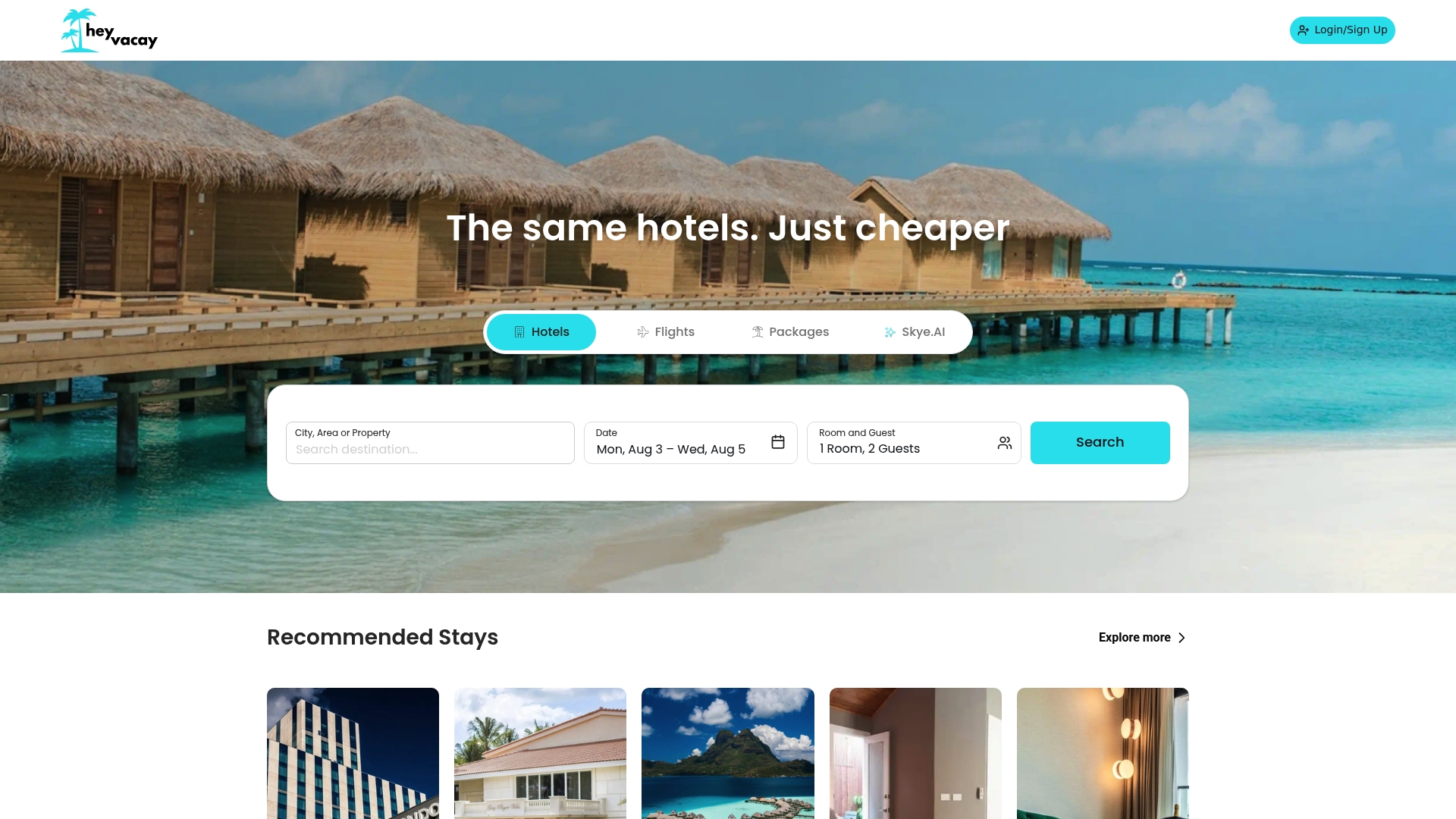
The platform compares hotel rates across channels using AI, surfaces member-eligible pricing where available, and shows total cost with no hidden fees. Whether you're planning a weekend trip or a two-week personal business run, a 30-second search on HeyVacay shows you the lowest available rate for your dates before you decide whether to book direct or call the hotel. Start there, then use the negotiation script above if the hotel's direct rate is close.
Sources
These are the primary sources cited in this article. Check them directly to verify current membership rates, eligibility rules, and booking policies.
- AARP Travel Center Powered By Expedia - Hotel Discounts
- 6 Ways to Get Cheap Hotel Rooms - NerdWallet
- Is it better to book directly with hotels and airlines? We asked the experts - Travel + Leisure
- Hotel Booking: Direct vs. OTA vs. Third-Party Sites - SmarterTravel