
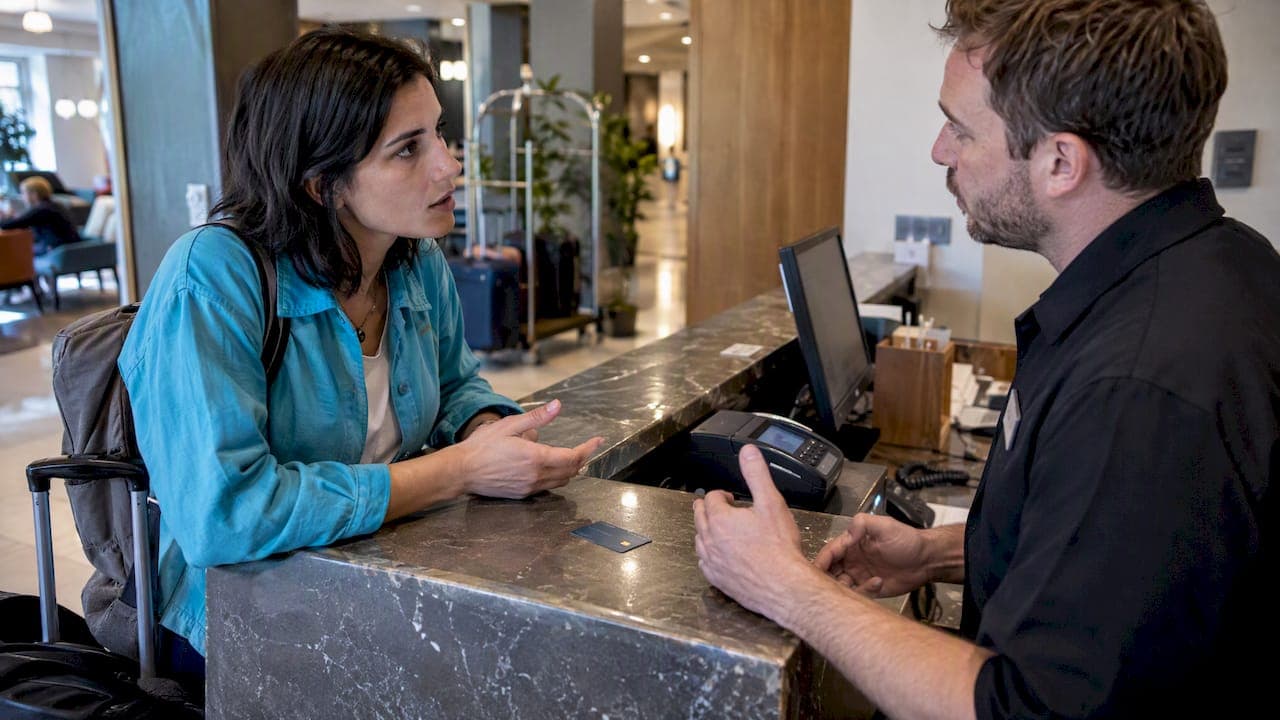
Yes, most hotels will let you check in without a credit card, but you'll still need to show some form of payment security, usually a debit card hold, a cash deposit, or in some cases a mobile wallet. Debit holds tie up real cash in your checking account and can take several business days to release, while cash deposits are handled differently from property to property. Before you book, confirm the exact hold or deposit amount and how it gets returned.
TL;DR:
- A typical incidental hold is $50 to $100 per night or $200 to $300 total, so ask the property for its exact amount before booking.
- Debit holds freeze checking account funds and commonly take five to ten business days to clear, while credit card holds usually clear within one to five.
- Cash deposit refunds vary by property, from immediate checkout returns to mailed checks that may take a couple of weeks; confirm the method and timing.
- A prepaid booking usually covers only the room; confirm whether the hotel still requires a separate incidental deposit at check in.
- When you use another person’s card, hotels may require a signed authorization form and identification that matches the reservation, so confirm the paperwork ahead.
Table of Contents
- What hotels commonly accept instead of a credit card
- How authorization holds and deposits actually work
- How to prepare before you arrive
- What to say at check-in to avoid surprises
- Special cases: third-party cards, prepaid stays, and digital check-in
- HeyVacay's take on booking with confidence
- Book with HeyVacay when you need payment clarity upfront
- FAQ
- Sources
What hotels commonly accept instead of a credit card
Hotels need some guarantee that you'll pay for incidentals like room service, minibar charges, or damages, and a credit card has traditionally been the easiest way to secure that. Without one, you still have several workable options, though acceptance varies a lot by property type and brand.
Debit cards are the most common substitute. Most hotels accept a Visa or Mastercard debit card the same way they'd accept a credit card, but the hold placed on it behaves differently. Instead of reducing your available credit, it locks up actual funds in your checking account, which is worth knowing before you plan your trip budget.
Cash deposits are the next most common route, and you'll find them more often at independent hotels, bed and breakfasts, and smaller regional chains than at large branded properties. The return process differs by hotel: some refund cash immediately at checkout, others same-day, and a few mail a check, so confirming the refund mechanism and timeline before you hand over cash matters.
Mobile wallets and contactless payment are gaining ground, particularly with chains that have upgraded their point-of-sale systems, but acceptance is inconsistent. A property might take Apple Pay or Google Pay for the room charge yet still ask for a physical card or cash to secure incidentals.
Prepaid bookings solve the room rate but rarely solve everything. Even when you've paid in full through a booking site, most front desks still ask for a local deposit or hold to cover anything beyond the room itself.
- Debit cards: widely accepted but place a real hold on your checking account rather than a credit line.
- Cash deposits: more common at independent properties; ask how and when it's returned.
- Mobile wallets: growing in availability but dependent on the property's payment terminal and software.
- Prepaid rooms: cover the rate, not necessarily the incidental deposit.
Hostels, bed and breakfasts, and independently owned hotels tend to be the most flexible about alternatives, while large chain hotels are more likely to have a fixed, corporate-mandated policy that favors credit cards.
How authorization holds and deposits actually work
An authorization hold, sometimes called a pre-authorization, is the hotel's way of confirming your payment method can cover potential charges before you've actually spent anything. The property sends a request to your bank for an estimated amount, and the bank sets that amount aside. Visa's merchant guidance allows lodging properties to use these estimated authorizations specifically because the final folio amount isn't known at check-in, and recommends that merchants process the reversal promptly once the final bill is settled.
The practical difference between credit and debit holds comes down to what gets affected. A hold on a credit card reduces your available credit limit, which is usually a minor inconvenience. A hold on a debit card reduces the actual cash sitting in your checking account, and that can matter a lot if you're relying on that balance for other expenses during your trip.
A typical incidental hold runs $50 to $100 per night, or $200 to $300 total for a stay, though the exact figure depends on the property and local market. This is the number worth asking about directly when you call ahead.
Release timelines vary by payment type. Credit card holds typically clear within one to five business days. Debit card holds often take longer, commonly five to ten business days, because banks handle debit reversals more conservatively than credit reversals. Cash deposits can be returned immediately at checkout, but if a property mails a refund check instead, it may take a couple of weeks to arrive.

Holds sometimes linger past the expected window because the reversal doesn't match the original authorization exactly, a mismatch in amount, date, or transaction code can confuse the bank's system and delay the release. If your hold is still showing after the standard window has passed, contacting your bank with your final checkout receipt and timestamp often speeds things up, since some banks can manually expedite a reversal once they see proof the charge was settled. If you've run into a hold that won't budge, our guide on clearing a stuck hotel credit card hold walks through the exact steps to take with your bank and the hotel.
How to prepare before you arrive
A phone call a few days before your trip can save you a stressful conversation at the front desk. Hotel policies on alternative payment methods aren't always listed clearly online, so it's worth asking directly.
- Ask whether the hotel accepts debit cards, cash, or mobile wallets for check-in, since policies vary even within the same chain.
- Ask the exact incidental hold or deposit amount, so you know how much to set aside.
- Ask how and when the deposit gets returned, whether that's immediate, at checkout, or mailed.
If you've booked through a third party or prepaid your room, confirm whether the hotel will still request a separate payment method on file for incidentals. Many prepaid reservations still require this step, and it catches travelers off guard more often than you'd expect. Our breakdown of prepaid rates versus pay-at-hotel policies covers exactly when this applies.
If you're planning to use someone else's card, ask whether the hotel accepts a signed authorization form and what documentation they'll need alongside it, some properties require a copy of the cardholder's ID in addition to the form.
Pro Tip: Leave a buffer in your checking account equal to the hold amount plus 25% so a hold doesn't push you into an overdraft while you wait for the release.
When you pack for the trip, bring a government-issued ID that matches the name on the reservation exactly, along with the physical debit card or printed authorization form you'll be using. Front desk staff check names against the booking, and a mismatch, even a shortened nickname, can cause delays. For a fuller prearrival checklist, our guide on what to confirm 24 to 72 hours before your stay walks through the timing in more detail.
What to say at check-in to avoid surprises
Front desk staff handle these questions constantly, so being direct and specific gets you better answers than a vague inquiry.
- Ask: "Do you accept a debit card or cash deposit for check-in, and what's the exact hold amount?"
- Ask: "How will my deposit be returned, and when should I expect to see it?"
- Ask for a written or emailed receipt showing the checkout timestamp and the final charges.
- Ask for the manager's contact information in case you need to follow up on a delayed refund.
If a staff member tells you a credit card is mandatory, it's worth asking whether a manager has discretion to accept a larger cash deposit instead, some properties have flexibility that isn't reflected in the standard script. You can also ask whether a signed third-party authorization form would be accepted as an alternative.
Whatever payment method you use, insist on documentation. A photo of any signed form and a copy of your receipt protect you if a dispute comes up later. Our list of questions to ask at check-in to prevent incidental charge surprises has more scripts you can use at the desk.
Special cases: third-party cards, prepaid stays, and digital check-in
A few situations come up often enough that they deserve their own explanation.
- Booking for someone else: most hotels require a signed authorization form plus name matching between the card and the reservation, so call ahead to confirm exactly which form the property accepts.
- Prepaid reservations: even when the room itself is fully paid, hotels commonly still request a local deposit or authorization for incidentals, confirm this at the time of booking rather than assuming it's covered.
- Digital and mobile check-in: some properties accept Apple Pay or Google Pay for authorization, but this depends entirely on the hotel's payment terminal and software, and front desk staff may still ask for physical ID regardless of how you paid.
- Inflexible policies: if a property insists on a credit card with no alternative, ask for manager escalation first, and if that doesn't work, consider booking a different property that explicitly lists alternative payment options.
If you're coordinating transportation alongside your stay, timing your confirmations together can help you avoid last-minute scrambling. Some travelers find it useful to confirm both flight and hotel payment arrangements in the same planning pass rather than handling each separately.
HeyVacay's take on booking with confidence
The real problem isn't whether hotels accept alternatives to credit cards, most do. The problem is that this information is scattered, inconsistently enforced, and rarely posted anywhere a traveler can see it before booking. We built our listing details and support chat around closing that gap: when a property's payment policy isn't clear from the listing, we encourage travelers to message ahead and get it in writing rather than guessing.
A written confirmation, even a short message, makes a difference at the front desk. If a staff member quotes a different hold amount than what you were told, you have something to point to. For more on how these policies typically work, our posts on hotel deposit policies and incidental charge prevention go deeper into what to expect.
— HeyVacay
Book with HeyVacay when you need payment clarity upfront
We make it easier to find hotels and understand their payment terms before you commit.

- Search and filter properties on our hotels page to compare rates and policies side by side.
- Reach out through our help and support page with questions about debit, cash, or mobile wallet acceptance before you pay.
- Get clear information on deposit or hold rules before your card information is ever on the line.
Start your search on HeyVacay and confirm the details that matter before you lock in your stay.
FAQ
Can I check into a hotel without my physical card?
Generally no, most hotels require the physical card, ID, or cash in hand at check-in rather than just the account number or a photo of the card. If you're using someone else's card, bring a signed authorization form and matching identification instead.
Is it possible to check into a hotel without a credit card?
Yes, most hotels accept a debit card, cash deposit, or in some cases a mobile wallet as a substitute for a credit card. The main difference is that a debit card hold ties up real funds in your checking account rather than available credit, and it can take five to ten business days to release.
Can I check into my hotel with a debit card?
Yes, most hotels accept debit cards for check-in, but they'll place a pre-authorization hold that typically runs $50 to $100 per night or $200 to $300 total. Call ahead to confirm the exact amount and how long it takes to release so you can plan around the hold on your checking account.
Can I use my mom's credit card to check into a hotel?
Most hotels will accept a third-party card, but you'll typically need a signed authorization form from the cardholder along with identification that matches the reservation name. Call the hotel in advance to confirm exactly which form and documentation they require, since this varies by property.