

Optimize the whole trip, not each city in isolation. That single shift in thinking is what separates travelers who pay full rate everywhere from those who cut hundreds of dollars off a multi-city itinerary. A multi-city hotel booking strategy treats your trip as one connected system of nights, transit, and cancellation windows, rather than five separate hotel searches that happen to share a suitcase.
Start here, today, before you book anything else:
- Rank your cities by hotel supply constraint and book the tightest markets first.
- Count actual sleep nights, not calendar days, before you touch a booking site.
- Book refundable rates in every city you're unsure about, then treat that price as your ceiling rather than your final answer.
- Put all flexible bookings in one channel or loyalty program so you can track cancellation deadlines in one place.
- Calendar every cancellation deadline the day you book, not the week you leave.
Pro Tip: Moving a single night from a high-demand city to a slower one, or shifting your check-in by a day, can change your total price exposure enough to save real money on a multi-city trip. Sequencing matters more than any individual room rate.
Key Takeaways
Sequencing hotel bookings by supply and timing, rather than by visit order, is the single biggest lever for cutting cost on a multi-city trip.
| Point | Details |
|---|---|
| Rank cities by supply | Book small, high-demand markets first; save flexible major-city bookings for last. |
| Count sleep nights | Treat any stop under 24 waking hours as a day trip, not a hotel change. |
| Use cancellable rates as a floor | Book refundable rates everywhere uncertain, then recheck pricing 10 to 14 days out. |
| Anchor to transport, not city center | Let arrival and departure times decide between downtown and station-adjacent hotels. |
| Consolidate selectively | Concentrate loyalty nights in your primary city; keep secondary stops price-flexible with HeyVacay or similar tools for transparent, lower rates. |
Table of Contents
- What Is Multi-Destination Hotel Booking, and Why Does Sequencing Matter?
- When Should You Book Cancellable Rates, and How Do You Recheck Prices?
- Should You Book Hotels Near the Airport or Downtown?
- Is It Worth Consolidating Hotel Bookings Under One Loyalty Program?
- Which Planning Tools Actually Help With Multi-City Routes?
- How Does HeyVacay Simplify Multi-City Hotel Planning?
- How Do You Handle Different Check-In and Check-Out Times Across Cities?
- How Do You Track Reservations With Different Cancellation Policies?
- How Do You Communicate Special Requests Across Multiple Hotels?
- What Should Travel Insurance Cover for a Multi-City Trip?
- How Do You Maximize Loyalty Points Across Different Hotel Chains?
- How Should You Balance Savings and Convenience on a Multi-City Trip?
- Primary Sources and Tools Referenced
- Book Your Multi-City Trip With Transparent Pricing From the Start
- Frequently Asked Questions
- Sources
What Is Multi-Destination Hotel Booking, and Why Does Sequencing Matter?
Multi-destination hotel booking is the practice of reserving accommodations for a single trip across several cities, usually tied together by trains, flights, or a rental car. Most travelers approach it city by city, in the order they'll visit, booking each hotel as they plan that leg. That instinct is the first mistake.
Hotel supply doesn't care about your itinerary order. A small coastal town with 400 rooms citywide fills up and gets expensive fast. A major capital with 40,000 hotel rooms barely notices when you show up. If you book in visit order, you're booking the constrained markets last, often when the best cancellable inventory is already gone.
Rank cities by supply, not itinerary position
Before booking anything, run each city through a quick mental filter:
- Is it a small island, a UNESCO old town, or a single-industry destination (ski town, festival city) with a hard cap on room count? Book it first, even if you visit it last.
- Does it have an event calendar — conventions, matches, festivals — that could spike demand during your dates? Check this before anything else.
- Is it a major metro with deep hotel inventory (think regional capitals with thousands of rooms across every price tier)? These can wait. Prices barely move for them.
This is where the classic 3-2-1 rule earns its keep as a planning shortcut. Allocate roughly three nights to your primary destination, two to a secondary stop, and one to a transit city. It forces you to think about where your money and time actually belong instead of splitting nights evenly out of habit.
Count nights, not days
A three-day stop might only be two sleep nights if you arrive at noon and leave at 9 a.m. Padding your night count with a city you're barely awake in is how trip budgets bloat. If a stop is under 24 hours of actual waking time, it's usually a day trip from a neighboring base, not a hotel change. Most seasoned multi-city travelers use a rough three-night minimum for any city that requires an off-day booking effort. Below that, you're often paying for a bed you'll use for six hours and losing money on a wasted checkout.
When Should You Book Cancellable Rates, and How Do You Recheck Prices?
Free cancellation isn't a nice extra on a multi-city trip. It's the mechanism that lets you lock in a price ceiling early without losing the ability to grab a better deal later. Book refundable rates in every city where you're not 100% certain of your dates, then treat that number as the worst-case price. Everything after that is just downside protection turning into savings.

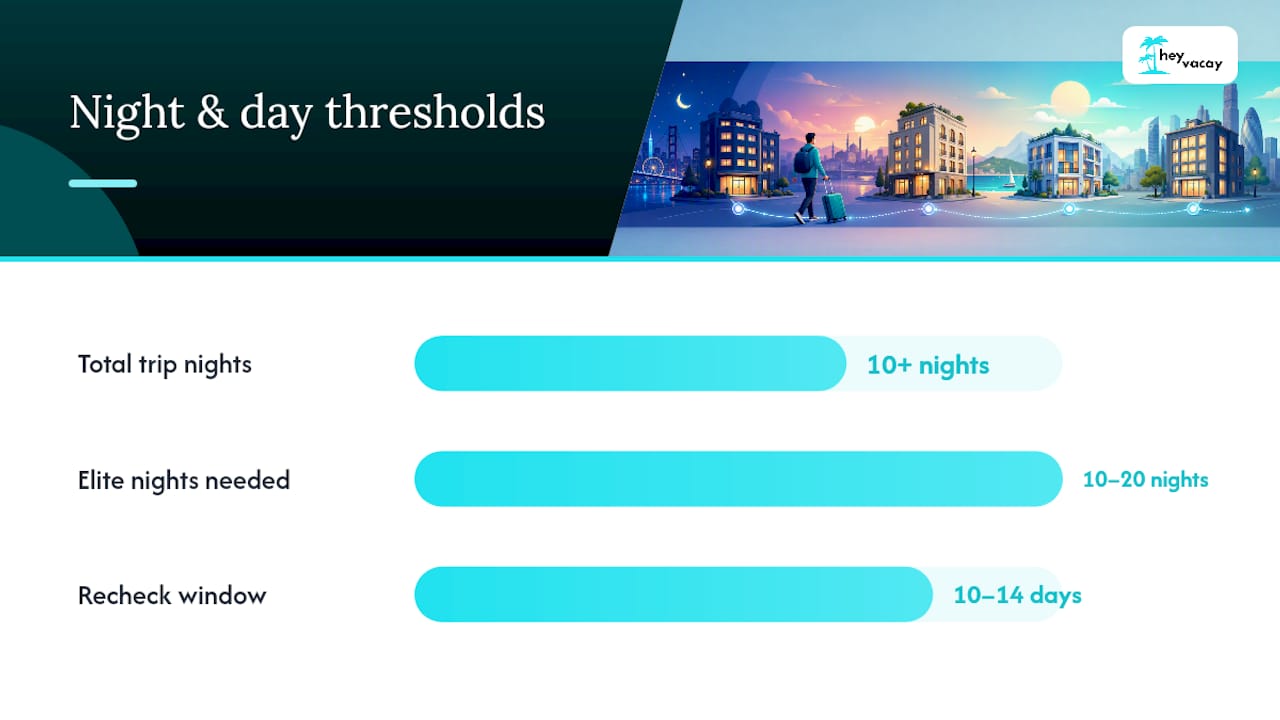
The window that matters most is 10 to 14 days before travel. This is when loose, high-supply markets tend to soften as hotels start discounting unsold rooms to avoid empty inventory. A pattern shows up consistently across travel guides and booking tools: refundable bookings made weeks out often get rebooked cheaper once that window opens, especially in cities with heavy competing supply.
Here's the practical workflow:
- Book refundable rates for every uncertain city as soon as you finalize rough dates.
- Set a calendar reminder for 10 to 14 days before check-in for each city, not just the trip start date.
- Recheck prices manually or with a price-tracking tool during that window.
- If a cheaper rate appears, book it, confirm the new reservation, then cancel the old one within its deadline.
Pro Tip: Keep a single spreadsheet or note with every confirmation number, cancellation deadline, and hotel name in one place. Trying to remember five different cancellation policies from memory is how people miss deadlines and eat a no-refund charge.
Tight, supply-constrained cities behave differently. Book those earlier and more firmly, since the cancellable inventory in a small market often disappears before the two-week window even opens. Loose markets reward patience. Tight markets punish it.
Should You Book Hotels Near the Airport or Downtown?
Transport decisions come before hotel decisions, not after. Once you know how you're arriving and leaving each city, your hotel location almost picks itself.
Arriving by train into a city center station usually means a downtown hotel wins outright, since you skip the taxi entirely. Arriving on a budget flight that lands at 11 p.m. and departs again at 6 a.m. flips that logic. A station or airport-adjacent hotel, even at a slight price premium, often beats a cheaper downtown room once you add a $30 to $50 taxi each way and the lost sleep from an early wake-up call.
Run the math before you book, not after:
- Compare the downtown rate plus round-trip transfer cost against the airport hotel rate alone.
- For early departures before 7 a.m. or late arrivals after 11 p.m., budget one "comfort night" near the airport rather than saving $40 downtown and losing three hours of sleep.
- For car-heavy legs, prioritize free parking over walkable location, since a $25 nightly parking fee erases most location savings anyway.
Pro Tip: A train-heavy European itinerary usually favors city-center hotels near the main station. A budget-airline-heavy itinerary usually favors airport-adjacent stays for at least one night per leg. Mixed itineraries need a case-by-case check, not a blanket rule.
Is It Worth Consolidating Hotel Bookings Under One Loyalty Program?
For trips spanning three or more cities, or ten or more total nights, consolidating stays within a single hotel loyalty program can pay off. Marriott Bonvoy's elite tiers are often reachable in just 10 to 20 nights per year, which lines up almost exactly with a busy multi-city trip. Hit that threshold and you start seeing real upgrades, late checkout, and free breakfast that offsets a slightly higher nightly rate.
The trade-off is real, though. Chasing loyalty status can mean skipping a better-located or better-priced independent hotel in a secondary city just to keep the streak going. That's usually not worth it.
A more practical approach: consolidate loyalty nights in your primary city, where you're staying longest and the benefits compound, then run open best-price searches for secondary and transit stops where flexibility matters more than points. You don't lose cancellation flexibility either way. Most major loyalty programs and independent booking channels both offer free-cancellation rates, so picking one over the other for points doesn't have to cost you your safety net.
- Book your longest stay through the loyalty program tied to your status goals.
- Book shorter, secondary-city stays wherever the price and location are best that week.
- Keep every booking refundable regardless of channel, and recheck the 10-to-14-day window either way.
Which Planning Tools Actually Help With Multi-City Routes?
Three distinct tool categories solve three different problems, and mixing them up wastes time.
Airline multi-centre pages, like British Airways' multi-centre vacations tool, package flights and hotels together and optimize for flight connectivity first. They're built for travelers who want a bundled result, not necessarily the cheapest possible hotel sequence.
Route optimizers solve a different problem entirely. Routely tests every possible order you could visit your cities in, up to 120 combinations for a five-city trip, and ranks them by total accommodation cost using live pricing. That's a calculation no human should try to do by hand.
Trip-mapping tools like Furkot solve a third problem: keeping your dates straight. Furkot plots accommodation options along your actual driving or transit route and pre-fills booking sites with the correct check-in and check-out dates, which cuts down on the classic mistake of booking the wrong night for a leg three cities away.
To get useful results from any of these, feed them realistic inputs:
- Mark any hotel leg you've already booked as "fixed" and leave the rest "open" for the tool to optimize.
- Enter your real transport constraints (train times, flight windows), not just city names.
- Re-verify pricing directly on the hotel or booking site right before you commit, since optimizer inventory can shift within hours.
A route optimizer is only as good as the moment you check it. Live hotel pricing moves fast enough that a result from this morning can be wrong by tonight, so the tool's job is narrowing your options, not making your final booking decision for you.
How Does HeyVacay Simplify Multi-City Hotel Planning?
HeyVacay applies this exact sequencing logic automatically. It uses AI to surface luxury hotel inventory at lower prices across every city on your route, with transparent pricing and no hidden fees layered on at checkout.
You give it your cities, rough dates, and any legs you've already locked in. HeyVacay returns sequenced hotel options, flags cities where cancellable rates make sense as your price floor, and helps you avoid the manual spreadsheet-and-calendar-reminder routine described above.
- You skip the 10-to-14-day manual recheck by letting the platform surface better rates as they appear.
- You get the same rooms typically found on higher-priced booking sites, at a lower rate.
- You keep the flexibility of cancellable bookings without tracking five different deadlines by hand.
Pro Tip: If you'd rather not run the ranking, night-counting, and rebooking workflow yourself across five cities, a platform built to do it automatically is the faster path to the same savings.
HeyVacay exists for travelers who want the sequencing logic applied without doing the spreadsheet work themselves.
How Do You Handle Different Check-In and Check-Out Times Across Cities?
Every hotel sets its own check-in and check-out window, and on a multi-city trip those windows almost never line up with your transit schedule. A 3 p.m. check-in after a 6 a.m. flight leaves you with hours to kill, and an 11 a.m. checkout before a midnight departure leaves you dragging luggage around a city all day.
Handle this at the booking stage, not the front desk. Look for hotels that explicitly offer early check-in or late checkout as a listed amenity rather than a maybe, especially in cities where you're arriving before 10 a.m. or leaving after 8 p.m. Many hotels will hold luggage even without a room ready, which solves half the problem for free.
If you're staying loyal to one chain across your trip, elite status often includes guaranteed late checkout as a standing benefit, which removes the guesswork entirely in your primary city.
For the tightest connections, book one extra partial night rather than gambling on hotel flexibility. A $60 late-checkout add-on beats wandering a train station with bags for six hours. When your schedule allows a buffer, build one city's itinerary around a slower morning specifically so the checkout mismatch doesn't cost you anything at all.
How Do You Track Reservations With Different Cancellation Policies?
A five-city trip can easily mean five different cancellation policies, each with its own deadline, and that's where multi-city plans quietly fall apart. One hotel might allow free cancellation until 24 hours before arrival. Another might lock you in seven days out. Miss one deadline and you've paid for a room you're not using.
Build a single tracking document the day you make your first booking, not after your third. A basic spreadsheet with hotel name, confirmation number, cancellation deadline, and refund amount covers it. Sort by deadline date, not by city order, so the next action item is always at the top.
Set calendar reminders two days before each deadline, giving yourself a buffer to actually act instead of noticing the date has already passed. For cities where you booked refundable rates specifically to recheck pricing later, that same reminder doubles as your prompt to run a quick price comparison before you lose the flexibility.
Group bookings by deadline urgency, not by geography. A tight-market hotel with a strict seven-day cancellation window matters more to your calendar than a flexible big-city stay you can cancel the morning of check-in.
How Do You Communicate Special Requests Across Multiple Hotels?
Special requests, whether it's a crib, a ground-floor room, dietary needs for breakfast, or a late arrival notice, get lost easily when you're juggling reservations across five properties. The fix is repetition, not cleverness.
Add the request directly in the booking notes field at the time of reservation, every single time, rather than assuming one email will cover the whole trip. Follow up with a direct email or message to each property individually about a week before arrival, since notes entered through a third-party booking channel don't always reach the front desk clearly.
If you're arriving well outside normal check-in hours at any property, say so explicitly and ask for confirmation in writing. Hotels sometimes release unclaimed rooms after a certain hour if they haven't heard from you, and a late flight shouldn't cost you your reservation.
Keep language simple and specific. "Quiet room, away from elevator" works better than a long explanation of why you need it. For accessibility needs, always confirm directly with the property rather than relying on a filter tag from a booking site, since interpretations of "accessible" vary widely between hotels and even between cities.
What Should Travel Insurance Cover for a Multi-City Trip?
A multi-city itinerary multiplies your exposure to the kind of disruption a single-destination trip rarely faces. One canceled flight can knock over three subsequent hotel bookings like dominoes, and standard trip insurance doesn't automatically treat that as one connected event.
Look specifically for a policy that covers trip interruption across multiple legs, not just trip cancellation before departure. That distinction matters once you're already on the road. If a delayed connection makes you miss a nonrefundable hotel night in the next city, interruption coverage is what reimburses that loss.
Check whether the policy covers "cascading" cancellations, where missing one leg forces changes to bookings further down your itinerary. This is more relevant on multi-city trips than almost any other trip type, since your cities are chained together by transit that any single delay can disrupt.
Keep every hotel confirmation, cancellation policy screenshot, and payment receipt in one folder as you book, since a claim after the fact is far easier with documentation gathered in real time rather than reconstructed from memory. If you're relying heavily on refundable rates as your safety net, insurance becomes a secondary layer for the situations refund policies don't cover, like a medical emergency that forces you to abandon the whole back half of your trip.
How Do You Maximize Loyalty Points Across Different Hotel Chains?
Splitting nights across multiple hotel chains on one trip is common on a multi-city itinerary, and it often means your points scatter across programs that don't talk to each other. That's not automatically a problem, but it does require a strategy instead of just booking whatever's convenient in each city.
Decide upfront which single chain, if any, is worth chasing status with this year, and concentrate nights there when the price difference is small. Booking your longest or most expensive city stay through that program usually gives the best point return, since rates and stay length both drive point accumulation more than shorter stops do.
For cities where your preferred chain doesn't have a competitive option, don't force it. Book the better independent hotel and treat those nights as outside your points strategy entirely. Trying to keep every single night inside one loyalty program on a five-city trip usually means paying more somewhere for a marginal points gain that doesn't add up to anything redeemable.
Some travelers run two loyalty programs in parallel, one for full-service hotels in primary cities and a budget-focused chain for transit stops, which captures points at both ends of the spending spectrum without forcing an awkward compromise in either direction.
How Should You Balance Savings and Convenience on a Multi-City Trip?
We accept an extra transfer or a slightly pricier room when the alternative is losing sleep before an early departure or wandering a train station for hours. That trade-off almost always favors comfort. Where we don't compromise is on refundable rates. There's rarely a good reason to lock in a nonrefundable price on a trip with this many moving parts.
Family trips lean toward booking earlier and more firmly, since flexibility across multiple kids' schedules is harder to manage than a single traveler rebooking on a whim. Solo and business travelers can push the 10-to-14-day rebooking window further, since their plans usually flex more easily.
Before committing to nonrefundable rates anywhere, test the full sequence on one sample itinerary first. Run the numbers, check the deadlines, and confirm the plan holds together before money changes hands you can't get back.
Primary Sources and Tools Referenced
- Marriott Bonvoy member benefits — elite tier thresholds cited for loyalty consolidation guidance.
- British Airways multi-centre vacations — example of airline-based multi-city packaging tools.
- Routely — route optimizer referenced for sequence-testing and live pricing.
- Furkot — trip planner referenced for date accuracy and route mapping.
Book Your Multi-City Trip With Transparent Pricing From the Start
Running the supply-ranking, night-counting, and 10-to-14-day rebooking workflow yourself works, but it takes real time across a five-city trip. HeyVacay gives you the same luxury hotel inventory found on higher-priced booking sites at a lower rate, with transparent pricing and no hidden fees added at checkout.

Whether you're a family locking in flexible rooms across three stops or a solo traveler chasing the best price in every city, HeyVacay's AI-driven search does the sequencing and price comparison work the tools above require you to do manually. You enter your cities and dates, and it surfaces options built for exactly the kind of trip this article walks through.
Start your search on HeyVacay's hotel platform and check pricing for your next multi-city itinerary before you book a single room elsewhere.
Frequently Asked Questions
What is the best way to book hotels for a multi-city trip? Rank your cities by hotel supply constraint, book the tightest markets first on refundable rates, and recheck pricing in looser markets 10 to 14 days before travel.
How many nights should I book in each city? Count actual sleep nights rather than calendar days, and use a rough three-night minimum for any city that requires a dedicated hotel booking. Shorter stops often work better as day trips.
Should I book hotels near the airport or downtown for a multi-city trip? It depends on your arrival and departure times. Train-heavy legs usually favor downtown hotels, while early flights or late arrivals often justify an airport-adjacent stay to avoid lost sleep and taxi costs.
Is it worth consolidating hotel bookings under one loyalty program? Yes, for trips with three or more cities or ten or more total nights, since elite status tiers are often reachable within that range and unlock upgrades and late checkout.
What tools help optimize a multi-city hotel route? Route optimizers like Routely.city test multiple city sequences for total cost, airline multi-centre pages like British Airways' package flights and hotels together, and trip planners like Furkot help avoid date-entry errors across multiple bookings.
Sources
- Marriott Bonvoy — member benefits
- Multi city vacations & twin centres — British Airways
- Routely
- Furkot — trip planner