
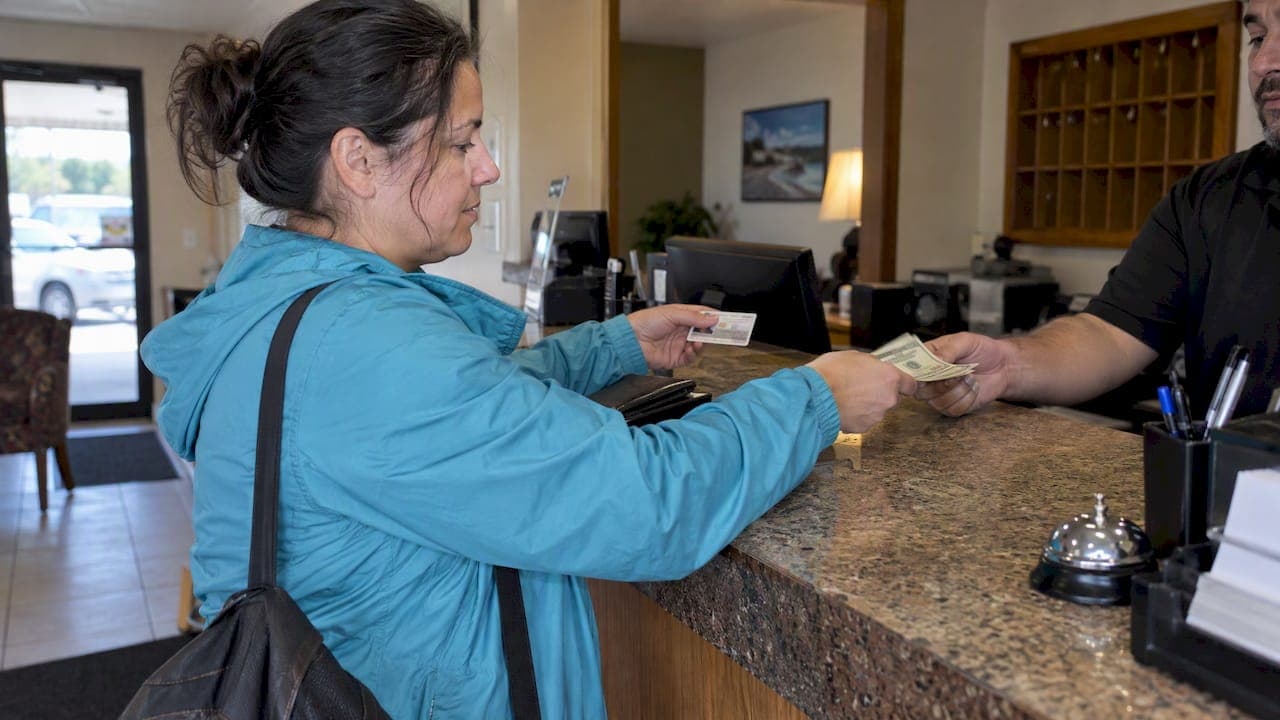
Yes, many hotels still accept cash, but most will ask for a refundable deposit, a valid photo ID, or a card on file to cover incidentals even when you pay your room rate in cash. The safest move is to confirm the property's exact policy by phone or through your booking confirmation before you arrive.
TL;DR:
- Independent motels and small inns are most flexible, while luxury and full service hotels often require a card, even when cash covers the room.
- Full service and luxury properties often request card authorizations of several hundred dollars for incidentals, while cash deposits require manual refunds.
- A pay at hotel filter does not guarantee cash acceptance, so call the property to confirm the deposit, receipt, refund timing, and required identification.
- A standard debit card may work, but its temporary hold can tie up available funds for several days; confirm whether the hotel accepts prepaid cards.
Table of Contents
- The reality: when hotels do and don't accept cash
- Payment rules, deposits and holds: what to expect at check-in
- How to find and book hotels that accept cash
- Safe alternatives and prep if a hotel prefers card payment
- Common questions staff will ask and documents to bring
- HeyVacay perspective and practical examples from our bookings
- How HeyVacay helps you book hotels and check payment policies
- Final practical checklist from the author
- FAQ
- Sources
The reality: when hotels do and don't accept cash
Whether a front desk will take your cash often comes down to the type of property, not just its policy on paper. Independent motels, roadside inns, and limited-service budget properties are generally the most flexible, since they run smaller operations with simpler billing systems and fewer corporate rules about guaranteed payment methods. Larger chains and full-service hotels tend to be stricter, and that pattern holds even within chain families that include both budget and upscale properties, like Best Western, where policies can vary by individual location.
The gap exists because hotels use card authorizations as insurance against unpaid bills. A card on file lets a property charge for a stained carpet, a missing towel, or a late checkout without chasing a guest down afterward. Cash doesn't offer that same built-in protection, so many hotels treat it as a secondary option rather than a default.
A few patterns show up consistently across property types:
- Independent motels and small inns are the most likely to accept cash with minimal friction.
- Mid-range chains often accept cash but add a refundable deposit or ID requirement.
- Luxury and full-service hotels usually require a credit card, since their incidental risk and security model depends on it.
- Extended-stay and all-inclusive resorts sometimes restrict cash entirely due to internal billing systems.
Upscale properties in particular lean on card authorizations that can run well into the hundreds of dollars, which makes a cash-only guarantee harder for them to accept, so many guests rely on premium concierge services to arrange bespoke bookings and smooth check-ins.
Payment rules, deposits and holds: what to expect at check-in
When a hotel does accept cash, it almost always pairs that acceptance with a process designed to protect the property financially. Expect three things at minimum: a request for government-issued photo ID, a cash deposit to cover potential incidentals, and a written record of how much you paid and when it will be returned.
The deposit itself functions differently from a card hold. A credit card authorization simply reserves funds without actually charging you, and it typically releases automatically within a few days of checkout. A cash deposit is real money changing hands, so the hotel has to log it manually and refund it manually, which means the process depends on staff follow-through rather than an automated system.

A card authorization for incidentals at full-service and luxury properties is often several hundred dollars, according to industry reporting on hotel deposit practices, and cash deposits at properties willing to accept them tend to track in a similar range depending on room rate and length of stay.
To avoid disputes, follow this sequence at check-in:
- Ask the exact deposit amount before handing over any cash.
- Request a signed or printed receipt showing the amount and the date.
- Confirm in writing how many days after checkout the refund will process.
- Get the name of the staff member or a reference number tied to your deposit.
- Keep your copy of the receipt until the refund actually posts or arrives.
Our guide to hotel deposit policies walks through typical hold amounts and the right questions to ask before you commit to a reservation, which is worth reviewing if a property's cash policy feels unclear.
How to find and book hotels that accept cash
Finding a cash-friendly hotel takes a little more legwork than booking the first result that comes up, but it's manageable if you know where to look. Many booking platforms include a "pay at hotel" or "pay later" filter, which flags properties willing to take payment on arrival rather than charging your card immediately at booking. That filter doesn't guarantee cash acceptance specifically, so the next step is reading the property's listed policies or messaging the hotel directly.
Calling ahead remains the most reliable method. When you call, ask these four questions in order: What is the refundable deposit amount? Will I receive a written receipt? How many days does the refund take after checkout? What ID do you require at check-in? Getting clear answers to all four before you arrive prevents the most common surprises travelers run into.
A few practical notes on timing and property type:
- Walk-in bookings at independent motels sometimes offer more flexibility on cash than a pre-paid online reservation.
- Smaller, independently owned properties tend to show higher cash acceptance than branded chains.
- Booking a reservation in advance still makes sense if you want price certainty, even when paying cash at checkout.
Our comparison of pay now versus pay at hotel options breaks down which booking method typically allows cash payment on arrival, which is useful context before you lock in a reservation.
Pro Tip: Screenshot or save the property's written cash policy from its website or your booking confirmation, since a saved copy carries more weight at the front desk than a verbal claim.
Safe alternatives and prep if a hotel prefers card payment
If a hotel insists on a card and you don't have one, a few workable alternatives exist. Prepaid debit cards function like regular cards for authorization purposes, though some hotels decline them specifically because the balance isn't tied to a traditional credit line. Standard debit cards usually work, but a hold can tie up a chunk of your available balance for several days, so check your account limits before relying on one for a hotel stay.
Some travelers split payment types: covering the room charge in cash while still providing a card for incidentals, when a property allows that mix. It's worth asking directly, since not every front desk offers this option.
A less common but sometimes available route is a direct bank deposit or a "courtesy hold" arranged with hotel management ahead of time. This isn't standard policy anywhere, and it usually requires a phone call days in advance rather than a same-day request.
- Prepaid cards: widely accepted, but confirm with the property first.
- Debit cards: workable, but expect a temporary hold on your balance.
- Mixed payment: cash for the room, card for incidentals, where permitted.
- Courtesy holds or bank deposits: rare, and dependent on manager approval.
Common questions staff will ask and documents to bring
Front desk staff follow a fairly predictable script when a guest wants to pay cash, so arriving prepared reduces friction significantly. Bring a valid government-issued photo ID, your reservation confirmation printed or saved on your phone, and enough cash to cover both the room rate and the deposit amount you confirmed ahead of time.
- Expect to be asked for ID that matches the name on the reservation.
- Expect a request for a refundable deposit, usually collected at check-in.
- Expect staff to record the deposit manually, so ask for a receipt on the spot.
- If a card-on-file is requested despite your cash payment, ask whether a cash deposit can substitute.
- If refused outright, ask to speak with a manager or request the property's written payment policy.
Our checklist on preventing incidental charge surprises covers the exact questions to ask at check-in to avoid disputes over your deposit later in the stay.
HeyVacay perspective and practical examples from our bookings
We built our resources around a simple idea: travelers shouldn't discover a hotel's cash policy for the first time at the front desk. Our post on confirming your reservation details walks through what to check 24 to 72 hours before arrival, including payment method and deposit expectations.
In practice, similar patterns are seen among budget-focused travelers: motels quote refundable cash deposits with prompt return at checkout, while mid-range hotels ask for higher deposits and longer refund windows. Policies vary by property, which is why confirming details directly is encouraged rather than assuming one policy applies everywhere. Keeping your receipt and refund timeline in writing protects you either way.
How HeyVacay helps you book hotels and check payment policies
We built our platform to take the guesswork out of comparing hotel options, including the payment details that matter before you arrive. When you search through our hotel listings, you can review property details and pricing without hidden fees, then reach out directly to confirm a cash policy before you commit.

If you run into a question about a reservation or want help verifying a property's payment requirements, our help and support page connects you with a real person rather than a bot. Search your next stay, check the payment policy before you travel, and book with the details already confirmed.
Final practical checklist from the author
Before any trip where you plan to pay cash, verify the policy by phone, ask for the deposit amount in writing, and confirm exactly when your refund will process. None of this takes more than a few minutes, and it turns a potentially awkward check-in into a routine one. Plan ahead, and cash stays a perfectly workable way to pay for a room.
— HeyVacay
FAQ
Can you walk into a hotel and pay cash?
At many independent motels and budget properties, yes, you can walk in and pay cash directly at the front desk. Larger chains and full-service hotels more often require a card for incidentals even if they accept cash for the room rate itself, so calling ahead helps avoid surprises.
Do any hotels accept cash anymore?
Cash payment is still widely accepted, particularly at independent motels, roadside inns, and many budget or mid-range chains. Luxury and full-service properties are the most likely to require a credit card, largely because their incidental billing systems rely on card authorizations.
What hotels can I pay for in cash?
Independent motels, small inns, and many budget-focused chains are generally the easiest to pay in cash, while full-service and luxury hotels tend to require a card on file. Checking a specific property's listed policy or calling ahead is the most reliable way to confirm before booking.
What is the 15-5 rule in hotels?
This isn't a standard or widely recognized hotel industry policy, and definitions of it vary depending on the source. If you've seen it referenced for a specific property, it's best to confirm directly with that hotel rather than assume it applies broadly.
How do I pay a hotel bill in cash without a card on file?
Call the property ahead of your stay and ask whether a cash deposit can substitute for a card guarantee, since policies vary by hotel. Bring a valid photo ID and enough cash to cover both the room charge and any refundable deposit requested at check-in.