

A resort is a self-contained destination built around on-site experiences. A hotel is a base for exploring what's around it. That's the entire distinction, and nearly every other difference (pricing, staffing, dining, activities) flows from it.
Industry guides frame this as two travel philosophies: hotels support "moving outward," resorts support "turning inward" to recharge without leaving the property. HeyVacay's search tool lets you filter by exactly this distinction, comparing total trip cost across both models before you book.
- If your trip revolves around a city, a conference, or hopping between attractions, skip ahead to the hotel breakdown.
- If you want to land somewhere and not leave until checkout, the resort section below is your starting point.
Key Takeaways
A resort is a self-contained destination priced for predictability, while a hotel is a convenience-focused base priced for flexibility, and the right pick depends entirely on how much you want to plan once you arrive.
| Point | Details |
|---|---|
| Core distinction | A resort is built to be the whole vacation; a hotel is built to support exploring somewhere else. |
| Compare total cost, not nightly rate | Add meals, activities, and fees to both options before deciding which is actually cheaper. |
| Match the format to the trip | Solo and business trips favor hotels; families and groups often get better value from resorts. |
| Watch for hidden fees | Resort fees and hotel parking or amenity charges can shift the total price by $20 to $50 a day. |
| Use HeyVacay to compare total price | HeyVacay's search filters by amenities and shows transparent total pricing across hotels and resorts. |
Table of Contents
- Resort vs Hotel at a Glance
- What Is a Hotel?
- What Is a Resort?
- Resort vs Hotel: Comparing Every Dimension That Matters
- How to Choose Between a Hotel and a Resort
- When a Hotel Beats a Resort on Price (and When It Doesn't)
- Sources
Resort vs Hotel at a Glance
The fastest way to tell them apart is to look at what each one is designed to do. A hotel is infrastructure for a trip happening elsewhere. A resort is the trip.
Here's the comparison stripped down to the axes that actually change your booking decision:
- Purpose: hotel = base camp for exploring; resort = the destination itself
- Location: hotels cluster near airports, downtown cores, and transit; resorts sit on beaches, mountains, or golf courses, often away from city centers
- Typical stay length: hotels skew toward 1 to 3 nights; resorts skew toward 4 nights or longer
- Amenities: hotels offer a gym, maybe a pool, sometimes breakfast; resorts stack multiple pools, spas, several restaurants, and daily programming
- Dining model: hotels rely on nearby restaurants; resorts build dining into the stay, often through all-inclusive packages
- Guest profile: hotels attract business travelers and short-trip explorers; resorts attract families, couples, and groups planning to stay put
The label itself changes how a property operates. Research on hospitality operations shows that calling a property a "resort" instead of a "hotel" shifts staffing ratios and pricing power, because resorts need activity coordinators, kids' club staff, and multiple food and beverage teams that a standard hotel simply doesn't carry.
What Is a Hotel?
A hotel exists to solve one problem: give you a clean, safe, convenient place to sleep while your actual trip happens somewhere else. That's it. The best hotels don't try to be a destination. They try to disappear into the background of whatever you're actually there to do, whether that's a work trip, a wedding, or a weekend exploring a new city.
Hotels typically cluster near airports, downtown business districts, and transit lines, because speed and consistency matter more than scenery. You want a fast check-in, a reliable Wi-Fi connection, and a lobby you can work from, not a lazy river.
Expect these standard features:
- Standard rooms or suites sized for one to four guests, not extended families
- A restaurant or grab-and-go breakfast, but rarely more than one or two dining options
- Business center, meeting rooms, or a small fitness room
- Front desk service focused on check-in speed and local recommendations, not daily programming
Most hotel stays run one to three nights. When you're scanning listings, two signals tell you what you're getting fast: does the property mention "walking distance to" anything, and does breakfast get its own line item or just a vague "amenities included" tag? Specificity on location usually means the property knows its job is proximity, not entertainment.
What Is a Resort?
A resort is built to be the entire vacation, not a stopover on the way to one. Instead of pointing you toward the city outside, it keeps you inside its own gates with enough variety that you never feel the need to leave.

Resorts commonly offer larger accommodations than hotels, including villas, private cottages, and multi-room suites designed for families or groups staying a week or more, sometimes with kitchens or extra living space built in. That's a different design brief than a hotel room meant for a two-night stopover.
Typical resort facilities go well past what a hotel offers:
- Multiple pools, often including at least one adults-only option
- A full spa with treatment menus, not just a "wellness room"
- Several restaurants and bars, sometimes six or more on larger properties
- Daily programming: kids' clubs, fitness classes, water sports, evening entertainment
- Golf courses, private beach access, or other signature draws tied to the location
Resort guests tend to book longer, plan less once they arrive, and travel as families or groups more often than solo. The all-inclusive model, where meals, drinks, and activities are bundled into one price, is common but not universal. Non-inclusive resorts exist too, charging separately for dining and extras while still offering the same sprawling amenity footprint. That distinction matters more than the resort label itself when you're pricing out a trip.
Resort vs Hotel: Comparing Every Dimension That Matters
Once you understand the core split (destination versus base), the rest is just working through how that plays out across the parts of a trip you actually plan around.
- Amenity footprint. Hotels operate compact: a gym, maybe a rooftop pool, a small business center. Resorts sprawl across acres, with amenities designed so you never run out of things to do without leaving the property.
- Dining and pricing models. Hotels expect you to eat elsewhere most nights, so their on-site dining is limited and priced à la carte. Resorts often bundle dining into an all-inclusive rate or offer several restaurants on-site, shifting the cost conversation from per-meal to per-stay.
- Activities and entertainment. A hotel might have a fitness room and a concierge desk pointing you toward local tours. A resort runs a printed daily activity schedule: yoga at 8, snorkeling at 10, trivia at 7pm.
- Location trade-offs. Hotels sit near what you came to see. Resorts often sit away from it, trading proximity to a city or airport for beachfront or mountain access. That trade-off shapes your entire itinerary, especially if you're planning day trips.
- Service level and staffing. Resorts need a higher staff-to-guest ratio than hotels, with specialized roles like activity coordinators and dedicated kids' club staff. Hotels run leaner, focused on front desk, housekeeping, and maybe one restaurant team.
- Stay length and booking patterns. Hotel bookings cluster around one to three nights, often booked closer to the travel date for business or short trips. Resort bookings run longer and get planned further in advance, since travelers are committing to one property for the bulk of their vacation.
- Practical cost cues. Nightly rate alone tells you almost nothing. Add expected meals, activity costs, parking, and any resort fee before comparing a hotel rate to a resort rate side by side.
Pro Tip: Before booking either, add up your realistic daily spend, not just the room rate. A $180 hotel room plus $90 a day in meals and Ubers can cost more than a $240 all-inclusive resort room where those costs are already covered.
The philosophy split shows up again here: hotels support active exploration, resorts support passive recharge, and most of the friction in comparing prices comes from forgetting that these are two different products solving two different problems, not the same product at two price points.
For business travelers specifically, convenience consistently ranks as the top priority when choosing where to stay, which is exactly why hotels near airports and business districts dominate that segment. Resorts rarely compete for that traveler, and they're not trying to.
How to Choose Between a Hotel and a Resort
Start with one question: what do you actually want your days to look like? If the answer involves museums, restaurants, meetings, or a specific neighborhood, you want a hotel. If the answer is "as little planning as possible," you want a resort.
Run through this checklist before you book:
- Who's traveling with you? Solo and business trips lean hotel. Families and groups of four or more often get better value from a resort's bundled pricing.
- How much do you want to plan once you land? Zero planning tolerance points toward a resort's built-in programming. Wanting flexibility points toward a hotel.
- What's your budget model? If you'd rather know your total cost upfront, an all-inclusive resort removes the guesswork. If you want to control spend meal by meal, a hotel gives you that flexibility.
- How mobile do you need to be? Renting a car and day-tripping favors a hotel's central location. Staying put favors a resort.
Before you confirm, ask the property directly:
- What exactly is included in the nightly rate, and is there a mandatory resort fee on top?
- What's the cancellation policy if plans change?
- Is kids' programming included or billed separately?
- Is airport transport included, or do I need to arrange it myself?
Red flags worth walking away from: a resort that's vague about what "all-inclusive" actually covers, or a hotel advertising itself as a "resort" with only a small pool and no real programming to back it up.
Three quick scenarios: a couple with five free days and no interest in itinerary planning fits a resort. A consultant flying in for a two-day conference fits a hotel near the venue. A family of five wanting one paid-in-full week with a kids' club fits a resort almost every time.
When a Hotel Beats a Resort on Price (and When It Doesn't)
The sticker price on a resort often looks scarier than a hotel rate, and that's exactly where the comparison goes wrong. You have to compare total trip cost, not nightly rate.
Hotels run on a pay-as-you-go model: you pay for the room, then pay separately for every meal, drink, and activity. Resorts often bundle those costs into one number, which tends to be more predictable for families and groups, while the pay-as-you-go model usually works out cheaper for solo or business travelers who barely touch on-site amenities.
Watch for hidden costs on both sides: resort fees (commonly listed separately on amenity pages and worth confirming before booking), activity surcharges, and parking, which can quietly add $20 to $50 a day to either a hotel or resort stay.
A rough example: a family of four spending $150 a night at a hotel, plus $120 a day in restaurant meals for four people, plus activity tickets, can easily clear $400 a day. A comparable all-inclusive resort room at $320 a night with meals and activities bundled in may come out ahead once you add it all up. Run that math for your specific group size before assuming the hotel is cheaper. Booking through a package or comparing rates across multiple aggregators usually surfaces the better total price faster than checking one site at a time.

Common Hotel and Resort Types You'll See in Listings
Recognizing these labels saves you from guessing what a listing actually offers.
Hotel types you'll run into: boutique (small, design-focused), business (near convention centers), airport (built for layovers and red-eyes), extended-stay (kitchenettes, weekly rates), budget (no-frills, low nightly cost), and luxury (five-star service without resort-scale grounds).
Resort types follow a similar pattern: all-inclusive (everything bundled), beachfront, wellness or spa-focused, golf, family-oriented (kids' clubs, water parks), and boutique resort (smaller-scale but still self-contained). A family suite hotel sometimes borrows resort-style multi-room layouts without the full amenity sprawl, which is one of several hybrids worth knowing. A "boutique resort" or "urban resort" often blends both categories, adding resort-style amenities to a smaller, hotel-like footprint. If neither label fits what you actually want, a vacation rental is worth a look for groups wanting more space and a kitchen without either format's overhead.
How HeyVacay Helps You Apply This Checklist
Running this comparison manually across ten browser tabs is exactly the friction HeyVacay was built to remove. Its AI-driven search compares luxury and budget properties side by side, factoring in the total price rather than just the nightly rate, so the hotel-versus-resort math from the section above takes seconds instead of an evening.
- Filter by amenities that actually matter to your trip goal (pools, kitchens, proximity to transit)
- Compare transparent pricing with no hidden fees buried until checkout
- Pull family-specific and budget-specific options side by side in one search
That's the checklist from this article, turned into filters instead of guesswork.
Why Matching the Property to the Trip Matters More Than the Label
Most booking regret doesn't come from picking a bad hotel or a bad resort. It comes from picking the wrong category for the trip you were actually planning. A hotel booked for a trip that needed a resort's structure leaves you scrambling to fill every evening. A resort booked for a trip that needed a hotel's flexibility leaves you paying for a pool you never used.
The predictability that package deals offer isn't just a pricing quirk. It's the entire reason resorts exist as a category, and it's worth respecting that when you compare the sticker price to a hotel's.
— HeyVacay
Try the HeyVacay Search Before You Book Either One
HeyVacay compares luxury and budget hotels side by side with transparent pricing, so you see the total cost of a stay before hidden fees show up at checkout.
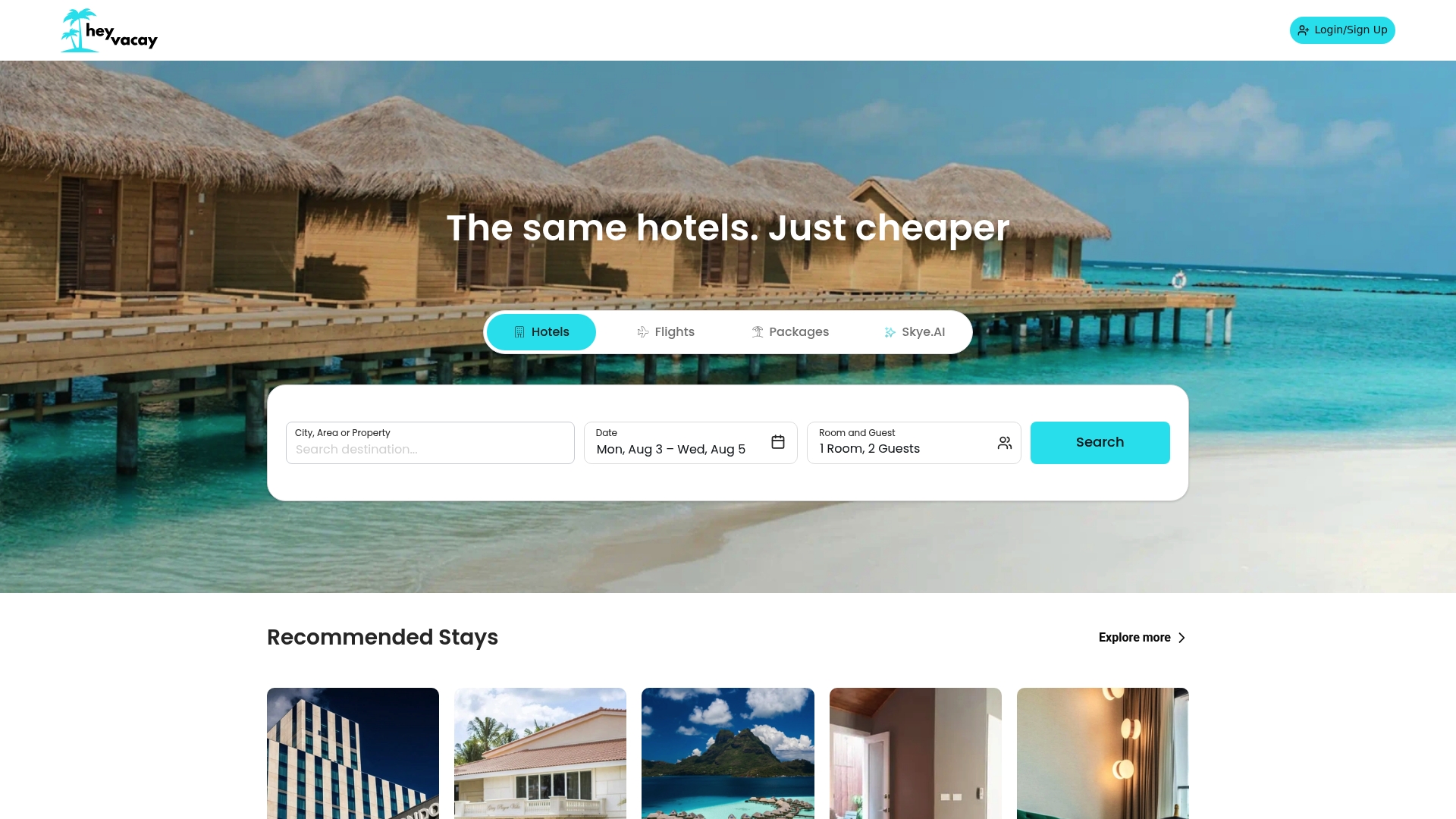
Whether the checklist above points you toward a hotel near the action or a resort you never have to leave, run the search on HeyVacay first. Enter your dates, filter by what actually matters to your trip (kitchen, pool, proximity to transit), and compare real total costs across properties instead of nightly rates alone. If your group is large enough that per-person pricing matters, HeyVacay's group rate guidance is worth checking before you commit to either format.
Sources
- Difference between hotels and resorts - Citi Travel Guide
- Resort vs. Hotel: Which accommodation suits your style? - AAA TripCanvas
- Differences between hotel and resort - Mews blog
- Hotel vs. Resort: What's the Difference? (Full Guide) - Canary Technologies