

Shoulder-season travel is worth it for most flexible travelers: hotel rates commonly drop 20 to 50 percent below peak pricing, and crowds thin out at the same time. The catch is that savings aren't automatic everywhere. HeyVacay's own booking data backs this up, but the size of the discount depends entirely on which destination and week you pick.
TL;DR:
- Hotel discounts during shoulder season can reach up to 50 percent below peak rates, but the actual savings depend on the destination and booking timing.
- Best booking windows vary: major cities offer their best rates 4 to 8 weeks in advance, while resorts may require booking 6 to 10 weeks early for maximum discounts.
- Weather unpredictability increases in shoulder season, especially in hurricane or monsoon-prone regions, making flexible plans and insurance essential.
- Regional timing differs, with Europe peaking in spring and fall, North America in late spring and fall, and tropical regions often overlapping with adverse weather seasons.
- Travelers should verify current conditions, local events, and recent prices before booking, as shoulder-season demand and prices can shift annually.
Table of Contents
- What Shoulder Season Means and Why Dates Shift by Place
- Benefits and Tradeoffs of Traveling During Shoulder Season
- When Should You Book Shoulder-Season Dates?
- Booking Tactics That Actually Capture Shoulder-Season Deals
- How to Pack and Plan for Shoulder-Season Weather Swings
- How HeyVacay Helps You Plan a Shoulder-Season Trip
- Activities and Experiences That Get Better in Shoulder Season
- How to Confirm Current Shoulder-Season Conditions Before You Book
- The Environmental Case for Traveling Off-Peak
- HeyVacay's Take on Shoulder-Season Travel
- Find Shoulder-Season Hotel Deals With HeyVacay
- Sources
- FAQ
What Shoulder Season Means and Why Dates Shift by Place
Shoulder season is the stretch between a destination's peak (high-demand, high-price) period and its off-peak (low-demand) period, when hotels and flights price somewhere in the middle but crowds thin out fast. There's no single calendar for it. Timing depends on which hemisphere you're in, when school lets out, when local festivals or conferences spike demand, and when a destination's signature activity (skiing, beaches, foliage) peaks.
That's why the same month can be shoulder season in one place and peak season 500 miles away.
- Europe: Mid-April to early June, and September through October, once summer crowds clear but weather still holds.
- North America (temperate regions): Late April through early June, and September into November.
- Southeast Asia: The windows just before and after monsoon season, which vary by country.
- Ski towns: Late spring after slopes close and late fall before snowfall.
- National parks: Weeks right before or after summer break, when trails are open but buses aren't full.
Benefits and Tradeoffs of Traveling During Shoulder Season
The upside is real and measurable. Round-trip flights from the U.S. to Europe in September or early October run 23 percent cheaper on average than the same routes in June through August, a savings of roughly $195 per ticket. Hotels follow a similar pattern, and lower occupancy means front desks have more room to say yes to free upgrades. Locals and hospitality staff also tend to be less burned out, which Lonely Planet has noted leads to warmer, more genuine interactions than you'd get during the July rush.
By the numbers: Fall flights to Europe average 23% cheaper than peak summer, while hotel rates in many destinations drop 20 to 50 percent below their high-season peak.
The tradeoffs are just as real. Weather gets less predictable, some attractions or ferries close for maintenance, and a local festival or marathon can spike prices for a single weekend inside an otherwise cheap month. Caribbean and Southeast Asian shoulder windows often overlap with hurricane or monsoon season, so check the forecast pattern before you book anything nonrefundable.
Shoulder season rewards flexible travelers, budget watchers, and anyone chasing a more local experience over a manicured one. It's a worse fit if your itinerary depends on one specific outdoor event or you can't tolerate a rained-out day.
When Should You Book Shoulder-Season Dates?
Picking the right week beats picking the right month. Here's how to narrow it down:
- Start with the regional rule of thumb. September and October work for most European city-and-beach combinations; April through June and September through November suit temperate North America; Southeast Asia's shoulder windows sit just outside monsoon dates, which shift by country.
- Find the pricing cliff. Open a flexible-date calendar view on a flight or hotel search and scan a six-week window. You'll usually see one sharp jump where prices double almost overnight. That jump is the real line between shoulder and peak, not whatever the calendar says.
- Cross-check local events. A single conference, marathon, or festival can override an entire month's pricing pattern. A quick search for "[destination] events [month]" catches most of these before you book.
- Check school holiday calendars. Family destinations swing hardest around school breaks, even in countries where the summer break falls at a different time than you'd expect.
- Confirm what's actually open. Some museums, ferries, and mountain attractions close for shoulder-season maintenance, so verify hours before you build an itinerary around them.
Booking Tactics That Actually Capture Shoulder-Season Deals
Knowing the calendar window only gets you halfway. The savings show up when you book the right way inside that window.
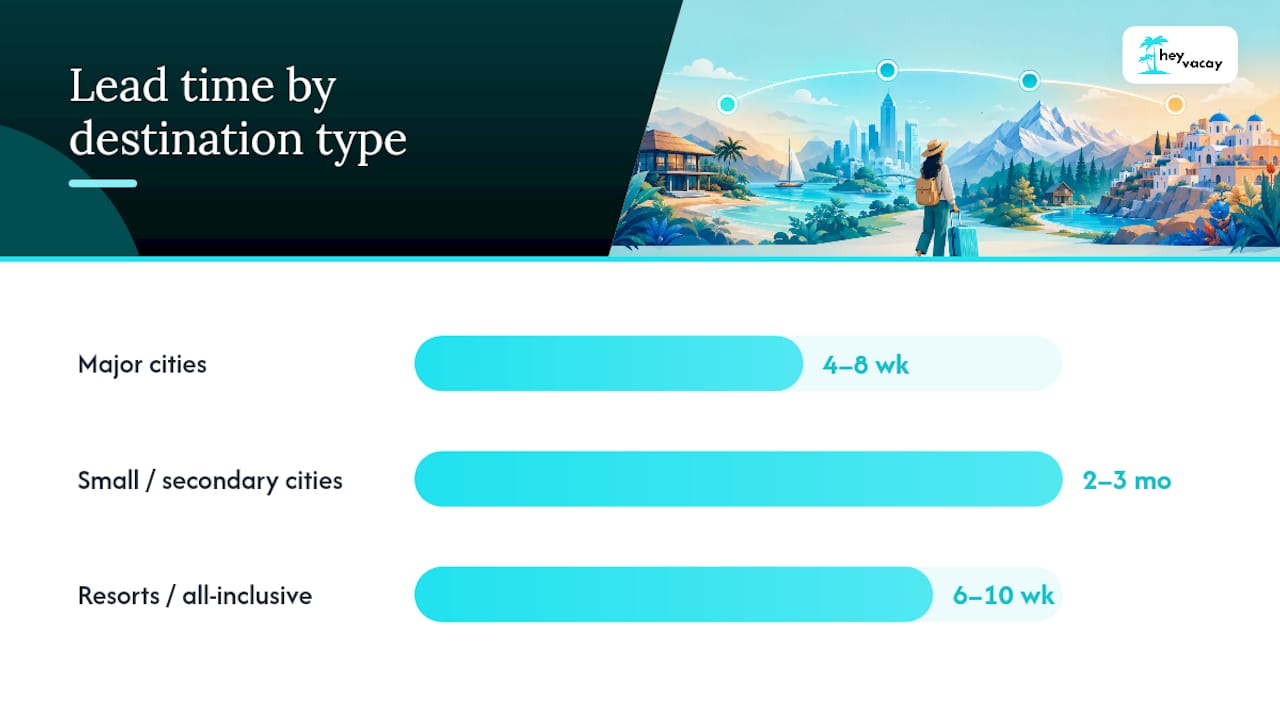
Match your booking lead time to the destination type. Major cities with year-round demand (New York, London, Tokyo) hold their best shoulder rates 4 to 8 weeks out. Small towns and secondary cities often reward booking earlier, sometimes 2 to 3 months ahead, because inventory is thinner. Resorts and all-inclusive properties tend to release their deepest shoulder discounts 6 to 10 weeks before check-in as they try to fill rooms.
A few tactics consistently outperform booking on a whim:
- Use flexible-date search views instead of fixed dates. This is the fastest way to spot the exact day prices drop, and it's a core tactic recommended by Rate Ranger's shoulder-season guide.
- Set fare and rate alerts, then book a refundable rate immediately and keep watching. If the price drops further, cancel and rebook.
- Choose midweek check-ins over weekends. Tuesday through Thursday arrivals often run 10 to 15 percent cheaper even within the same shoulder window.
- Consider a secondary city near your main destination. Hotels there often discount harder to compete for shoulder-season attention.
- Stack a cashback portal or loyalty program on top of an already-discounted rate rather than treating them as separate strategies.
Hotels frequently test length-of-stay requirements and early-booking packages during shoulder windows, a revenue-management pattern Cvent has documented across the hospitality industry. A three-night minimum with a bundled breakfast rate might beat a one-night refundable rate on total cost, so compare both before you commit.
Pro Tip: Book a refundable rate the moment you find a fair shoulder-season price, then set a calendar reminder to check back once a week until 10 days before check-in. If the rate drops, cancel and rebook. If it climbs, you're already locked in at the lower number.
For a deeper look at why rates move the way they do, HeyVacay's guide to dynamic pricing in hotels breaks down the mechanics, and the data-backed rules for best booking timing go deeper on lead-time patterns by destination type.
How to Pack and Plan for Shoulder-Season Weather Swings
Shoulder season means variable weather, so your packing list needs to flex the way your itinerary does.
- Pack in layers: a base layer, a warm mid layer, and a waterproof or windproof shell that packs small.
- Bring a compact umbrella and a pair of shoes that handle both dry pavement and a sudden downpour.
- Book at least one or two anchor nights at a reliable hotel, then build in a buffer day for weather delays or a canceled ferry.
- Buy travel insurance if you're heading anywhere near hurricane or monsoon season, especially the Caribbean and parts of Southeast Asia.
- Have a backup indoor activity ready for each outdoor day, since shoulder-season weather can flip fast.
How HeyVacay Helps You Plan a Shoulder-Season Trip
AI-driven hotel search technology can surface luxury hotel inventory with transparent, all-in pricing and no hidden fees. That combination matters most during shoulder season, when the gap between a peak-priced room and a shoulder-priced one at the same property can be dramatic.
Here's how to put it to work:
- Run a flexible-date search across your target shoulder window instead of locking in one set of dates.
- Compare refundable rates on HeyVacay against the tactics above, then hold the booking and keep watching for drops.
- Check nearby secondary cities in the same search session. Some platforms can surface comparable luxury options at lower shoulder-season rates without extra searching.
- Some platforms offer customer support lines to help with rate verification and cancellation terms before weather-dependent trips.
Activities and Experiences That Get Better in Shoulder Season
Shoulder season doesn't just save money. It changes what your trip actually feels like. Hiking trails that are packed shoulder-to-shoulder in July open up completely in late September, and popular overlooks become places you can actually sit and take in without a line behind you.
Wine regions hit their best stretch during harvest season, typically September and October in the Northern Hemisphere, when vineyards are active and tasting rooms are far less crowded than during summer weekends. Beach towns in the Mediterranean and along the U.S. East Coast keep warm water well into September while hotel rates and restaurant wait times drop fast.

City breaks benefit even more. Museums, food tours, and walking tours run with smaller groups, and guides have more time to answer questions instead of rushing to the next stop. Restaurants that require reservations weeks out in peak season often have same-day tables available.
Ski towns flip the pattern: their shoulder season falls in late spring and late fall, when hiking trails and mountain-town restaurants are open but lift tickets haven't started yet, or have already stopped. That window suits travelers who want mountain scenery without ski-season prices.
The common thread is access. Fewer people competing for the same trail, table, or hotel room means a better version of the same trip, not just a cheaper one.
How to Confirm Current Shoulder-Season Conditions Before You Book
Shoulder-season windows shift slightly year to year, and 2026 is a case in point: some destinations are seeing rising fall demand, which narrows the discount you might expect based on last year's prices. Verify conditions before you assume a deal exists.
Start with a flexible-date search on your target route. If prices stay flat across a six-week window instead of dropping at a clear point, that destination's shoulder season may be shrinking or shifting later than expected.
Check the destination's tourism board site for festival and event calendars. A single large convention or sporting event can spike hotel rates for a specific week even inside an otherwise slow month.
Look at recent weather history for your travel window, not just the seasonal average. Climate patterns have gotten less predictable, and a "typical" shoulder-season forecast from five years ago may not hold now.
Cross-check school holiday calendars for your destination country, not just your home country. A European destination's shoulder season narrows fast if it overlaps with a regional school break you didn't know about.
Finally, read recent traveler reports from the past few weeks, not reviews from a year ago. Occupancy patterns, opening hours, and even which attractions are under renovation change season to season.
The Environmental Case for Traveling Off-Peak
Spreading travel across more of the year eases pressure on the infrastructure and ecosystems that peak-season crowds strain hardest. Popular trails, coral reefs, and historic sites all show wear faster when visitor numbers spike for a concentrated stretch of the year, and shoulder-season travel spreads that impact more evenly across the calendar.
Lower occupancy also means hotels and transit systems run closer to their efficient capacity instead of straining resources during a short peak window. A half-full train in October uses less overhead per passenger than a packed one in July, and the same logic applies to water and energy use in resort towns that swell during peak months.
Destinations that lean too hard on a few peak months often see the local economy struggle during the rest of the year, while shoulder-season demand helps smooth that pattern out. Restaurants, guides, and small hotels stay in business longer when visitor spending isn't concentrated into eight or ten weeks. Choosing shoulder-season dates isn't just a personal money-saving move. It's a small vote for tourism that doesn't burn out the places people actually want to keep visiting.
HeyVacay's Take on Shoulder-Season Travel
We built HeyVacay around the idea that the "best" travel dates are the ones that match your actual flexibility, not a generic calendar rule everyone repeats. The data shows shoulder-season savings are real but uneven, so the guidance we publish leans on flexible-date pricing patterns and destination-specific checks rather than blanket advice like "always book in September." That nuance is why we keep pushing transparent, all-in pricing instead of teaser rates that fall apart at checkout. For readers who want to go deeper on booking-window data, the HeyVacay blog keeps expanding its research on when rates actually move.
— HeyVacay
Find Shoulder-Season Hotel Deals With HeyVacay
There are platforms designed to avoid the need to check multiple sites for real shoulder-season rates, using AI to search hotel inventories and present transparent, all-in pricing without hidden fees.

Run a flexible-date search on the HeyVacay hotel platform for your shoulder-season window, compare refundable rates, and keep an eye out for drops as your dates approach. If you need help sorting cancellation terms or comparing rate types before you book, the HeyVacay support page has real people who can walk you through it. Start your search now and see what a shoulder-season rate actually looks like next to a peak-season one.
Sources
- What—and When—Is Shoulder Season? - AFAR
- How to Book Fall Shoulder-Season Hotels for Less
- Shoulder Season Travel Guide 2026 | Rate Ranger
- Why 'Shoulder Season' Is Great for Travel - NerdWallet
FAQ
What Is Shoulder Season in Travel?
Shoulder season is the period between a destination's peak and off-peak seasons, when prices sit in the middle and crowds thin out noticeably. Exact timing varies by destination, but it commonly falls in spring (April through early June) or fall (September through early November) in many temperate regions, according to Forbes.
How Much Money Can You Save Traveling in Shoulder Season?
Flights to Europe in September or early October run about 23 percent cheaper than peak summer fares, and hotel rates in many destinations drop 20 to 50 percent below their peak-season price. The exact discount depends heavily on the destination, so it's worth checking current pricing rather than assuming a fixed percentage.
How Far in Advance Should You Book Shoulder-Season Hotels?
It depends on the destination type: major cities tend to hold their best shoulder rates 4 to 8 weeks out, while resorts and small towns often reward booking 2 to 3 months ahead. Using a flexible-date search on a platform like HeyVacay helps you spot the exact date a destination's price drops instead of guessing.
Is Shoulder-Season Travel Risky for Weather?
It carries more weather variability than peak season, and some regions, like the Caribbean, overlap with hurricane season during their shoulder window. Travel insurance and flexible, refundable bookings help offset that risk without giving up the savings.
Are Shoulder-Season Discounts Guaranteed Every Year?
No. Some destinations have seen rising fall demand narrow their usual discounts, so pricing patterns shift year to year. Always check a flexible-date calendar for your specific destination before assuming last year's savings will repeat.