

Pick your daily driving limit first, then book "anchor" nights in the towns that anchor your route while leaving shorter "fill" nights flexible. Use route-aware search tools to find hotels sitting directly on your driving line, lock in anchors two to four weeks out, and grab third-night or flexible-rate deals for the rest. HeyVacay works well for comparing those anchor and fill nights side by side. Reserve the anchors tonight, then save every confirmation offline before you leave the driveway.
TL;DR:
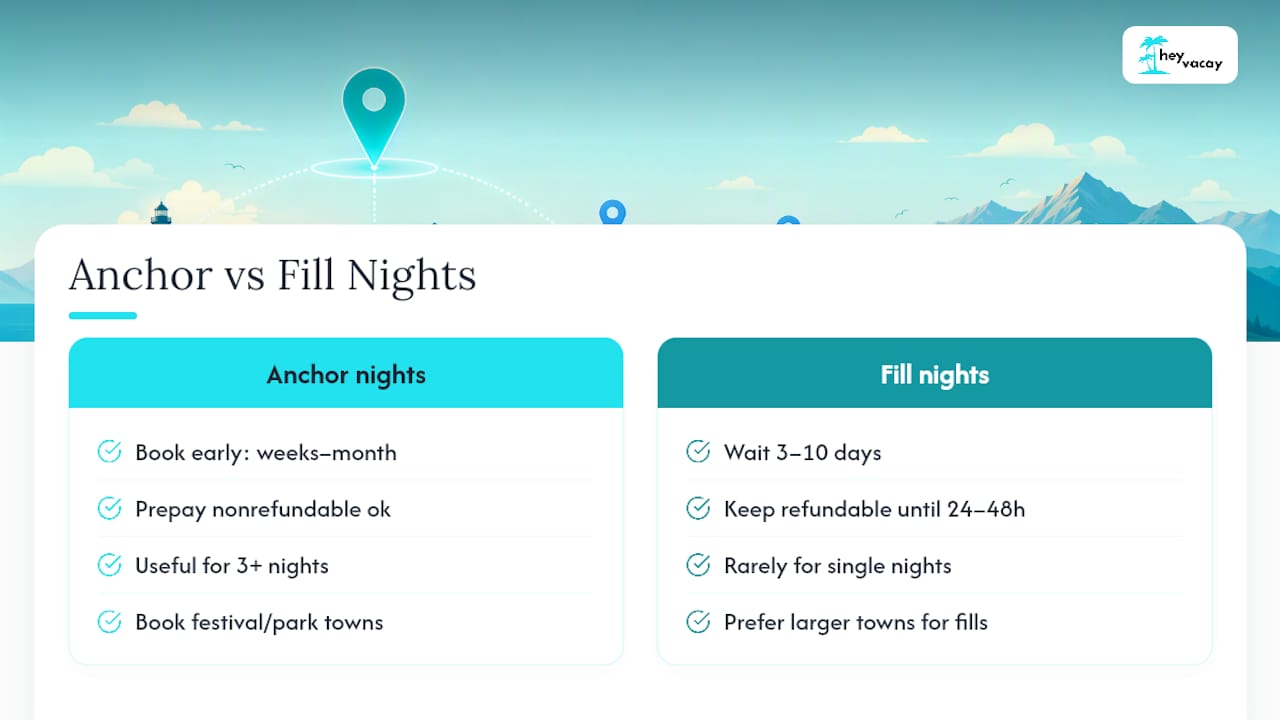
- Booking anchor nights early is essential for popular destinations or peak seasons, while fill nights should be reserved only 3 to 10 days before travel.
- Route-aware tools help visualize your entire route, allowing you to add hotels along your line and compare options efficiently, saving time and avoiding mismatched locations.
- Confirm key lodging details like free parking, pet policies, and EV charging ahead of booking to prevent surprises during late arrivals or remote stops.
- Setting a daily driving limit of six to seven hours ensures enough time for stops and reduces fatigue, regardless of the mileage involved.
- Always download or screenshot reservations and directions before departure, as rural routes may lack cell service, risking last-minute rebooking issues.
Table of Contents
- What Is the Best Way to Plan Hotels for a Road Trip?
- How Do You Find Hotels Along Your Driving Route?
- What Should You Check Before Booking a Road Trip Hotel?
- When Should You Book Hotels for a Road Trip?
- Your Day-of and Contingency Checklist
- Book Multi-Stop Road Trip Hotels Faster With HeyVacay
- What Travelers Get Wrong About Road Trip Hotels
- Tools Worth Bookmarking for Your Next Trip
- Sources
What Is the Best Way to Plan Hotels for a Road Trip?
Road trip hotel planning works best as itinerary engineering. You're not booking one hotel. You're designing a chain of overnight stops that has to survive traffic, weather, and the inevitable "let's just see one more thing" detour. The travelers who get this right treat every night on the trip differently: some nights are locked in stone, others stay loose until the day arrives.
That distinction, between anchor nights and fill nights, is the backbone of the whole process.
Step 1: Set your daily driving limit
Most people overestimate how far they'll actually want to drive. On paper, 500 miles sounds fine. In practice, after stops for gas, food, and a bathroom break every two hours, that's an 8 to 9 hour day, and you'll arrive exhausted with no energy left to enjoy the destination.
A better approach: pick a time limit, not a mileage number. Cap driving at about six to seven hours behind the wheel per day, which generally translates to several hundred highway miles depending on terrain and traffic. Mountain routes, coastal roads, and anything with a lot of stoplights cut that number down fast. Flat interstate through Kansas or Nebraska lets you push higher without the same fatigue.
Step 2: Define your anchor nights
Anchor nights are the stops that matter most: a city you specifically wanted to visit, a national park gateway town, a place where you've booked a tour or a dinner reservation. These get reserved early because they're non-negotiable and because good hotels near popular attractions sell out or spike in price with little warning.
Fill nights are different. These are the "we just need somewhere to sleep between anchor A and anchor B" stops. They exist purely to break up long drives, and their location often only becomes obvious once you know how far you actually got that day.
Step 3: Convert legs into candidate stops
Once you know your daily driving limit and your anchor cities, map the legs between them. If the drive from Denver to your anchor in Moab is 6 hours, and your daily limit is 5, you already know you need a fill night somewhere around Grand Junction, not a specific hotel yet, just a rough zone.
Work backward from daylight. Arriving at an unfamiliar hotel after dark, especially in a rural area, makes parking, check-in, and basic orientation harder and riskier. Plan each leg so you're pulling into your stop with at least an hour of daylight left as a buffer for traffic delays or a wrong turn.
Step 4: Decide what to book now versus later
Not every night deserves the same commitment:
- Book anchor nights immediately once dates are set. These carry the highest risk of sellouts or price jumps.
- Hold off on fill nights until 3 to 10 days out, when you have a clearer sense of your actual pace.
- Keep one buffer night unscheduled if your trip runs longer than five days. Road trips rarely go exactly to plan.
A few practical guardrails for this stage:
- Never schedule a fill night town you haven't sanity checked for lodging options. Some rural highway exits genuinely have one motel and nothing else within 40 miles.
- Build slack into any day involving a mountain pass, a border crossing, or a major city's rush hour.
- Treat your anchor nights as fixed points and let the map fill in around them, not the other way around.
How Do You Find Hotels Along Your Driving Route?
The old method, searching each city one by one, wastes hours and misses better options sitting a few miles off the highway. Route-aware tools flip the process: you draw the line first, then see what's actually on it.
Pilot's free road-trip planner lets you build the full multi-stop itinerary, add hotels directly onto each leg, reorder stops as plans shift, and export the whole thing for offline use. Sites built specifically around this problem, like Hotel Route Planner, search for hotels sitting along your driving line rather than just near a single point, then suggest planned overnight stays based on realistic driving distances.
Here's how to actually use these tools without wasting time:
- Draw your full route first, then add hotel search as a layer on top, not the other way around. Searching city by city before you have a route means you'll miss the gas-station-town options that turn out to be perfectly fine.
- Widen your search radius to 10 to 15 miles off the highway for fill nights. A hotel sitting a few exits past the obvious town often costs less and has easier parking.
- Save pins as you go. Most map tools let you drop a marker on a hotel without committing, so build a running shortlist for each leg instead of deciding on the spot.
- Compare two alternate legs side by side when a route has an obvious fork, coastal versus inland, for instance, before locking in which fill towns you'll actually need.
Once you've got candidates, filter for what actually matters on a road trip, which is rarely the same list that matters for a city hotel stay. Free parking (and whether it's a lot, a garage, or street parking you're on your own for) matters more than a rooftop bar. Late check-in flexibility matters if your daily limit estimate runs long. If you're driving an EV, filter specifically for on-site charging rather than "EV friendly," which sometimes just means a plug exists somewhere in the parking lot. The Road Trip Accommodation and Lodging Advisor flags exactly these checks, location versus cost, cancellation terms, and charging availability, as the ones road-trippers skip and later regret.
Pro Tip: Screenshot or download every hotel confirmation the moment you book it, even if you plan to reserve more nights later. Cell service disappears fast in mountain passes and rural stretches, and a saved PDF beats a "let me pull up my email" moment at a front desk with no signal.
Planner tools that let you attach confirmations directly to your itinerary and export the whole trip offline cut down on exactly this kind of mid-trip scrambling, particularly useful on routes with long stretches between towns.
What Should You Check Before Booking a Road Trip Hotel?
Cheapest isn't always right, and neither is closest. The best road trip hotel is the one that matches that specific night's constraints, and those constraints change from one leg to the next.
Location trade-offs come first. A hotel right off the highway exit saves time and stress after a long driving day, but it often means chain motels with little character and roadside noise. A downtown hotel gives you walkability and a better dinner scene but adds 15 to 20 minutes of driving after you're already tired, plus parking headaches in older city cores. Scenic detour properties, think mountain lodges or lakeside inns, can turn a forgettable fill night into a trip highlight, but they usually mean a longer drive to get back on route the next morning. Match the choice to how tired you'll realistically be.
Amenities worth verifying, not assuming:
- Parking: Free lot parking beats paid garage parking for anyone hauling a car full of gear; call ahead if the listing is vague about cost or availability.
- 24-hour front desk: Matters enormously if your daily leg runs long and you're arriving after 10 p.m.
- EV charging: Confirm the charger type and whether it's reserved for guests or first-come, first-served, charging policies vary wildly between properties that all list "EV charging" as an amenity.
- Pet policy: Weight limits, breed restrictions, and per-night pet fees differ by property, always confirm directly rather than trusting a filter. HeyVacay's guide to pet-friendly hotels walks through what to ask before booking.
Group and family logistics deserve their own pass. Two double rooms often cost less than one suite, but adjoining rooms with a connecting door work better for families who want kids nearby without sharing one bathroom. If you're traveling with more than one vehicle or more than four people, check whether the property can actually hold that many rooms on the same night, smaller properties sell out fast during peak season. HeyVacay's breakdown of group hotel rates covers when block-booking multiple rooms saves money versus when it doesn't.
Reading reviews for road-trip specifics means ignoring the generic five-star gushing and searching for particular phrases: "noisy," "parking lot was full," "arrived late and," these tell you more about your actual experience than an overall star rating ever will. A property with 4.2 stars and zero parking complaints beats a 4.6-star hotel where three reviews mention circling the block at midnight.
When Should You Book Hotels for a Road Trip?
Timing splits cleanly along the anchor-and-fill line. Anchor nights, especially in popular destinations during peak season, deserve booking as soon as your dates are firm, sometimes weeks or a month out. Fill nights are the opposite: booking too early locks you into a pace you might not actually keep, so waiting 3 to 10 days out usually works better once your trip's real rhythm becomes clear.
Stay-longer offers change this math when your route allows for it. Properties frequently run "third night free" style promotions, and hotels like the Newbury Boston and Four Seasons Chicago structure these as a complimentary night blended into an average nightly rate, not a flat discount off each night. That distinction matters for road-trippers because these offers work best at anchor destinations where you're staying three or more consecutive nights anyway, not for one-night fill stops where a stay-longer deal makes no sense. Four Seasons and similar programs also attach blackout dates and minimum-stay rules, so check eligibility before assuming a promoted rate applies to your travel dates.
Refundable versus prepaid comes down to how firm that night actually is. Anchor nights in destinations you're committed to visiting can often go prepaid nonrefundable for the discount, since you're not canceling anyway. Fill nights should almost always stay refundable until 24 to 48 hours out, given how often road trip pacing shifts.
Community discussion on r/roadtrip consistently backs a simpler last-minute tactic: aim fill nights toward larger towns rather than tiny highway exits, since bigger towns carry more inventory and give you real options if your first choice sells out same-day. During peak summer travel or major regional events, last-minute searches in small towns can spike well above what the same room cost a week earlier, so if you know you're hitting a festival town or a national park entrance during high season, that's exactly the night to book as an anchor, not leave for the road.
Tools focused on dynamic pricing patterns can help you spot when rates are trending up for a specific date, useful intelligence before deciding whether to lock a fill night early or gamble on waiting.
Your Day-of and Contingency Checklist
Twenty-four hours before arrival, run through a short list rather than trusting memory:
- Confirm the reservation is still active and pull up the confirmation number, not just the email subject line.
- Check parking instructions specifically. Some properties require a code, a separate garage entrance, or advance notice for oversized vehicles.
- Note the check-in window and after-hours contact number. If you're running late, call ahead. Most properties will hold a room with a heads-up call; almost none will hold it without one.
- Recheck your arrival time against sunset if you're on an unfamiliar rural route. Adjust your last stop of the day if you're cutting it close.
If you pull up to a property that's overbooked, doesn't match its listing, or feels wrong for any reason, don't argue it out in the lobby at 11 p.m. Ask for a same-brand referral or a nearby comparable property first, most front desks will help arrange this to avoid a bad review. If that fails, pull up your saved shortlist of nearby alternates, this is exactly why building that list during the planning stage in the tools section matters.
Pro Tip: Download or screenshot your confirmations, driving directions, and the hotel's direct phone number before you lose signal, not after. A folder of PDFs saved to your phone costs nothing and has saved more than one road trip when cell service vanished exactly when a rebooking call was needed.
Book Multi-Stop Road Trip Hotels Faster With HeyVacay
The platform is built around the anchor-and-fill workflow this article walks through: search multiple destinations at once, compare pricing across each stop, and see straightforward rates without hidden fees stacked on at checkout.
When you're checking a listing for a road trip stop, verify the same details every time: parking type and cost, the cancellation window, check-in hours, and whether pet or EV charging notes are listed directly on the property page rather than buried in a policy PDF. For anchor nights in well-covered destinations, comparing options side by side on HeyVacay usually turns up better rates than booking each city separately. For genuinely remote stops, a one-motel highway exit with no real alternative nearby, a direct phone call to the property can still be your fastest, most reliable option. HeyVacay's support and policy details page is worth a look if you want to confirm cancellation terms before locking in a nonrefundable anchor night. Start by mapping your route, then pull up HeyVacay to compare your anchor nights before prices shift.
What Travelers Get Wrong About Road Trip Hotels
The single biggest mistake isn't a bad hotel choice, it's an unrealistic driving estimate that cascades into every booking decision after it. Someone plans a 500 mile day, hits construction and a wrong turn, and arrives two hours later than expected to a hotel with no late-arrival policy and a parking lot that fills up by 9 p.m. Every other decision downstream gets rushed.
The second mistake is skipping the parking check specifically. People verify star ratings, breakfast inclusion, even pillow types, but rarely confirm whether parking is free, guaranteed, or even on-site. That's the detail that ruins a midnight arrival.
The third: leaving every single night unbooked "for flexibility." Some flexibility is smart. Total flexibility means competing for rooms in a town you didn't realize was hosting a marathon that weekend.
Fix all three with one habit: book your anchors the day your dates are firm, and build a habit of glancing at parking policy before glancing at the photos. It's a small reordering of priorities that prevents most of the bad nights people end up complaining about later.
— HeyVacay
Tools Worth Bookmarking for Your Next Trip
For mapping multi-stop routes and saving hotel picks along the way, try Pilot's road trip planner or Hotel Route Planner. For a real example of stay-longer pricing, look at how the Four Seasons Chicago structures its third-night offer, and see HeyVacay's guide on stopover hotel deals for more tactics.
Sources
- Free Road Trip Planner: Scenic Routes, Best Stops | Pilot
- Road Trip Accommodation and Lodging Advisor – The Tool Collective
- Hotel Route Planner – Road Trip Planner for Hotels and Motels
- Chicago Luxury Hotel Offer | Third Night Free | Four Seasons Chicago