
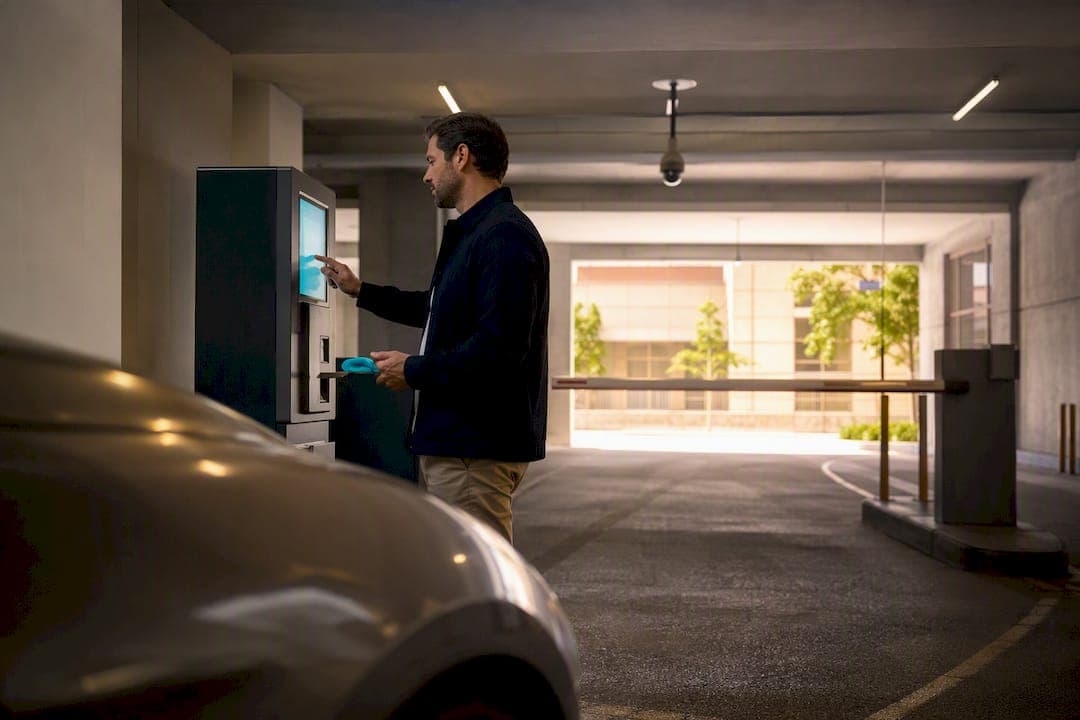
Yes, most hotels charge for parking, and the amount swings wildly by city and by whether you self-park or hand your keys to a valet. Expect anywhere from free to $75 or more a night. Before you book, check the parking rate on the listing or call the front desk. At check-in, say so if you're arriving without a car. At checkout, read your folio line by line before you sign.
TL;DR:
- Parking rates can range from free to over $75 per night, with downtown city hotels often charging $45 to $95 for self-park and valet.
- Valet parking usually costs 30 to 60 percent more than self-park, with additional tips raising total expenses significantly over multiple days.
- Mandatory parking fees are often bundled into resort fees or billed regardless of actual car use, making it essential to check your folio carefully.
- Booking with free parking filters, confirming rates directly, and comparing nearby public garages can help minimize parking costs upfront.
- Regional differences are stark, with high-cost markets like San Francisco and New York averaging $60 or more nightly, while suburban hotels may charge less or offer free parking.
Table of Contents
- Hotel Parking Rates: Self-Park vs. Valet by City
- Why Hotels Charge Parking Fees in the First Place
- Mandatory Parking Fees vs. Resort Fees, and How to Get One Removed
- How to Avoid or Lower Parking Fees Before You Even Check In
- Regional Parking Price Guide: What to Expect City by City
- What the Data and the Experts Actually Say About Fighting Parking Fees
- Why Total Price Transparency Matters More Than the Room Rate
- Check the Real Cost Before You Book Your Next Stay
- Sources
Hotel Parking Rates: Self-Park vs. Valet by City
The price gap between parking your own car and handing it to a valet is bigger than most travelers expect, and it compounds fast on a multi-night stay. In major downtown markets, self-park typically runs $45 to $75 a night, while valet climbs to $65 to $95. Suburban and airport hotels usually charge far less, and plenty still throw parking in free.
By the numbers: Industry trackers put the average hotel parking fee in the mid $40s per night nationally, with New York, San Francisco, and Chicago averaging $60 or more.
Valet isn't just pricier upfront. Valet service tends to run 30 to 60 percent higher than self-parking, and the tip you hand the attendant every time your car comes back adds a second, ongoing cost that self-parkers never see. Stay four nights and retrieve your car twice a day, and those $2 to $5 tips alone can add another $30 to $50 to your bill.
A few variables push the number up or down before you even get to the base rate:
- In/out privileges. Some hotels charge once per stay for unlimited comings and goings; others bill you every single time your car leaves the garage and comes back, which can turn a $50 rate into $150 fast if you're out sightseeing twice a day.
- Oversize and EV surcharges. Trucks, SUVs, and vans often carry an extra $10 to $25 a night, and electric vehicle charging spots sometimes carry their own premium on top of the base parking fee.
- Occupancy taxes and city fees. Parking charges are frequently taxed the same way room rates are, so a $50 fee can land closer to $56 or $58 once local tax is applied.
- Tipping culture. Valet tips aren't optional in practice, even when they're optional on paper. Skip the tip and you risk slower service or an awkward wait the next time you need your car.
Where you stay matters more than almost anything else. Downtown properties in dense cities have no room to build surface lots, so they either lease garage space at premium rates or build structured parking that costs a fortune to maintain, and that expense gets passed straight to guests. Airport hotels and suburban properties, by contrast, usually sit on land that was cheap to acquire, so free parking is often part of the package rather than an add-on.
Resort and casino properties add their own wrinkle. Many bundle parking into a mandatory resort fee rather than billing it separately, which means you're paying for it whether you use the garage or not. That distinction becomes important later, when it's time to challenge a charge you don't think you owe.
If you're weighing whether a hotel's other perks make a high parking fee worth it, it helps to look at what else is bundled into the stay. Some properties fold parking into a package with breakfast or lounge access, and certain hotel amenities genuinely offset their cost once you add up what you'd pay for the same things separately.
Why Hotels Charge Parking Fees in the First Place
Parking isn't an afterthought on a hotel's balance sheet. It's a real profit center, and hotels have gotten more aggressive about billing it as one. Parking can add roughly 19 to 31 percent in additional revenue relative to a hotel's average nightly room rate, with the higher end of that range showing up at properties that offer valet.
That number explains a lot about why parking fees keep climbing even as room rates fluctuate. A garage costs a hotel roughly the same to operate whether it's half full or completely full, so every dollar charged above the operating cost is close to pure margin. Land in a dense downtown core is expensive to buy, expensive to build on, and expensive to maintain, especially structured garages with elevators, security, and staffing. Hotels recover that sunk cost through nightly fees rather than folding it into the room rate, partly because a lower headline room rate ranks better on booking sites and comparison searches.
A few forces are pushing parking fees higher and making them harder to avoid:
- Falling drive-in demand hasn't lowered prices. Fewer guests arrive with cars in major cities with strong transit and rideshare options, but that hasn't pushed rates down. It's pushed them up, because hotels lean on the guests who do drive to cover fixed garage costs.
- Captive demand kills price sensitivity. Once you've checked in downtown at 11 p.m. with a rental car, you're not driving around looking for a cheaper garage. Hotels know this and price accordingly.
- Mandatory conversion boosts guaranteed revenue. Some properties have shifted from "optional if you have a car" to a flat mandatory fee applied to every reservation, because it guarantees revenue instead of leaving it up to who happens to drive.
That last point is where things get contentious, because it means guests without cars sometimes get billed for parking they never used.
Mandatory Parking Fees vs. Resort Fees, and How to Get One Removed
Mandatory parking charges function almost exactly like resort fees. Both get added to your folio regardless of whether you use the amenity, and both raise the same disclosure question: did the hotel show you this cost clearly before you booked, or did it show up as a surprise line item at checkout? Consumer reports document cases where guests were billed a parking fee despite never bringing a car, which is the clearest sign the charge has drifted from "service fee" to "mandatory revenue line" in practice. If you're trying to understand how these bundled charges compare to genuine resort-style amenity fees, the parallel is worth knowing before you argue your case.
Here's the dispute path that actually works, based on the steps travel columnist Christopher Elliott lays out for readers who get hit with an unfair parking charge:
- Check your folio line by line before you leave the property. Catching the error at checkout, while you're still standing at the desk, is far easier to resolve than catching it three weeks later on a credit card statement.
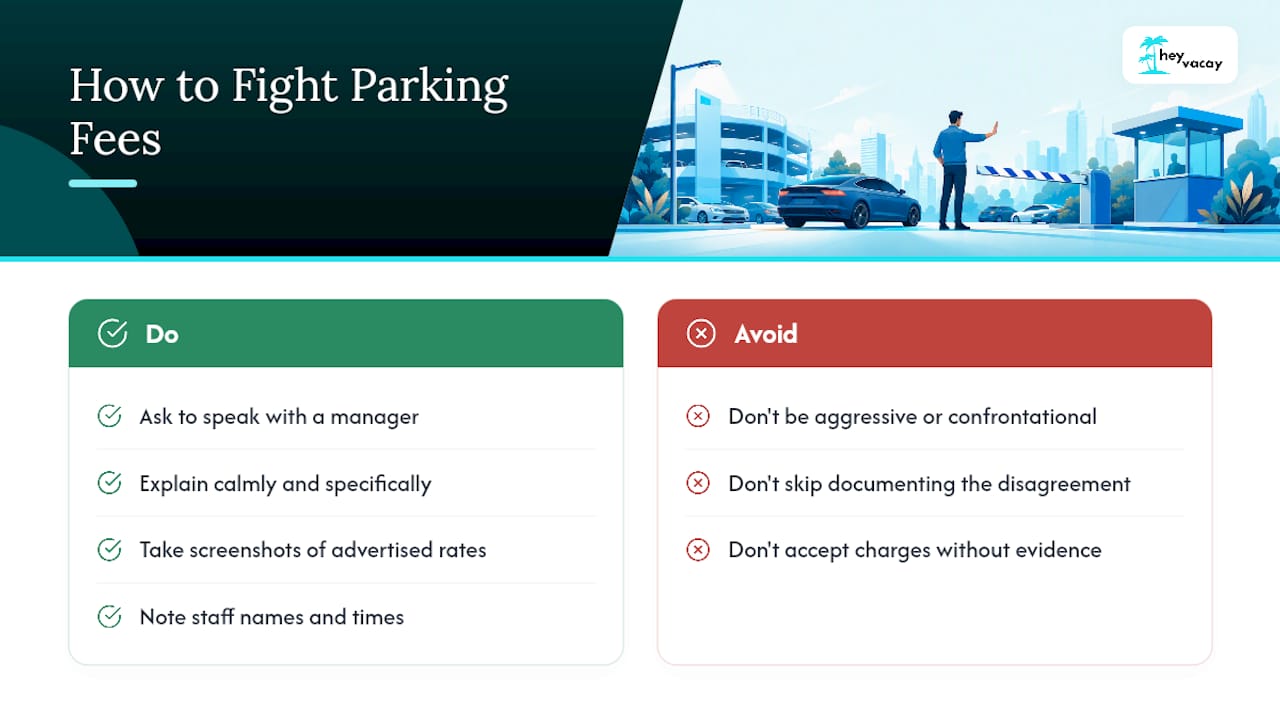
- Escalate to a manager on-site, calmly and with specifics. Front-desk staff often can't remove fees on their own authority. Ask directly for a manager and state plainly that you didn't have a car, or that the fee wasn't disclosed at booking.
- Dispute the charge with your card issuer if the hotel won't budge. Frame it as "services not received." Cardholders have real protection here through the Fair Credit Billing Act, which covers exactly this kind of billing error.
Pro Tip: Take a photo of your reservation confirmation and any booking page showing the parking rate (or lack of one) before you travel. If a manager pushes back, having a screenshot in hand turns "I think I was overcharged" into "here's the rate you advertised."
Keep a simple paper trail: your check-in notes, a photo of the folio, and the name of anyone you spoke with. If a property refuses to budge and your card issuer denies the dispute, most states have a consumer protection office that handles unresolved billing complaints, and a documented paper trail is what makes that complaint stick.
How to Avoid or Lower Parking Fees Before You Even Check In
The smartest move happens before you book, not after you're standing at the garage gate wondering what it'll cost to get your car back. Run the real math: take the room rate, add the nightly parking fee, then apply your local occupancy tax to the total. A $180 room with a $55 parking fee and 15 percent combined tax isn't $235 a night. It's closer to $270.
One consistent finding across cost comparisons: running the true nightly cost, room plus parking plus tax, flips plenty of booking decisions toward the free-parking option, even when that hotel's sticker room rate looks higher at first glance. Parking fees compound every single night, while a slightly higher room rate doesn't.
A handful of moves, done in the right order, cut real money off your total:
- Filter for free parking during your search. Most booking platforms let you filter by amenity, and skipping this step is the single most common way travelers overpay without realizing it.
- Call the property directly to confirm the rate. Listings and third-party sites sometimes show outdated parking fees, and a two-minute call before you book can save you from an unpleasant surprise at check-in.
- Check nearby public garages before assuming the hotel lot is your only option. In cities like Chicago or Boston, a public garage a few blocks away can run half the hotel's rate, and apps that show real-time garage pricing make comparing genuinely fast.
- Pay by credit card rather than debit. Kiplinger's advice on avoiding annoying hotel fees is straightforward: a credit card preserves your right to dispute a charge later, and a debit card mostly doesn't.
At check-in, a few more words can save you real money. Tell the desk clerk directly that you don't have a car, and ask them to note it on your reservation. If you're a loyalty member, ask whether your tier includes complimentary parking. Many mid-tier and top-tier hotel loyalty programs do, and desk staff won't always volunteer it unless you ask. Some premium credit cards bundle parking credits or waived resort fees into their travel benefits too, so it's worth checking your card's benefits guide before you assume you have to pay full rate. If you're deciding between paying for the room now or settling up at the property, the distinction matters here too, since how and when you pay affects your dispute leverage later.
Regional Parking Price Guide: What to Expect City by City
Parking costs vary enough by region that a rate you'd consider outrageous in one market is completely normal in another. A quick benchmark helps you spot when you're being overcharged versus when you're just paying the going local rate.
- Las Vegas. Strip properties publish separate weekday and weekend parking rates, and many still offer locals' discounts or free validation for the first few hours, which makes Vegas one of the few major markets where a little research still finds you a real discount.
- New York and San Francisco. These sit at the top of the national range, frequently averaging $60 or more per night for self-park, with valet at luxury properties climbing well past $80.
- Mid-size cities and suburban properties. Parking here is often free or capped under $20 a night, since these hotels typically own surface lots rather than paying for structured garages.
The pattern holds across nearly every market: density drives price, and land scarcity is the real culprit behind the highest rates.
What the Data and the Experts Actually Say About Fighting Parking Fees
The numbers back up what frustrated travelers have suspected for years. Parking has become one of the most disputed line items on a hotel folio, right alongside resort fees, and the people who study this closely say the fix is almost always procedural rather than confrontational.
"Ask to speak with a manager, explain the situation clearly, and if that doesn't work, dispute the charge with your credit card company," is roughly how Christopher Elliott frames the successful playbook for reversing an unfair hotel charge, based on cases where guests got fees removed simply by escalating calmly and documenting the disagreement.
Average nightly parking fee nationally: mid-$40s, with New York, San Francisco, and Chicago running $60 or higher.
The common thread in successful fee removals isn't aggression. It's documentation: a screenshot of the advertised rate, a note of who you spoke with, and a calm, specific ask.
Why Total Price Transparency Matters More Than the Room Rate
The room rate you see first is almost never the number you actually pay, and parking is usually the biggest reason for that gap. Some booking platforms are built around the idea that travelers deserve to see the real total cost before they commit, not a low headline rate that balloons once parking, taxes, and fees get added at checkout.

That means surfacing known fees as part of the comparison, not burying them in fine print you only find after booking. When you can see parking costs alongside the room rate itself, you can weigh a slightly pricier hotel with free parking against a cheaper one that nickel-and-dimes you at the garage, and actually compare them fairly.
Transparent pricing isn't a marketing line. It's the difference between booking with confidence and getting an unpleasant surprise at checkout.
— HeyVacay
Check the Real Cost Before You Book Your Next Stay
Every dollar you save on parking is a dollar you don't have to fight for at checkout. HeyVacay surfaces total pricing up front, including the fees that competitor sites tend to bury until you're already committed, so the number you see when comparing hotels is closer to the number you'll actually pay.

Before you lock in a reservation, pull up the hotel's parking policy on HeyVacay and check whether self-park, valet, or free parking applies to your dates. If a listing's parking rate looks unclear, HeyVacay's help and support page can walk you through verifying it before you pay. A few minutes of checking now beats a disputed charge on your bill later.
Sources
- Elliott
- Hotel parking fees are out of control. Here's how to fight them — USA TODAY
- Hotel parking fees guide — Hoteliers Choice