

The single most effective move is to find the lowest publicly available rate on Google Hotels or an OTA, then call the hotel directly and name that exact price — this is why knowing Why Book Direct Rentals: Save More, Get More matters. Ask the front desk or reservations to match or beat it, and bring loyalty membership or an AAA, AARP, or military card as proof. If they won't touch the cash rate, push for free breakfast, parking, or a room upgrade instead.
TL;DR:
- Booking direct and matching or beating the lowest public rate can often secure free extras like breakfast or upgrades, saving money overall.
- Comparing rates from Google Hotels, major OTAs, and the hotel's website, especially with proof of lower prices, is key to effective negotiation.
- Midweek bookings, shoulder seasons, and last-minute availability provide better leverage for rate discounts and upgrades.
- Having screenshot proof and a specific, plausible highest price increases the chances of success during negotiations.
- Using AI tools to compare market rates before calling hotel staff can improve negotiation outcomes, especially for multiple properties or longer stays.
Table of Contents
- How to Negotiate Hotel Rates: A Priority Checklist
- How to Prepare Before You Call
- Who to Call and What to Say
- Negotiating Extended Stays and Group Bookings Solo
- What to Do After You Book
- Using Reviews and Social Proof to Strengthen Your Ask
- A Step-by-Step Checklist You Can Run Today
- When to Escalate to a Manager or Let a Tool Do the Work
- HeyVacay's Perspective on Stacking These Tactics
- Try an AI-Assisted Search Before Your Next Call
- Sources
How to Negotiate Hotel Rates: A Priority Checklist
Not every tactic pulls equal weight. Work through these in order.
- Scan the market first. Check Google Hotels and one OTA from each major booking group (Booking Holdings, Expedia Group) to find the true floor price for your dates.
- Check the hotel's own site. Signing up for a free loyalty account often unlocks member-only rates roughly 10 to 20 percent below the public price.
- Flash your affiliations. AAA, AARP, military, and student discounts frequently knock a small to moderate percentage off the rack rate at participating properties.
- Call and name a price. State the lowest number you found and ask the hotel to match or beat it, since doing so lets them skip the OTA commission.
- Play the calendar. Midweek stays, shoulder season, and last-minute openings all shift leverage in your favor depending on how full the hotel is.
- Negotiate extras if the rate won't move. A free upgrade, late checkout, or comped parking can be worth more than a small cash discount.
Run through all six before you give up on a property. Most travelers stop after step one and leave money on the table.
How to Prepare Before You Call
A hotel negotiator with a screenshot and a specific number gets a different response than someone who just asks, "Can you do any better?" Preparation is what turns a vague request into a real negotiation.
- Pull rates from at least two sources. Compare Google Hotels against one OTA tied to Booking Holdings or Expedia Group. If the numbers match, that's your real floor.
- Check the rate calendar for slack. A wide-open calendar with lots of remaining inventory signals the hotel needs bodies in beds, which gives you room to push.
- Calculate your named price. Take the lowest rate you found, subtract a small buffer (5 to 10 percent), and that's your opening ask. It has to sound plausible, not insulting.
- Screenshot everything. Save the OTA listing, the date range, the cancellation terms, and the price. You'll want these ready if the front desk asks for proof.
Pro Tip: Screenshot the OTA rate with the date and time stamp visible. A hotel employee is far more likely to honor a match when you can show, not just tell, what you found.
Understanding dynamic pricing also helps you time this right. Hotels adjust rates by demand in real time, and low occupancy windows are exactly when staff have the authority to say yes.

Who to Call and What to Say
The person who answers the phone matters more than most travelers realize. Front desk staff can usually only apply pre-approved discounts. Reservations agents have more pricing flexibility, especially for stays booked more than a week out. For group blocks, multi-week stays, or anything unusual, ask directly for a sales manager or the general manager.
Timing matters too. Call mid-afternoon on a weekday, after the morning checkout rush and before the evening arrival wave. Avoid Friday and Saturday, when leisure demand is highest and staff have the least room to negotiate.
Here's a script that works:
- "Hi, I'm looking at a stay for [dates]. I found a rate of [X] on [platform]. Can you match or beat that if I book directly with you?"
- If they hesitate: "I'd rather book direct so I can call if something comes up. Is there a member rate or any flexibility on that price?"
- If the cash rate is fixed: "Understood. Is there any way to include breakfast, parking, or a room upgrade at that rate?"
- If still stuck: "Would it be possible to speak with a manager about this?"
The reason a named number works better than a vague request is simple:
Stating an exact price you're willing to pay turns an open-ended discussion into a yes-or-no decision. It removes the guesswork for the person on the phone and forces a faster answer, because naming a price anchors the whole negotiation instead of leaving it open to interpretation.
If reservations says no, don't argue the same point twice. Ask politely to be transferred to a manager, explain you have a specific rate in hand, and repeat the ask once. Two clean attempts beats five frustrated ones.
Negotiating Extended Stays and Group Bookings Solo
Hotels give their best rates to groups and long stays because both reduce their marketing cost and fill rooms with certainty. You can borrow those same levers even as a solo traveler or a small party.
- Offer a commitment. A confirmed 7 to 14 night stay, even solo, often qualifies for a weekly or monthly discount that beats the nightly rate by a wide margin.
- Use simple RFP language for groups. State your dates, number of rooms needed, and willingness to sign a room block agreement. Hotels take this more seriously than a casual phone inquiry.
- Offer flexible dates. Telling a sales manager "any three nights between the 10th and the 20th work for me" gives them room to slot you into low-demand nights.
- Ask for a split-stay alternative. If a hotel won't budge on a long block, splitting the stay across two properties sometimes unlocks two separate "new guest" or first-booking rates.
- Fall back to value-adds. When a hotel prefers full-price commitment over any discount, ask for free parking, late checkout, or a suite upgrade instead.
Reading up on group hotel rate strategies or how to secure corporate-style discounts without a company account gives you more scripts built specifically for these scenarios.
What to Do After You Book
Booking the right rate today doesn't mean you're locked into it. Hotel prices move constantly, and a free-cancellation rate keeps your options open.
- Always book with free cancellation unless the nonrefundable rate is dramatically cheaper and your dates are locked.
- Set price alerts on Google Hotels or your OTA of choice so you're notified if the rate drops.
- Rebook before the cancellation deadline if a lower rate shows up, then cancel the old reservation and confirm the new one.
- File a best-rate guarantee claim if the hotel brand offers one. Keep your screenshot and booking confirmation ready, since most brands require proof within 24 hours of booking.
Booking within a week of your stay can save around 35% domestically and 25% internationally in some windows, but that gamble cuts both ways. It also shrinks your choice of rooms.
Pro Tip: Book the free-cancellation rate first, then treat the days before your cancellation deadline like a countdown clock — check prices daily and rebook the moment something better appears.
Using Reviews and Social Proof to Strengthen Your Ask
A hotel's own reputation can become a quiet bargaining chip. If you've stayed at a property before and left a strong review, mention it. Front desk staff and managers remember repeat guests who publicly vouch for them, and many are willing to extend a small courtesy rate or upgrade to keep that relationship going.
The same logic works in reverse, carefully. If a hotel has a run of recent negative reviews about slow service or maintenance issues, that's often a sign of low occupancy or a property trying to rebuild trust. That's leverage, not an excuse to complain. Frame it gently: "I noticed a few reviews mentioning noise on lower floors. Any chance I could get a quieter room at the rate we discussed?" You're using public information to ask for value, not to be difficult.
Loyalty tiers double as social proof too. A Gold or Platinum status shows the hotel you're a repeat customer worth retaining, and staff at the property level often have discretion to extend small perks or price matches to status members even outside the official benefits chart. Mentioning your tier status early in a call, before asking for anything, sets a cooperative tone rather than a combative one.
If you're negotiating a group block, referencing your organization's or company's public reputation, event history, or prior stays at sister properties within the same brand can also carry weight. Hotels want group bookings that reflect well on them and are less likely to cause problems, so a clean track record is worth mentioning out loud.

A Step-by-Step Checklist You Can Run Today
Print this or save it to your phone before your next call.
- Search Google Hotels and one major OTA for your exact dates and room type.
- Check the hotel's direct website for a sign-in or member rate.
- Note any applicable affiliations: AAA, AARP, military, corporate, or student.
- Calculate your named price using the lowest rate minus a small buffer.
- Screenshot the rate, the dates, and the cancellation policy.
- Call between 2 and 5 PM on a weekday, avoiding weekends.
- Open with your named price and ask for a match or beat.
- If declined, ask about value-adds: breakfast, parking, upgrade, late checkout.
- If still declined, ask to speak with a manager and repeat your ask once.
- Book with free cancellation and set a price alert for your dates.
- Rebook if a better rate appears before your cancellation deadline.
Following this in order takes less than fifteen minutes and covers nearly every lever a hotel actually has available.
When to Escalate to a Manager or Let a Tool Do the Work
Front desk staff can usually approve small discounts or a free add-on. Ask to be transferred as soon as you sense you've hit the front desk's ceiling. Don't repeat the same pitch to three different staff members hoping for a different answer; it wastes everyone's time and rarely works.
There's also a point where manual negotiation stops being worth your time. If you're comparing a dozen properties across multiple dates, or you just don't want to make five phone calls to save $20 a night, that's when a platform built to surface these rates automatically becomes the better move. An AI-assisted search can scan member rates, direct pricing, and public listings across a market in the time it would take to dial one hotel.
The right call depends on the stakes. A single weekend trip? Call the hotel yourself, it takes ten minutes. A multi-city itinerary with a dozen room nights? Let a tool built for it.
HeyVacay's Perspective on Stacking These Tactics
Most negotiation advice treats phone scripts and loyalty programs as separate tools. They work best combined. HeyVacay uses AI to scan direct rates, member pricing, and public listings at once, which is essentially the same "compare, then call" process outlined above, just automated across dozens of properties instead of one. Travelers who stack a strong OTA benchmark with loyalty status and good timing consistently land better than those relying on any single tactic. That's the pattern worth remembering: negotiation isn't one move, it's a sequence.
— HeyVacay
Try an AI-Assisted Search Before Your Next Call
Calling the hotel yourself works, and you should still do it for a single stay where you have time to negotiate. But if you're comparing multiple properties or juggling several sets of dates, checking Google Hotels, one OTA, and a hotel's direct site by hand gets tedious fast.
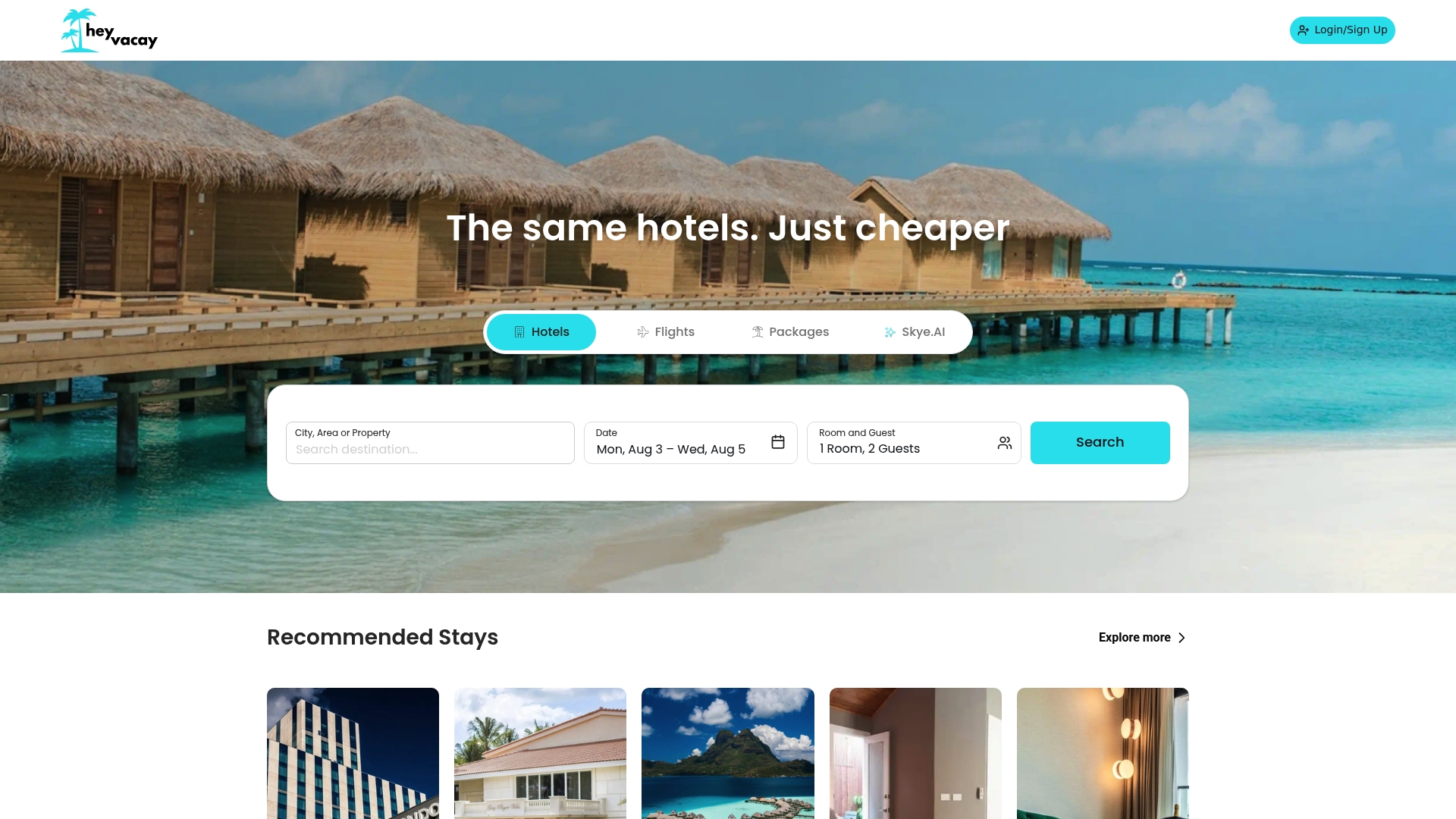
An AI-assisted platform can scan luxury and budget hotel pricing to surface the same rooms other sites list, often at a lower total price, with no hidden fees layered on afterward. It won't replace a phone call when you have a specific property in mind and time to negotiate. It's built for the moment before that call, when you need to know what the real floor price actually is across a market instead of guessing from one search result. Comparing timing patterns is easier with data-backed rules on when hotels drop rates, and pairing that timing with an AI-assisted search on HeyVacay gives you a sharper starting number before you ever pick up the phone. Run your next set of dates through it and see what price it surfaces before you negotiate the rest by hand.
Sources
For deeper timing data, see Travel + Leisure's booking window research. For loyalty comparisons, read HeyVacay's guide to loyalty versus booking sites and its breakdown of dynamic pricing.
- How hotels handle rate parity and member rates — SiteMinder
- Maximize savings: best time to book a hotel room — Travel + Leisure
- How to negotiate hotel prices: 7 proven tactics for travelers — HotelHuddle
- How to find cheap hotels in 2026: booking workflows and repricing tips — LitExplore