
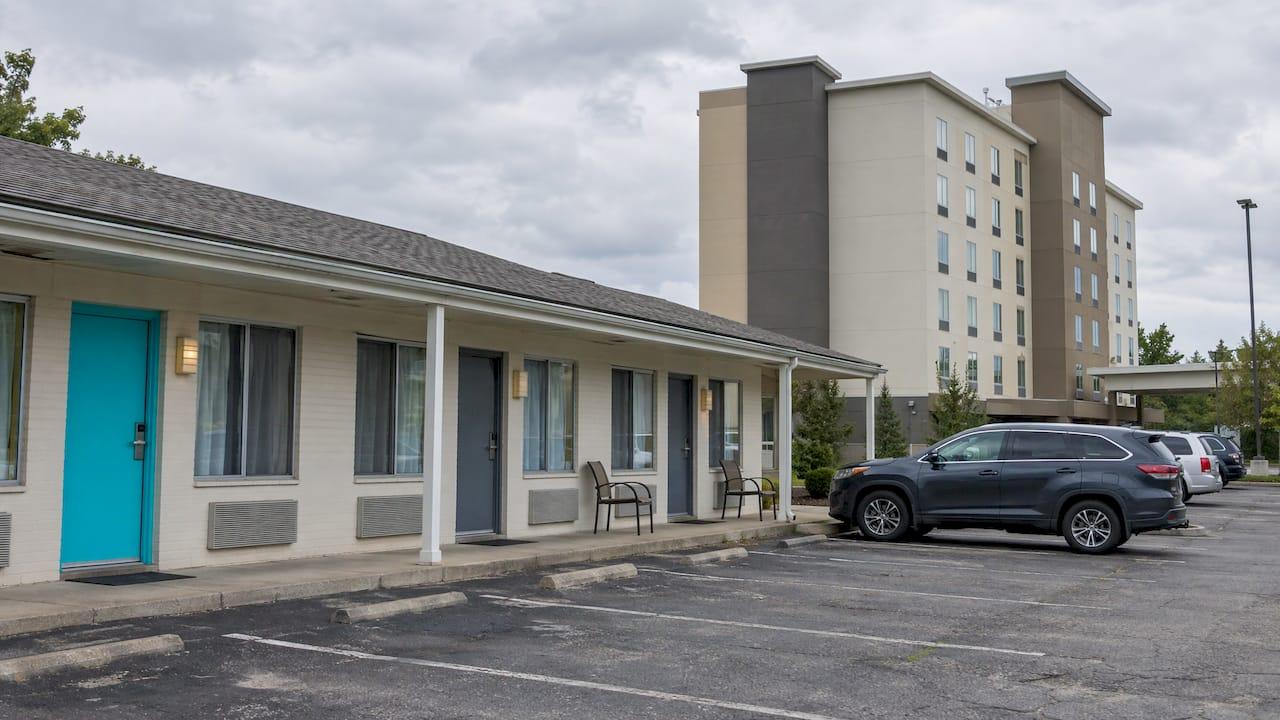
A motel is a low-rise, drive-up property where your room door opens onto the parking lot. A hotel is usually a larger building with a lobby, interior hallways and a wider set of services. Motels tend to cost less, but the label alone does not set the price: location, dates and what is added at checkout matter just as much. So the smart move is to compare the actual total for your actual nights, whatever the property calls itself. That is the comparison we built HeyVacay around, with clear pricing and no hidden fees.
TL;DR
- Layout: motel rooms open directly to the parking lot or outdoors; hotel rooms open onto interior hallways.
- Services: hotels typically add a staffed front desk, restaurants, pools, gyms and meeting space. Motels keep to the essentials.
- Price: motels usually undercut hotels, but a motel in a pricey city can match a mid-range hotel nearby. Compare totals, not labels.
- Inns: smaller, often rural or scenic, and the word is used loosely. Check the services, not the name.
- Best fit: motels for road trips and short stops, hotels for longer stays, business trips and trips where amenities matter.
Table of Contents
- What actually separates a motel from a hotel
- Motel vs hotel at a glance
- Which is cheaper: a motel or a hotel?
- Where does an inn fit in?
- How to choose for your kind of trip
- A quick checklist before you book
- Perspective
- Compare hotel prices for your dates
- FAQ
- Sources
What actually separates a motel from a hotel
The two words overlap more than most people think, and Google's own lodging categories show the core idea. In its Hotel Center definitions, a hotel offers basic services such as room service and professional housekeeping, with a front desk that may keep limited hours. A motel is described as a roadside hotel aimed mainly at motorists, with rooms in low buildings and parking directly outside the guest room.
In practice, four things tell them apart.
Layout and entrance
This is the clearest tell. Thrillist explains that hotel rooms open into interior hallways, while motel rooms open straight onto a parking lot or the outside. HowStuffWorks adds that hotels are larger, multi-floor buildings with central lobbies and elevators, while motels use simpler low-rise designs with exterior doors facing the lot.
What that means for you:
- Motel: you park next to your door and carry bags a few steps. That is handy for a late arrival, a pet, a car full of gear or kids who need to be let out fast.
- Hotel: you walk through a lobby and a corridor. Many travelers feel that adds a layer of comfort and security, and it keeps noise from the lot away from your door.
Size
Properties differ widely, but Roommaster's 2025 guide gives a useful rule of thumb: hotels often run from 100 to 500 or more rooms, motels about 30 to 100, and inns often fewer than 30. Fewer rooms generally means fewer on-site facilities.

Location
Motels grew up along highways, so they sit near exits and main roads. Hotels cluster in city centers, tourist districts, airports and business areas. That difference shapes the whole trip. A motel can be the easiest place to stop mid-drive, while a hotel often puts you within walking distance of what you came to see.
Services and amenities
HowStuffWorks notes that motels cover the basics for short-term, on-the-go guests, while hotels offer a wider range: fitness centers, pools, conference rooms, restaurants, room service and sometimes pet-friendly rooms. Expect a bed, a private bathroom and Wi-Fi at a motel, and a front desk with limited hours. At a hotel, a 24-hour front desk, a concierge or a breakfast room is far more common.
Motel vs hotel at a glance
| Motel | Hotel | |
|---|---|---|
| Room entrance | Outside, from the parking lot | Inside, from a hallway |
| Building | Usually one or two stories | Often multi-story with elevators |
| Typical size | About 30 to 100 rooms | Often 100 to 500+ rooms |
| Location | Highways, exits, roadside | Cities, tourist areas, business districts |
| Services | Essentials, limited reception hours | Front desk, dining, fitness, pool, meeting space |
| Typical guest | Road trippers, short and budget stays | Business, leisure, longer and group stays |
| Parking | Right outside your door | Lot, garage or valet, sometimes extra |
Size ranges come from Roommaster; the rest follows the Google, Thrillist and HowStuffWorks descriptions above.
Which is cheaper: a motel or a hotel?

Usually the motel, because it carries fewer services and less overhead. Apartment Therapy makes the same point: location and amenities drive price, so hotels with fuller offerings cost more and motels are the budget option.
Here are some published US ranges to give you a sense of scale:
- Roommaster's 2025 guide puts hotels at roughly $100 to $1,000 or more per night, motels at about $50 to $120, and inns at about $80 to $200 before taxes.
- Rough Guides reports that typical US motel and hotel rates start around $45 a night in rural areas and about $80 in major cities, with luxury suites reaching four figures. A third single bed costs roughly $15 to $25 extra.
These are published guide figures, not today's rates. Nightly prices move with season, day of the week, local events and demand, so use them to understand the gap, then check live prices for your dates.
Why the label is not a price guarantee
A motel in a high-demand city or near a beach, stadium or festival can cost as much as a mid-tier hotel a few exits away. Treat "motel" as a description of layout and service level, not a promise about the rate. That is why comparing the label alone can send you to the wrong property.
What else changes the real cost
Two rooms with the same nightly number can end up far apart once you add the extras:
- Taxes and fees. Some prices show taxes and fees up front and some add them later. Our guide to taxes included vs excluded shows how to read what a listing really charges.
- Parking. Free at the door is the norm at motels. City hotels often charge for a garage or valet.
- Breakfast and extras. A hotel that includes breakfast can beat a cheaper room where you buy every morning meal.
- Cancellation terms. A slightly higher rate with free cancellation can be the better deal if your plans might shift.
For a clear picture, line up the total for all nights rather than the headline number. We walk through the math in nightly vs total price.
Where does an inn fit in?
Searches for "inn vs hotel" come up often, and the honest answer is that the word is loose. Traditionally, an inn is a small lodging property that rents rooms and serves food and drink, as Hospitality Net explains. Inns grew up along trade routes and coach roads, and today they are especially common in the UK, Ireland and New England.
Compared with a hotel, an inn is usually:
- Smaller: often one or two levels, and frequently under 30 rooms.
- Lighter on amenities: a small dining room or restaurant rather than a gym, pool or spa.
- More personal: set staff hours rather than round-the-clock service, and often an owner-run feel.
Because the term is not regulated the way a star rating is, some full-size hotels and even some motels call themselves inns. If "inn" is in the name, read the room count, the amenities list and the photos before you assume anything. Inns suit couples and leisure travelers who want a cozy stay more than a long list of facilities.
How to choose for your kind of trip
Start with what the trip needs, then match the property type. The guidance below follows the comparison points Roommaster recommends: location, size, services, amenities, price range and who the property is built for.
Budget travelers and road trippers
If you are driving long distances and just need a clean bed, a private bathroom and a parking spot, a motel fits. Staying close to the highway saves detour time, and walking from car to room saves effort after a long day. The motel gets even better value if you book a night or two ahead rather than on the spot, because last-minute roadside rooms near busy exits can climb.
Families
Families often split on this. A motel gives you easy unloading and a lower nightly rate. A hotel may give you a pool, breakfast and a larger room layout, which can be worth more than the savings, especially when kids need to burn off energy. Count the extra bed fee too: Rough Guides' figure of about $15 to $25 for a third single bed shows how small add-ons shape the total.
Couples on a romantic getaway
For a weekend away, atmosphere and location usually beat a rock-bottom rate. A city hotel near dinner and sights, or a small inn in a scenic town, tends to make the trip. If you are weighing how purpose, parking and location should shape a short stay, this piece on booking a weekend stay is a handy companion.
Business travelers
Hotels fit better: reliable front desk hours, Wi-Fi, a quiet interior corridor, and often a desk and meeting space. Because expenses matter, it helps to know the rate tricks that lower a work trip's bill. Our five-minute checklist for business hotels and our guide to corporate rates without a company cover them.
Frequent travelers
If you book often, the property type matters less than your habits. Moving your dates by a night or two can change the price a lot, so try flexible-date hotel search, and learn how rates shift with demand in our piece on dynamic pricing for hotels.
A quick checklist before you book
- Confirm the entrance type. If you want an interior hallway, look for that in the description or photos. If you want to park at your door, look for exterior access.
- Check front desk hours. Late arrivals at a property with limited reception hours need a plan.
- Read the amenity list. Pool, breakfast, gym and laundry are the usual swing factors.
- Find the total price. Include taxes, parking, extra guests and pet charges.
- Look at cancellation terms. Free cancellation gives you room to change plans.
- Check location against your plans. A cheap room far from where you will spend your day can cost more in gas and time.
Perspective
Most people ask "motel or hotel?" when the more useful question is "what will this stay cost me in total, and what do I get for it?" A motel label tells you about the building. It does not tell you the price, the fees or how flexible the booking is.
We built HeyVacay for that second question. Our approach is to use AI and wholesale inventory to show you the same hotels at lower prices, with clear pricing and no hidden fees. That matters for the motel versus hotel choice, because when the total is transparent, a step up from a motel to a hotel can cost less than you expected, and a budget pick is easy to confirm.
We also support flexible cancellation and real human support, so if your road trip changes direction you are not stuck. Whichever type of property fits your trip, the goal is the same: a good room at a fair, clear price.
HeyVacay
Compare hotel prices for your dates
If you have decided a hotel suits your trip, or you want to see how close hotel rates come to a motel's, HeyVacay's hotel search lets you search multiple destinations and compare options with clear pricing and no hidden fees.

If you want help with a booking, our help and support page is the place to start.
FAQ
Is a motel cheaper than a hotel?
Usually, yes. Motels carry fewer services and less overhead, so rates are generally lower, as Apartment Therapy notes. The gap shrinks in expensive cities or busy event weeks, so compare the total for your dates.
What type of lodging is a motel?
A motel is a roadside lodging built mainly for motorists. According to Google's Hotel Center, it has rooms in low buildings with parking directly outside the guest room.
What is the difference between an inn and a hotel?
An inn is typically smaller and simpler than a hotel, often with fewer than 30 rooms, a small dining area and set staff hours. The term is used loosely, so check the room count and amenities rather than relying on the name.
What are motels best used for?
Motels suit short stays, overnight stops on a road trip and budget travel, especially when you want to park by your room. For longer stays, business trips or trips where a pool, restaurant or concierge matters, a hotel is usually the better match.
Sources
- Categories for lodging businesses, Hotel Center Help (Google)
- The Difference Between Hotels and Motels, Explained (Thrillist)
- Motel vs. Hotel: Differences in Overnight Accommodations (HowStuffWorks)
- Hotel vs Motel vs Inn: Explained (Roommaster)
- Accommodation in the USA (Rough Guides)
- 4 Key Differences Between a Motel vs. Hotel (Apartment Therapy)
- Types of accommodation: 30+ lodging types explained (Hospitality Net)
- How to Book a Weekend Stay and Get the Best Deal